Saddam Haftar is eyeing the throne in Libya
Emadeddin Badi
Eastern Libya spent nearly seven years denouncing the maritime memorandum Turkiye struck with its rivals based in Tripoli. Last week, it needed a single sitting of the legislature to embrace it.
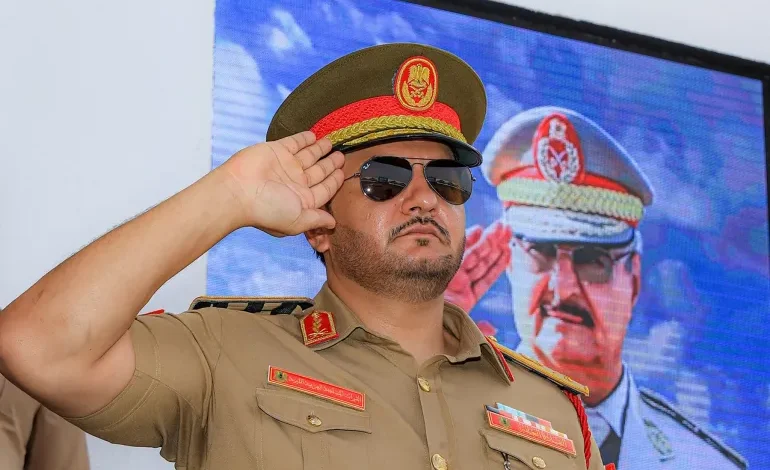
On October 20, the House of Representatives (HoR) in Benghazi ratified the deal. The European Union condemned the vote, as did Greece, Israel and Egypt.Yet the ratification was less a Turkish triumph than the final act of a sequence choreographed by Saddam Haftar, the son of Khalifa Haftar, the military commander who controls eastern Libya. The ultimate goal is the Libyan presidency.
The United States is currently trying to broker a power-sharing arrangement between Tripoli and Benghazi. Championed by Massad Boulos, US President Donald Trump’s senior adviser for Arab and African affairs, the deal could install Saddam as Libya’s president.
For that to happen, however, he needs the backing of Ankara, whose sway over western Libya gives it a decisive voice in any such settlement. The ratification of the maritime deal, therefore, is meant to secure Turkiye’s blessing.
The opening move in Saddam’s pursuit of the presidency was a palace coup: a fortnight before the vote, the HoR unseated its speaker, Aguila Saleh, who had spent 12 years in this position. It thus removed both Cairo’s principal ally in the east and the most stubborn obstacle to the memorandum’s ratification.
Yet Saleh’s ouster was never only about Egypt, and the same stone felled a second bird. As speaker and nominal supreme commander, he embodied the de jure authority from which Khalifa’s own command flows, and with a weighty tribal constituency among the Obeidat tribe, he was one of the few men capable of complicating, or even arbitrating, any transfer of power. Removing him cleared Saddam’s path to a handover already quietly under way, which the elder Haftar’s advanced age could hasten at any moment.