Palestinian victims of Israeli settler attacks face battle for justice
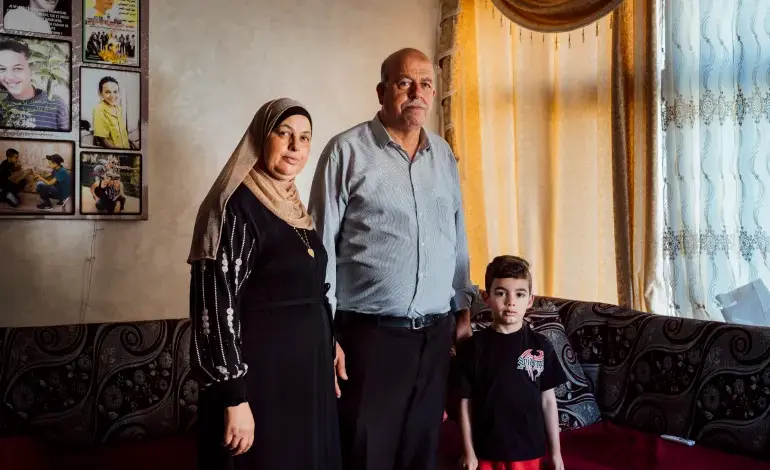
Sixteen years after Ziad’s death, Moira Jilani still waits to hear the footsteps of her husband sound up the stairs of their home in Shu’fat, occupied East Jerusalem.
She still lives at her mother-in-law’s building, where she and their three girls used to wait excitedly for Ziad to return home from work.
The first thing Moira remembers about Ziad is his laughter. Not the video that Israeli rights investigators pieced together of his final moments, nor the word “terrorist” that Israeli police attached to him hours after he died.
An old Christian friend of Ziad had recently dreamed of him and called to check in on her. Ziad would bring Moira along to the b’nei mitzvahs and weddings of Israelis he knew.
“He didn’t have … hatred for anybody. He was just that kind of personality that drew you in,” Moira told Al Jazeera.
On the day he was killed, Ziad had promised his daughters he’d take them to the beach once Friday prayers at Al-Aqsa Mosque were finished.
“Just get ready, you and the girls. When I come back, I’ll just honk, and you come on down,” were his last words to his wife. “Instead of going to the beach, we went to his funeral,” Moira told Al Jazeera.
On June 11, 2010, Ziad Jilani was driving his pick-up truck home through the congested roads of Wadi al-Joz on his way home.
According to witnesses who spoke to The Los Angeles Times, Ziad was caught in the middle of a fight between Israeli forces and Palestinian youths throwing stones. A rock struck his windshield, causing him to swerve into a group of police officers, lightly injuring two of them.
A border police officer then opened fire, and as he left his vehicle for safety, he was shot in the back. Minutes later, as he lay on the ground, he was shot two more times in the head at close range by a border police officer.
An investigation by Israeli rights lawyers claimed that less than two weeks earlier, the officer who shot Ziad dead, Maxim Vinogradov, had posted online about his desire to kill Arabs, according to Moira. A case against Vinogradov and his commanding officer was closed due to a lack of evidence. Neither of them has faced trial.
Ever since that promised day at the beach, Moira said she and her daughters have had to live with the fallout of Ziad being branded a “terrorist”.
“I remember telling my daughters, ‘ Please, do not look up your dad online,’” she said, regarding the false information spread about Ziad online.
“[Israel] had everybody brainwashed to think that Palestinians were terrorists. But the Palestinians that are being threatened and killed are the ones being terrorised. So for me, I call the ones holding the guns the terrorists.”
‘He loved everybody’
August 21 marks the United Nations’ International Day of Remembrance and Tribute to Victims of Terrorism. Today, Palestinians, like Moira, continue to face the consequences of false accusations against their loved ones or are the direct casualties of Israeli attacks.
Hussein Abu Khdeir still remembers his son Mohammed singing and dancing as he ran down the street from school to his home. In the days before he was killed, Mohammed helped line the streets of Shu’fat, a neighbourhood north of Jerusalem, with Ramadan lanterns, and joined the older boys in dancing the dabke.
Mohammed was a boy who “loved everybody”, his father said. He worked without complaint in the family’s electronics shop, serving Jewish and Arab customers alike with “no discrimination.”
“He was 16, but when you looked at him, he looked 12. His body was small,” Hussein said.