‘No war’ happening in South Sudan, says govt, despite 180,000 displaced
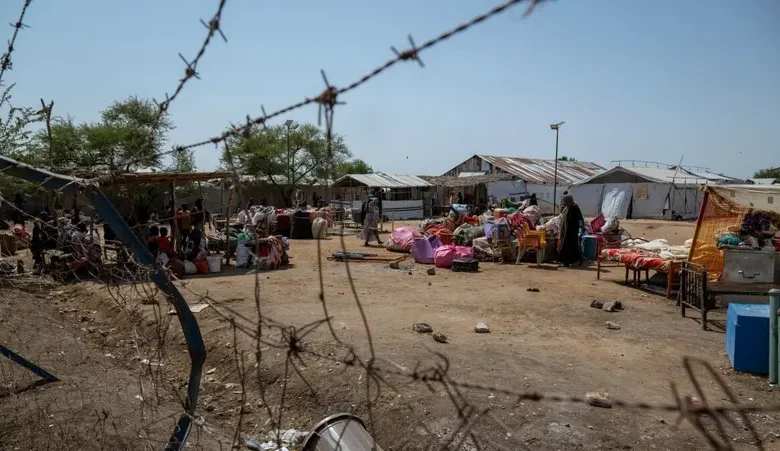
South Sudan’s government insisted it was “not at war” on Tuesday after days of heavy fighting against rebel forces that has displaced more than 180,000 people.
Fighting erupted in Jonglei state, north of the capital Juba, in late December, in the latest clashes between factions loyal to President Salva Kiir and his long-time rival, Riek Machar.
“The ongoing security operation in northern Jonglei State is a lawful and necessary measure aimed at halting the advance of rebel forces, restoring public order and safeguarding civilians,” Information Minister Ateny Wek Ateny told reporters in Juba.
“The country is not at war. We are only stopping the advancement” of the opposition forces, he said.
South Sudan is the world’s youngest country and has been beset by civil war, poverty and massive corruption since it was formed in 2011.
Kiir and Machar fought a brutal civil war from 2013 and 2018, and the subsequent peace deal has been unravelling over the past year.
“The peace agreement has not collapsed,” Ateny insisted.
But Machar has been kicked out of the power-sharing government and is on trial for “crimes against humanity”.
Since late December, his forces have seized parts of Jonglei, triggering a violent response from the government including the “indiscriminate” use of barrel bombs on civilian areas, according to witnesses and NGOs speaking to AFP by phone.
A senior general, Johnson Olony, was filmed ordering troops to “spare no lives” in Jonglei. Government spokesman Ateny said this “might have been a slip of the tongue”.
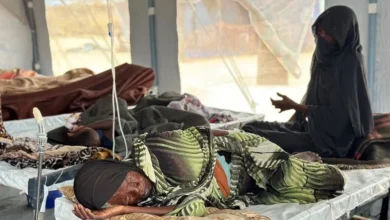
South Sudanese authorities estimate the number of displaced in Jonglei at more than 180,000, the United Nations humanitarian agency OCHA said last week.
Amid reports of blocks on humanitarian access, NGOs like Doctors Without Borders (MSF) say they have struggled to supply teams in Jonglei, leading to “catastrophic” shortages.
“What we are witnessing in Jonglei is not an isolated security incident; it is a dangerous escalation which is manifesting in other parts of the country as well,” said Barney Afako, a member of the UN Commission on Human Rights in South Sudan, in a statement last week.