Israel’s election: The battle between change and anti-Palestinian sentiment
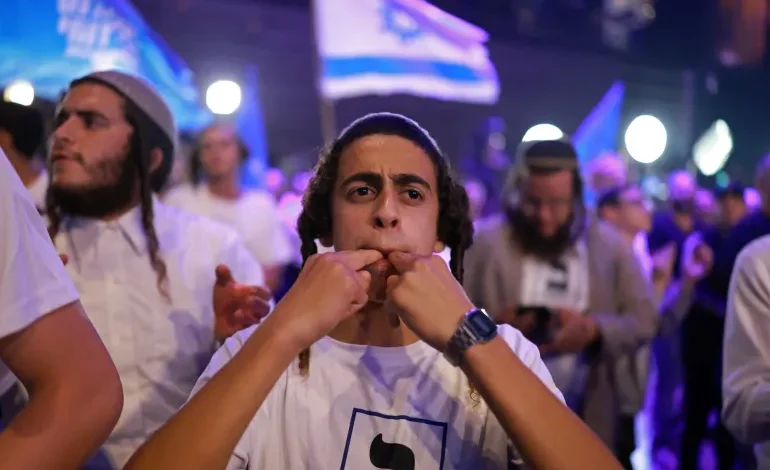
With Israel’s governing and opposition blocs failing to secure a majority in Israel’s election, and neither appearing ready to ally with Arab parties that could allow them to form a coalition, speculation is growing over the future shape of the government.
The vote on Tuesday, billed as one of the most important in Israel’s history, saw turnout reach 77.7 percent of eligible voters – the highest level since 1999.
With nearly 80 percent of votes counted by Wednesday afternoon, the outgoing coalition led by Prime Minister Benjamin Netanyahu, centred around his Likud party, had secured 54 seats, short of the 61 needed to establish a governing coalition.
Former military chief of staff Gadi Eisenkot’s self-styled Zionist opposition, drawing from parties as diverse as Yair Golan’s relatively left-wing Democrats and Avigdor Lieberman’s hard-right Yisrael Beiteinu, had 49 seats, also short of a governing majority in the 120-strong Knesset.
Holding the balance of power, in theory at least, are the Arab-dominated Ra’am and Joint List, with 17 seats, more than enough to give either bloc a majority with which to appoint a speaker, pass legislation and form a working government.
Those figures are not final, however, with the final tally expected by Friday and official results formally published on November 4 .
What happens next is a matter of procedure as much as politics.
President Isaac Herzog will consult party leaders on who they want as prime minister, before tasking the candidate he believes has the best chance of forming a government. That candidate has 28 days to build a coalition, with a possible 14-day extension. If they fail, the mandate can pass to another member of parliament, and if that also fails, the Knesset is dissolved and Israelis return to the polls, with the current cabinet staying on as caretaker.