Israel to demolish 25 homes in occupied West Bank’s Nur Shams camp
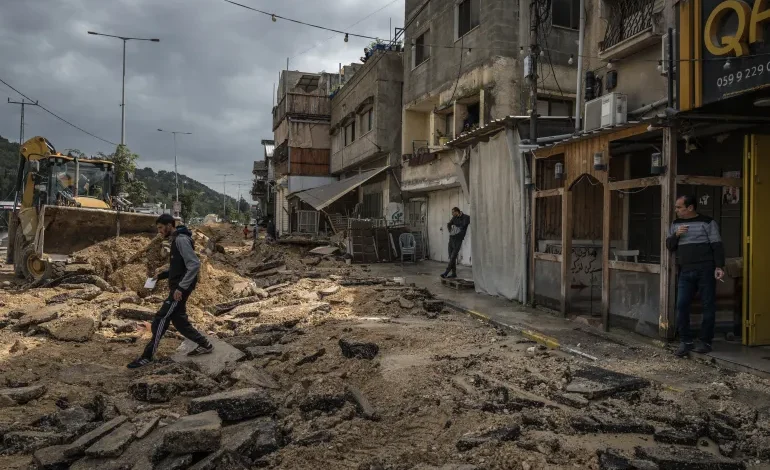
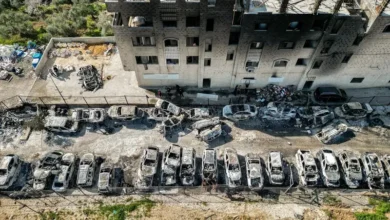
The Israeli military will demolish 25 residential buildings in the occupied West Bank’s Nur Shams refugee camp this week, according to local authorities.
Abdallah Kamil, the governor of the Tulkarem governorate where Nur Shams is located, told the AFP news agency on Monday that he was informed of the planned demolition by the Israeli Defence Ministry body COGAT.
Faisal Salama, the head of the popular committee for the Tulkarem camp, which is near Nur Shams, said the demolition order would affect 100 family homes.
Israel launched Operation Iron Wall in the occupied West Bank in January. It says the campaign is aimed at combating armed groups in refugee camps in the northern West Bank.
Human rights organisations have warned that Israel is using many similar tactics it used in its genocidal war against the Palestinian people in Gaza to seize and control territory across the occupied West Bank.
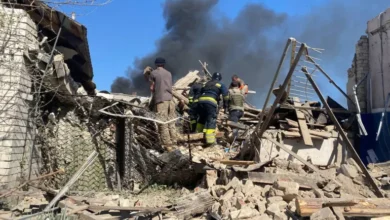
“This is part of a wider campaign that has persisted for about a year, targeting three refugee camps and demolishing or damaging a total of about 1,500 homes in the past year, and forcibly displacing 32,000 Palestinians,” said Al Jazeera’s Nour Odeh, reporting from the West Bank’s Ramallah.
Palestinians and human rights organisations say such demolitions are an attempt to “cage in” Palestinians and alter the geography in the West Bank, she added.
On Monday, a dozen displaced Nur Shams residents held a demonstration in front of armoured Israeli military vehicles blocking their way back to the camp. They protested against the demolition orders and demanded the right to return to their homes.
The head of the Palestinian National Council, Rouhi Fattouh, said that the Israeli decision is part of “ethnic cleansing and continuous forced displacement”, the Palestinian news agency Wafa reported.
‘Social death’
Omer Bartov, a professor of holocaust and genocide studies at Brown University, told Al Jazeera that Israel was “dehumanising” the Palestinian population in the occupied West Bank.
“[It is creating] a growing situation of social death, which is a term that was used to describe what happened to Jewish populations in Germany in the 1930s. That is, that your population, the Jewish population of Israel, increasingly has no contact with the people on the other side, and it exists as if they don’t exist,” he said.
“It dehumanises the population because you treat it as a population that has to be controlled, and it dehumanises the people doing it because they have to think of that population as being lesser than human.”
Aisha Dama, a camp resident whose four-floor family home, housing about 30 people, is among those to be demolished, told the AFP she felt alone against the military.
“On the day it happened, no one checked on us or asked about us,” she said.
“All my brothers’ houses are to be destroyed, all of them, and my brothers are already on the streets,” said Siham Hamayed, another camp resident.
Nur Shams, along with other refugee camps in the West Bank, was established after the 1948 Nakba, when hundreds of thousands of Palestinians were forcibly displaced from their homes in what is now Israel.
With time, the camps they established inside the West Bank became dense neighbourhoods. Residents pass on their refugee status from one generation to the next.