Israel kills seven in Lebanon as direct talks continue in US for second day
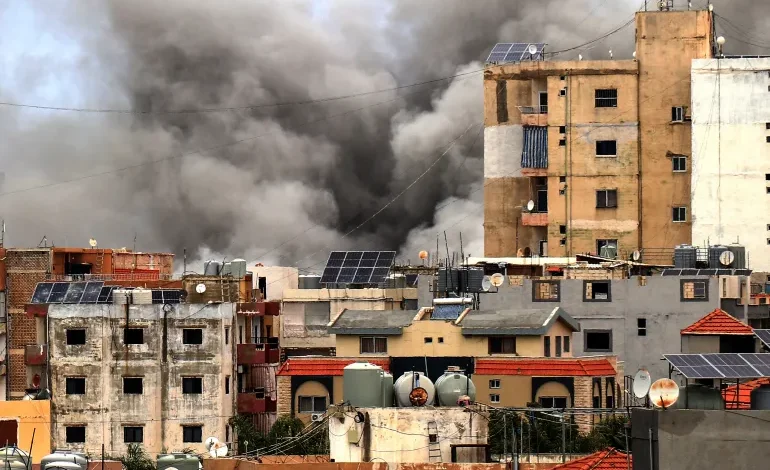
A second day of talks between Israeli and Lebanese officials is taking place in Washington, DC, despite ongoing Israeli attacks and ceasefire violations in Lebanon.
Both delegations, including each country’s ambassador to the United States, arrived at the State Department on Friday morning for the continued discussions, the third round of direct negotiations between the two sides this year.It came as Israel launched new attacks on Lebanon on Friday, killing at least seven people in the south, according to the Lebanese state news agency NNA. The Lebanese Ministry of Health said 2,951 people have been killed in Israeli attacks since March 2, when fighting between Israel and Hezbollah reignited.
Since then, Israel has lost 20 troops including another soldier killed in fighting with Hezbollah on Friday.
Direct talks
There is little information on what was discussed on the first day of the closed-door talks, with the US official saying they hoped to have more to share after the conclusion of Friday’s meeting. Lebanese and Israeli officials have not commented.
Both sides are approaching the talks from different positions, with Lebanon insisting that Israel fully end its attacks and occupation of its territory. Israel is focused on the disarmament of Iran-backed Hezbollah – and a potential normalisation agreement between the two countries.
Despite these differences, the talks are significant, being face-to-face and the third round this year.
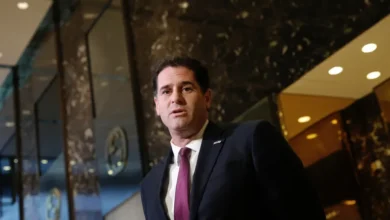
Lebanon has sent Presidential Special Envoy Simon Karam, while Israel’s Deputy National Security Adviser Yossi Draznin is also there.
Despite encouragement from US President Donald Trump, Lebanon has so far refused a meeting between President Joseph Aoun and Israeli Prime Minister Benjamin Netanyahu. Aoun has insisted that full normalisation is not on the table, and that Lebanon is pushing for the ceasefire to be enforced before negotiations continue.
The Lebanese president is treading carefully, seeking to balance US pressure and a desire to stop Israel’s attacks without appearing to be conceding too much to Israel.
While some Lebanese would tolerate the meetings between Lebanese and Israeli officials if they end the war, Hezbollah and its allies are adamant that the talks should have been indirect.
Despite these differences, the talks are significant, being face-to-face and the third round this year.
Lebanon has sent Presidential Special Envoy Simon Karam, while Israel’s Deputy National Security Adviser Yossi Draznin is also there.
Despite encouragement from US President Donald Trump, Lebanon has so far refused a meeting between President Joseph Aoun and Israeli Prime Minister Benjamin Netanyahu. Aoun has insisted that full normalisation is not on the table, and that Lebanon is pushing for the ceasefire to be enforced before negotiations continue.
The Lebanese president is treading carefully, seeking to balance US pressure and a desire to stop Israel’s attacks without appearing to be conceding too much to Israel.
While some Lebanese would tolerate the meetings between Lebanese and Israeli officials if they end the war, Hezbollah and its allies are adamant that the talks should have been indirect.
Just that morning, Jewish settlers had stolen hundreds of sheep and two tractors from a member of his extended family in Jiljilyya, to the north of Rammun, as well as shooting and killing 16-year-old Yousef Kaabneh – also from Abu Najjeh’s Kaabneh clan.
Like the community of Ein Samiya, Yousef and his family had been forcibly displaced from Wadi as-Seeq in 2023, one of dozens of Palestinian Bedouin communities emptied since October 7, 2023. Already ascendant, the Israeli far right has used the Hamas-led attack on Israel, along with the cover of Israel’s genocidal war on Gaza, to ramp up attacks on Palestinians in the West Bank and seize more land.