Iraq’s Kurdish forces look to a new era after US withdrawal
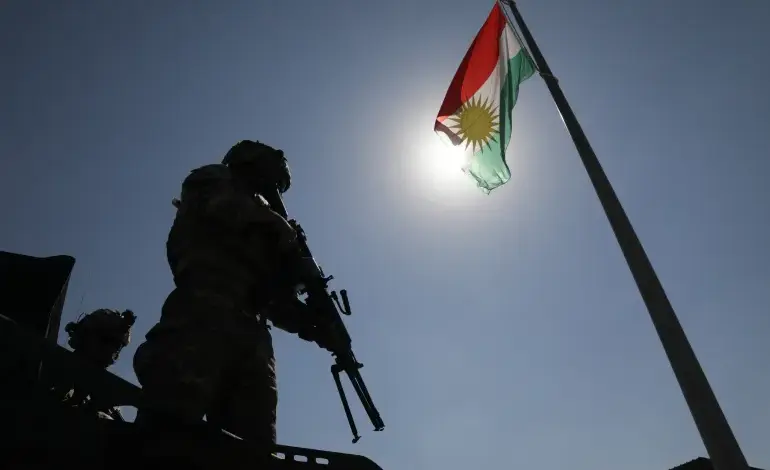
Iraq’s Kurdish forces are entering a new era following the withdrawal of US-led international forces that had been in the country to fight ISIL (ISIS).
On Wednesday, the United States announced the formal end of Operation Inherent Resolve, its name for the 12-year-long campaign to defeat ISIL, and the completion of the withdrawal of its military forces from Iraq.
Other partners in the war against the armed group also withdrew from Iraq, in accordance with a September 30 deadline set by Washington and Baghdad two years prior.
For years, Iraq’s Kurdish forces – known as the Peshmerga – have relied on close military support from coalition forces, and the US in particular, to safeguard their autonomy and defend against ISIL.
Their withdrawal has posed new political and security challenges for Iraq. Where does the Peshmerga stand today?
The challenge of unification
Days before the coalition’s withdrawal, on September 21, the Erbil-based Kurdish Regional Government (KRG) – which presides over Iraq’s semi-autonomous Kurdistan region – announced that it had finally merged Kurdish armed factions into a unified fighting force.
In his speech at the ceremony marking the event, KRG President Nechirvan Barzani characterised it as a major national step towards consolidating the region’s institutions.
“Kurdistan needs one force, one ministry, and one command,” he said. “The Peshmerga must be a national force, free from party interference and disputes. Today, we take a major step towards achieving this goal.”
Barzani announced that the militias affiliated with his Kurdish Democratic Party (KDP) and its historic rival Patriotic Union of Kurdistan (PUK) were now under one structure. The KDP and PUK represent the two dominant Kurdish Iraqi factions.
Zeidon Alkinani, a Middle East political analyst and founding director of the Doha-based Arab Perspectives Institute, told Al Jazeera that the unification would help stabilise Iraq.
“Iraq’s most damaging rivalries have been within communities, intra-Shia and intra-Kurdish, not between them,” he said.
He says reducing the role of the Erbil-based KDP and the Sulaymaniyah-based PUK party structures within the Peshmerga “strengthens Iraq’s stability and gives Erbil firmer legal footing with Baghdad”.
However, the work is far from finished. Barzani, in his speech, warned that the unification marked the start of a phase that “may be even more difficult” than past Kurdish struggles, requiring the Peshmerga to stand above party loyalties.
“The test is whether [unification] survives, given the persistence of two geographically distinct commands”, Alkinani says.
Retired Lieutenant General Jabbar al-Yawar, former secretary general of the Ministry of Peshmerga in the KRG, told Al Jazeera that these parties were embroiled in a number of political disputes, including governance of Kurdistan and relations with Baghdad.
These disputes, he says, could extend to military institutions if the forces remain tied to political parties.