In Ghana Town, a ‘stateless’ future for hundreds born and raised in Gambia
As dawn breaks over Ghana Town, a fishing village along The Gambia’s Atlantic coast where hundreds of residents live without official documentation, Marie Mensah moves quickly through her morning routine: dressing her children, preparing breakfast and checking their schoolbags before walking them to the roadside.
Three of her four children – aged between six months and 10 years – attend a fee-paying private school, not by choice, but by necessity. Without national identity documents, enrolment in tuition-free public schools is nearly impossible.
“They ask for documents we don’t have,” Mensah, 30, told Al Jazeera. “So the public schools refuse them.”
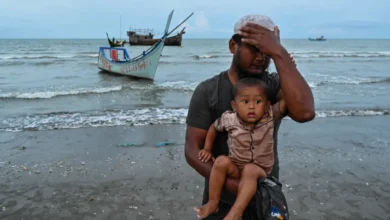
From a distance, Ghana Town, about 35km (22 miles) from the capital, Banjul, looks like any village in coastal Gambia, with fishermen untangling their nets and mounting wooden boats towards the sea. But for most of the people living here, each day begins with uncertainty: the question of whether they legally belong to the only country they have ever known.
About 850 of the town’s 900 residents lack citizenship, passports, and even national identification, according to the Village Development Committee (VDC), which oversees community matters in the town.
Ghana Town was founded in the late 1950s by 10 Ghanaian fishermen who sailed from what was then the Gold Coast (now Ghana) to eventually settle along The Gambia’s coastline. Over the years, their families grew. More people were born and raised here, learning local languages and forming a close-knit community. But even though this is the only home they have ever known, most of the descendants of the original fishermen remain trapped in a legal grey zone.
According to Gambian law, a person born to non-Gambian parents is not recognised as a citizen, even if born in the country. Those who have one Gambian parent have attained official paperwork. For other residents, it has been a series of failed applications to the government.
After Mensah sees her older children off to school, she takes her six-month-old to the nearest immigration office, about 15km (9 miles) away in Kanifing. She will once again try to apply for a national identity card, something she first attempted when she was 18.
“I know they may reject me,” she told Al Jazeera. “But I still have to try.”
After hours of waiting and paying 500 dalasi ($7) for an application form, which she fills out with supporting documents, officials turn her away, citing that her birth certificate, which classifies her as non-Gambian, disqualifies her.
Other residents told Al Jazeera their applications were also rejected on similar grounds.
“If I cannot get an ID where I was born,” lamented Mensah, visibly emotional, “where else will accept me?”
‘We are all stateless’
Under Section 9 of The Gambia’s 1997 Constitution, citizenship by birth is determined by descent. Being born in the country alone does not confer nationality; at least one parent must be Gambian.
For many Ghana Town families – who lack both Gambian and Ghanaian citizenship – the law has shaped and roadblocked their lives for generations.
Amina Issaka, 64, traces her family’s presence in Ghana Town back nearly seven decades.
Her grandparents were among the earliest settlers. Today, she, her six adult children, 11 grandchildren, and four great-grandchildren are all undocumented.
“We are all stateless,” she said. “If we cannot get Gambian citizenship, where else would we go?”
From a small roadside stall selling cooking ingredients and children’s items, Issaka earns just enough to survive. But building a real business is impossible without identity documents.
“I cannot even register my shop,” she said. “Without papers, you cannot grow.”
To formally register a business or even open a bank account, an individual is typically required to present a valid national ID card or passport, along with a Tax Identification Number. In Ghana Town, the general lack of documentation means that business activity operates largely within the informal sector.