Hunger, death, devastation: No respite in Tigray a year after US aid cuts
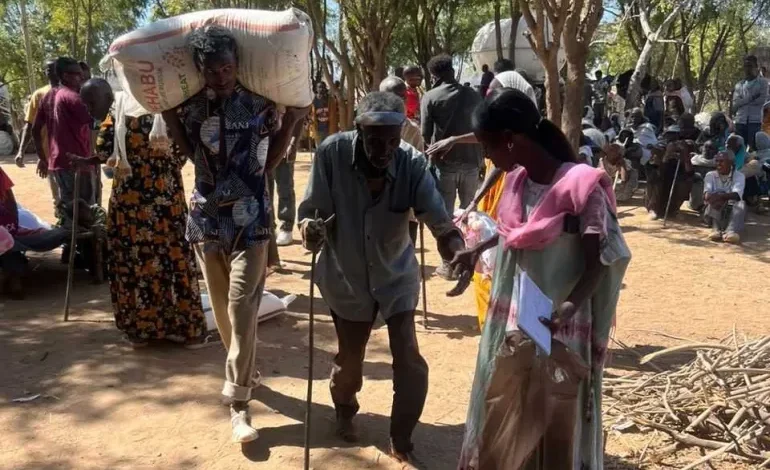
Lately, 88-year-old Nireayo Wubet spends many of his days burying friends and family members. As he grieves, he worries about whether there will be anyone left to offer him a decent burial when the time comes, as severe hunger ravages a large swath of his village in Ethiopia’s northern Tigray region.
“We have little humanitarian support,” laments the octogenarian whose frail appearance is mirrored by many others in his village of Hitsats, near the Eritrean border. “It’s not conflicts that will ultimately kill us, but famine,” he says.
Once a proud farmer from Humera – currently a disputed area within the Amhara region – Wubet took shelter in Hitsats four years ago, after fleeing conflicts and ethnic strife that uprooted him and others in the region.
He was first displaced in the middle of the Tigray war, which started in 2020, killing thousands of people and displacing millions more. He has not been able to return and reclaim his life even as the conflict ended in 2022.
Hitsats is a destitute village that has been sustained mostly by humanitarian organisations, including the United States Agency for International Development (USAID) – once Ethiopia’s largest source of humanitarian aid.
But that changed abruptly a year ago when US President Donald Trump took office and promptly demolished the agency’s work and cut funding across the globe.
Across Tigray province, humanitarian organisations including the World Food Programme (WFP) say that up to 80 percent of the population is in need of emergency support. But the USAID cuts mean there is less humanitarian funding available overall, and what remains is often directed towards hotspots and global conflict zones that are considered worse emergencies.
Medical aid organisation Doctors Without Borders, known by its French initials MSF, which assists vulnerable populations in Ethiopia and across the Horn of Africa region, notes that the US cuts “upended global health and humanitarian programs around the world” in 2025.
“The human costs [around the world] have been catastrophic,” MSF said in a statement this week.
It said in Somalia, aid disruptions caused shipments of therapeutic milk to stop for months, leading to a rise in child malnutrition cases at the MSF clinic there; in Renk in South Sudan, funding cuts forced an aid organisation to stop supporting hospital staff, which left gaps in maternity care; and in the Democratic Republic of the Congo, the dismantling of USAID caused the cancellation of an order of 100,000 post-rape kits, which included medication for preventing HIV.
In Ethiopia, which used to be the largest recipient of USAID funds in sub-Saharan Africa prior to Trump’s cuts, the funding shortfalls have created critical gaps and put more pressure on other organisations.
In Tigray, “donor funding cuts have placed additional strain on an already fragile public health system,” Joshua Eckley, MSF head of mission for Ethiopia, told Al Jazeera.
“As aid actors scale back or suspend activities in the region due to funding constraints, the most vulnerable are experiencing reduced access to medical care, water and sanitation services … while overall humanitarian needs continue to exceed the collective capacity.”