How the US far-right weaponised ‘inshallah’ against Abdul El-Sayed
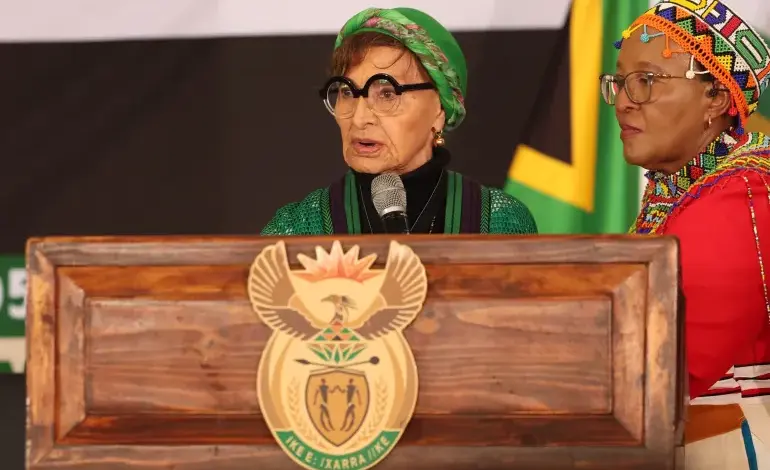
Seventy years ago, Sophie Williams-de Bruyn was 18 when she joined about 20,000 women marching to the Union Buildings, the seat of South Africa’s apartheid government, to protest against the extension of the pass laws to Black women.
On August 9, 1956, the women gathered in Pretoria carrying a petition against laws that restricted the movement of Black South Africans. Williams-de Bruyn was among the leaders of the march, which became one of the defining moments of the country’s liberation struggle.
On Sunday, at 88, she returned to the same grounds.
The country around her had changed. Apartheid had ended, South Africa had become a democracy and women had moved into some of the country’s highest offices. Its constitution guarantees equality and protection from discrimination.
But for many women, the freedoms won through that political transformation have not translated into security, economic opportunity or reliable public services.
“How can we fully celebrate our past victories when our present reality is so deeply disappointing and distressful?” Williams-de Bruyn asked.
Her question set a sombre tone for this year’s National Women’s Day commemorations, which marked 70 years since the historic march.
What the women of 1956 won
The women who marched in 1956 were challenging one of apartheid’s most visible instruments of racial control. The pass laws regulated where Black South Africans could live and work, and the government planned to extend those restrictions to Black women.
The women delivered their petitions at the Union Buildings and stood in silence for 30 minutes before leaving. The protest became a symbol of women’s resistance and is now commemorated each year as National Women’s Day.
Nearly four decades later, apartheid was dismantled.
South Africa’s first democratic elections in 1994 brought a new political order, followed by a constitution that placed equality and human dignity at its centre. Women entered Parliament in significant numbers and moved into senior positions across government, the judiciary and other institutions.
President Cyril Ramaphosa pointed to those gains during Sunday’s commemoration, highlighting South Africa’s progress in women’s political representation, education, financial inclusion and participation in decision-making.
Women now hold some of the country’s highest positions, including chief justice, parliament speaker and public protector.
But political representation has not brought equal economic security.
“Women are more than half of our population, but they do not yet hold an equal share of our country’s wealth, its land or its enterprises,” Ramaphosa said.
Cassandra Dorasamy, a campaigner at Amnesty International South Africa, told Al Jazeera that while the country had made progress in women’s representation, it had not seen the same improvement in the lives of the majority of women.
“We’ve seen progress in terms of women’s representation in Parliament, companies and local government structures, but we have not seen the same meaningful progress in the realities of the majority of women in the country,” she said.
Violence and fear
Nowhere is that tension more visible than in South Africa’s continuing crisis of gender-based violence.
South African police recorded 9,782 reported rapes between January and March 2026, along with 12,590 sexual offences. That amounts to roughly 108 reported rapes every day.
Almost half of those reported rapes, 4,620, or 47.2 percent, took place at the home of the victim or the perpetrator, according to police statistics.
In November last year, the National Disaster Management Centre classified gender-based violence and femicide as a national disaster following sustained pressure from civil society organisations.
Ramaphosa told the gathering that women continue to live with the threat of violence “in the streets, even in their homes”.