How severe is Russia’s energy shortage because of Ukrainian strikes?
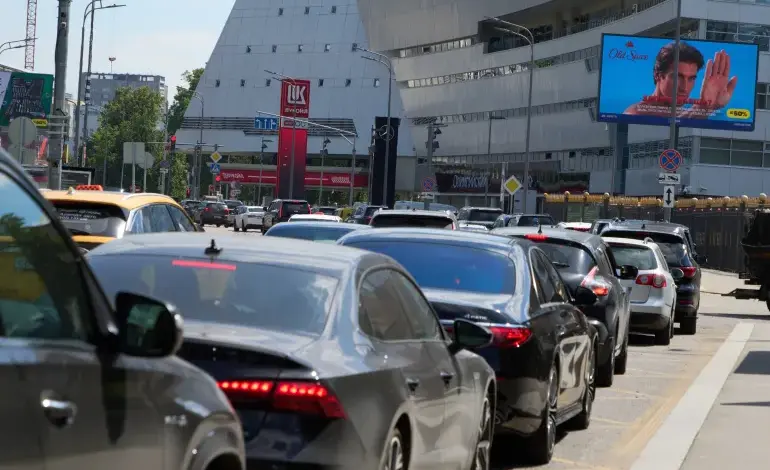
Ukrainian drone attacks on energy infrastructure are intensifying fuel shortages in Russia, triggering a rare admission from President Vladimir Putin of the gravity of the situation.
In unusually candid public remarks to a meeting of senior officials on Sunday, Putin explicitly acknowledged that Ukrainian strikes had led to fuel rationing.
“You are well aware that problems for drivers and for businesses persist,” he said, according to Russian news agencies. “Unfortunately, there are still queues at petrol stations too.”
“We have to reduce to a minimum the impact of terrorist attacks on our civilian targets and infrastructure,” he said, adding that the situation required “systemic measures that match the scale of current challenges”.
Ukraine has stepped up attacks on Russian energy facilities in recent months, hitting Russia’s crude oil and refined products sales, its main source of export income and the main source of funding for its war efforts.
Norsi, Russia’s fourth-largest oil refinery and the second-largest producer of petrol, suspended operations last week following a Ukrainian drone attack. The facility is located near Kstovo in the Nizhny Novgorod region, 450 kilometres (280 miles) east of Moscow.
Ukraine’s military said it also struck Russia’s Orenburg gas processing plant, which has a capacity of 45 billion cubic metres of natural gas per year. It is located in the southern Urals near Russia’s border with Kazakhstan, more than 1,200km (750 miles) beyond the front lines in Ukraine
Last week, Ukraine also used long-range drones to hit two oil facilities in Kerch in Crimea and the port of Kavkaz, used to bring fuel to the Russian front lines.
Long-range drones also hit the Slavyansk and the Yaroslavl oil refineries, about 300 and 700 kilometres (190 and 435 miles) from the front line, respectively. Ukrainian President Volodymyr Zelenskyy said in the aftermath of the attack on Sunday that this meant “fewer resources serving Russia’s war machine”.
“We continue our operations that weaken Russia’s ability to wage this war,” he wrote on X.
Earlier this month, Israeli ministers had described their expanding colonial project in the language of intent – with Finance Minister Bezalel Smotrich announcing the “cancellation” of the Hebron Accords, and Israeli broadcasters reporting on the government cabinet’s intended “quiet annexation” of Gaza. This week, that vision began to take physical shape.
In Hebron, Israeli forces brought heavy machinery into the Ibrahimi Mosque and began installing steel beams over its open courtyard – a structural alteration the mosque’s director called a fundamental change to the ancient site’s historic character; Israeli authorities have also blocked the Muslim call to prayer there for a week and a half.
Annexation, from blueprint to build
If the Ibrahimi Mosque works were the week’s most visible construction, the quieter colonialist building happened across the West Bank’s outpost system, where the state moved to entrench settlement infrastructure that even Israeli law had viewed as illegal. Israeli authorities declared 465 dunums (0.465 square kilometers) of land near Sinjil, north of Ramallah, as “state land”, a designation the Colonization and Wall Resistance Commission said was intended to retroactively legalise the Givat Haroeh outpost – converted into an official settlement in 2023 – and to stitch it into the surrounding settlement bloc along Route 60.