How Serbia’s President Aleksandar Vucic sees the world
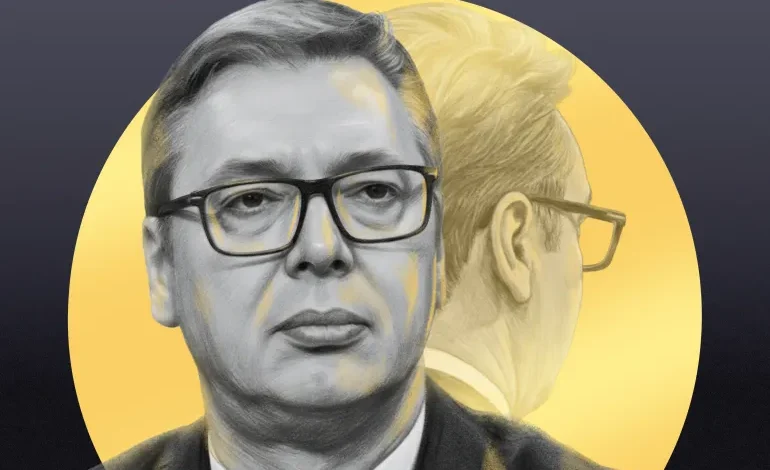
On May 13, 1990, in Zagreb, two of Yugoslavia’s biggest football teams, Red Star Belgrade and the home team, Dinamo Zagreb, were set to play in the Maksimir Stadium of the Croatian capital. Among the excited Red Star fans riding on the train to Zagreb that day was a young law student named Aleksandar Vucic.
On the streets, fights began breaking out between rival fans. Cafe tables were flipped over, windows smashed. But the real ruckus erupted at the stadium, where Red Star fanatics, led by Serbian gangster Zeljko Raznatovic, aka Arkan, broke through the barrier holding them back and rushed at the Dinamo supporters, with punches and chairs thrown by both sides.
“They threw everything they had at us [until] there were no more chairs to hurl at each other,” Vucic recounted in a magazine interview 20 years later.
Dinamo supporters then stampeded the pitch, where their team jumped into the fray, assaulting police officers, and the game was officially called off before it began.
Over the next hour, authorities tried to restore order, playing soothing music over the loudspeakers to try to calm the mob. Two fire engines were dispatched to hose the fans, who pelted the trucks with stones.
Trading insults and fisticuffs are hardly unusual in football hooliganism, but the riots laid bare the ethnic fault lines that would soon lead to the violent breakup of Yugoslavia.
“It was already a conflict between Serbs and Croats, not Red Star and Dinamo fans,” Vucic explained in the same interview. “Football is always just a reflection of what is happening in society.”
Maksimir exemplified the toxic nationalism and football hooliganism that have shadowed Vucic’s rise to dominate Serbian politics for more than a decade as prime minister from 2014 to 2017, and since then, as president.
As war raged through the former Yugoslavia, Vucic began his political career with a far-right group calling for a “Greater Serbia”. In 1995, merely days after Bosnian Serb forces perpetrated a genocide against Bosniaks, Vucic threatened to kill hundreds if outside powers intervened.
Two decades later, after founding a new, more centrist party, Vucic paid his respects to the Srebrenica victims and called the killings a “monstrous crime”. However, he has never recognised the crimes as a genocide and opposed the 2024 United Nations vote establishing an annual remembrance day. Meanwhile, he has led negotiations for Serbia to join the European Union and strengthened ties with China and Russia. Since taking the presidency in 2017, he has consolidated power and curbed democratic freedoms.
Throughout, allegations of criminality have plagued his presidency – from football thugs to graft reaching the halls of power – as anticorruption protests continue into their second year.
Amid the antigovernment protests, what motivates his grip on power, and how does he see the world today?
A young football thug
Vucic was born in 1970 in Belgrade, the capital of a country that no longer exists: Yugoslavia, a vast land home to many ethnic groups spanning what is now seven nations in southeastern Europe.
Vucic’s family fled their home village of Cipuljic in central Bosnia to escape the Ustase, Croatian fascists who collaborated with the Nazis during World War II. The family left after Vucic’s grandfather, a prosperous merchant, was murdered by collaborators in 1941. He’d offended them by serving a keg of rakija (a strong Balkan brandy) to passersby outside his shop in solidarity with anti-German demonstrations in Belgrade.
The Ustase sought a Greater Croatia, attempting to achieve this by throwing Serbs, Jews and Roma into death camps. A violent Serb movement, the Chetniks, organised in response, but their own ambitions of a Greater Serbia led them to massacre Bosniaks and Croats, and eventually, to collaborate with the Nazis.
But it was Josip Broz Tito’s communist, multiethnic Partisans who ultimately prevailed against the Nazi occupation.