How Russia could benefit from the US-Israeli war on Iran
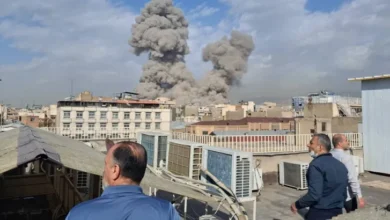
The US-Israeli attacks on Iran and the assassination of Supreme Leader Ayotallah Ali Khamenei have caused a measure of discomfort in Moscow. Some hawkish Russian commentators claim that Russia could be attacked in the same manner despite its vast nuclear arsenal. They see reckless statements by major Western officials about the possibility of war with Russia in the near future as proof of the intent.
Although the attack on Iran is a cause of concern in Moscow, it is also seen as a vindication of its own geopolitical strategy, including the aggression against Ukraine. It is a confirmation of the Kremlin’s long-held view of the US-led West as a rogue and irrational actor.
For Russian President Vladimir Putin, the US war on Iran likely echoes the events of 2011 in Libya, which heavily influenced his own threat perceptions. That year, a NATO-led military intervention resulted in the ouster of Libyan leader Muammar Gaddafi.
The NATO attack on Libya, which Putin’s protege and then-President Dmitry Medvedev had facilitated by approving Russia’s abstention during a United Nations Security Council vote, was one of the factors that pushed him to decide to return to the presidency.
In October 2011, a month after Putin accepted the nomination for another presidential run, Gaddafi was brutally murdered by rebels, and the video of his demise went viral on the Internet. The end of his regime, celebrated by Western leaders at the time, brought neither democracy nor prosperity to Libya. Instead it plunged the country into a civil war and fragmentation.
For Putin, it was a clear demonstration of what might await him personally and Russia at large should he tolerate the neoliberal “democratisation” crusade waged by the increasingly reckless and overconfident West. In December of that year, protests against fraud in legislative elections were staged by pro-Western urbanites in Moscow. This served as yet another red flag for the Kremlin.
Putin looked on for a few months before decisively clamping down on the protests on the eve of his inauguration in May 2012. It was a turning point in Russia’s domestic and foreign policy that led to Russia intervening in Ukraine’s Maidan Revolution upheaval less than two years later.
Watching the dramatic events unfold in Iran right now, Putin is likely feeling vindicated that his actions in Ukraine were justified and thankful to his Soviet predecessors that they built the world’s largest nuclear arsenal, which ensures Russia’s genuine sovereignty and the impregnability of his personalistic regime.
Despite himself starting a brutal war of aggression against Russia’s closest neighbour in Europe, Putin still considers himself a stalwart of the disappearing post-World War II order, whose demise – in his opinion at least – was precipitated by the US-led West becoming overconfident, intolerably arrogant and reckless.
The idea of launching all-out aggression in Ukraine has its roots in the 1930s Soviet doctrine of taking the war to the enemy’s territory. Ukraine and Georgia became “enemy territory” when NATO decided in 2007 to allow their membership. That idea was successfully tested first during the short-lived conflict in Georgia in 2008.
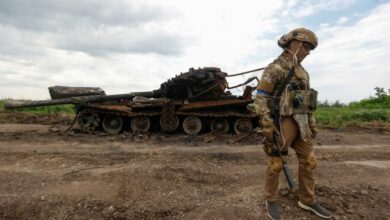
The attacks on Ukraine in 2014 and then the invasion of 2022 were charted by the Kremlin as preventive of the type of military intervention that Iraq, Libya and Syria experienced and that now Iran is facing.
Making Ukraine the decisive battlefield of its conflict with the West has allowed the Kremlin to shield the vast majority of the Russian population from any tangible impact of the war, which was successfully peddled to the Russian society as inevitable.
Iran entered the scene of the Russo-Ukrainian conflict as an unlikely ally of Russia, given the historically difficult relations between the two countries. It provided crucial drone technology in the heady days of Russia’s all-out invasion when many in the West were convinced that Ukraine could have a technological edge over Russia by deploying the Turkish Bayraktar drones. This support wasn’t a selfless act of sincere friendship – Tehran was paid billions of dollars, which helped prop up its struggling economy.
Russian-Iranian ties, however, are not strong enough for Moscow to intervene on the Iranian side now. What is more, the Kremlin has an informal nonattack pact with Israel, which is refusing to supply crucial weapons systems to Ukraine or join anti-Russian sanctions. Because Israel does not apply Western sanctions, it has become a safe haven for members of the Russian oligarchy who have historically close links to the country.
Yet another reason for Russia’s neutrality is US President Donald Trump’s own near-neutral position on the Russia-Ukraine conflict and his attempts to end it at the negotiating table. Moscow doesn’t want to give European leaders a chance to disrupt the relationship it has forged with the Trump administration and prolong the war.
Even if it had a genuine desire to prop up the Iranian regime, Russia would have had very little capacity to do so. The only way it could help Iran is with military technology it has developed in the four years of the Ukraine war, but that could jeopardise relations with Israel and the US while Iran may not have the money to pay for it.
It is also important to note that the US-Israeli operation against Iran actually benefits Russia in the short term. The war has already caused a spike in the prices of oil and gas, which means greater revenue from energy sales for the Russian state coffers. Higher energy prices can also affect the ability of the European Union, Ukraine’s prime funder at the moment, to finance the country’s war effort.
Besides, a prolonged war in the Middle East would deplete US arsenals, which would otherwise be available to Ukraine, especially when it comes to crucial air defence missiles.
The US getting bogged down in the Middle East also would mean Moscow could secure greater leverage in the ongoing talks with Ukraine.
Domestically, Putin stands to benefit from the scenes of destruction and chaos in Iran as well. The war, which the US and Israel are now trying to sell as something that could help Iranians to build a freer and more prosperous country, will only increase the besieged fortress attitude among Russians and solidify the image of Putin as a protector of the nation, even if an authoritarian one.