How Israel is destroying Lebanon’s water infrastructure
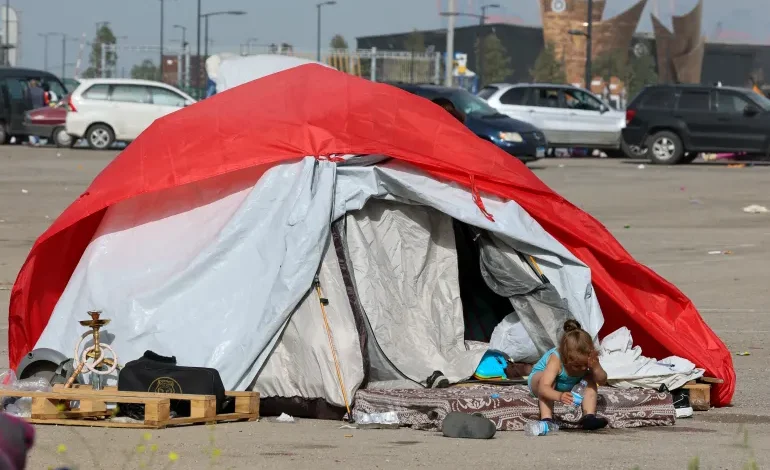
Israel is attacking Lebanon’s water infrastructure, using similar tactics to its genocidal war on Gaza, uprooting local populations.
Experts say that Israel’s strikes on crucial water infrastructure and near sites being repaired after prior damage have effectively turned access to water into a weapon – and that has become a pattern.
“The impunity Israel enjoyed in Gaza as it committed water war crimes is again on full display,” Bachir Ayoub, Oxfam’s Lebanon country director, said in a report published by the charity in late March. “The world has shown Israel can do what it wants, whenever it wants, without repercussion and again it is civilians who are paying the ultimate price for this inaction.”
Displacement through water
Israel intensified its war on Lebanon for the second time in less than two years on March 2. Hours earlier, Hezbollah had fired rockets at Israel, breaking a 15-month period of not responding to Israeli attacks and the more than 10,000 ceasefire violations.
Hezbollah’s attack was also in retaliation for the killing of Iran’s Supreme Leader Ayatollah Ali Khamenei two days later. Over the next few days, Israel would displace more than 1.2 million people in Lebanon in a bombing campaign across the country.
Israel has killed journalists, medical workers, and devastated southern Lebanon’s medical infrastructure. Experts told Al Jazeera that those acts, along with the destruction of Lebanon’s water infrastructure, are part of a concerted effort to create an uninhabitable buffer zone in southern Lebanon.
Israel is currently occupying dozens of villages in southern Lebanon and preventing thousands from returning home. Prime Minister Benjamin Netanyahu said earlier in April that Israeli forces “are remaining in Lebanon in a reinforced security buffer zone”.
“This is a security strip 10 kilometres [6.2 miles] deep, which is much stronger, more intense, more continuous and more solid than what we had previously,” Netanyahu said. “That is where we are, and we are not leaving.”
One way to prevent Lebanese from returning is by striking Lebanon’s water infrastructure.
“Israel has declared its intent on raising [towns and villages] to the ground and preventing people from going back there,” Rami Zurayk, professor and chairperson of the Department of Landscape Design and Ecosystem Management at the Faculty of Agricultural and Food Sciences, American University of Beirut, told Al Jazeera. “Every drop of water that Israel steals is a drop of the water that is taken from the local population … Israel uses water in order to displace people, and it displaces people in order to steal the water.”
Israel damaged six water facilities in southern Lebanon during previous attacks on Lebanon since 2023, and in the first four days of the renewed conflict this year, “damaged at least seven critical water sources including reservoirs, pipe networks and pumping stations that supplied water to almost 7,000 people in the Bekaa area alone”, according to Oxfam International. Key infrastructure has been damaged in areas like Britel and Nabi Chit in the Bekaa Valley, and in Marjayoun, in southern Lebanon.
Lebanon’s water infrastructure is being “directly and indirectly attacked and on purpose”, asserted Nadim Farajalla, an environmental engineer and chief sustainability officer at the Lebanese American University in Beirut. “We saw it in 2024 and now in 2026.”
The indirect attacks hit things such as the electricity infrastructure, so that pumping stations cannot work to move water or sewage. The direct attacks have hit the pumping stations, as well as municipal workers operating water wells.
The aim behind these attacks is “to force people to leave”, Farajalla said. “Without electricity, you can stay in the dark and cook with gas, but without water, how will you live?”
Southern Lebanon, like many of the country’s peripheries, has been particularly neglected by the state. In October 2025, the ICRC conducted a water insecurity study in southern Lebanon’s Bint Jbeil and Marjayoun districts. Chiri explained that 91 percent of households were found to be experiencing moderate-to-high water insecurity – insufficient to meet daily needs. For 57 percent of households, the situation was bad enough for them to be classified as highly water insecure.
During times of conflict, water infrastructure comes under even more pressure, particularly for areas hosting displaced people. And even basic damage to water infrastructure can lead to compounding difficulties.
“There are two issues at hand that you have to be aware of,” Farajalla said. “There are attacks on infrastructure, and there is the burden on infrastructure due to displacement.”
“Water sources and networks are often located in frontline or high-risk zones, yet they continue to supply populations who have chosen to remain,” Chiri said. “Identifying contractors willing to operate under such conditions is already challenging. Even when they agree, operations require meticulous planning, limited time on site, and continuous adaptation to a highly volatile security environment.”
Water as a weapon
International Humanitarian Law (IHL) “obliges parties to a conflict to take constant care to spare water resources and water infrastructure,” Tadesse Kebebew, a legal researcher and project manager at the Geneva Water Hub, wrote for the ICRC in 2025.