How extensive is Russia’s military aid to Iran?
“A bit” is what United States President Donald Trump thinks about the scale of Russia’s military aid to Iran.
Moscow “might be helping them a bit”, he told Fox News on March 13.
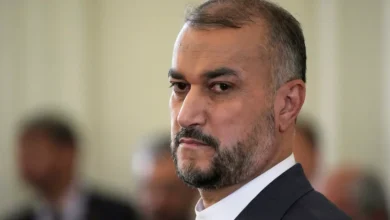
A day later, Iran’s Foreign Minister Abbas Araghchi stated laconically that Moscow’s military cooperation with Tehran was “good”.
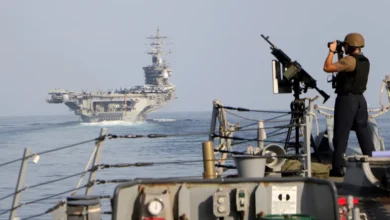
His words seemed to confirm earlier media reports that Russia is providing Iran with satellite and intelligence data on the locations of US warships and aircraft.
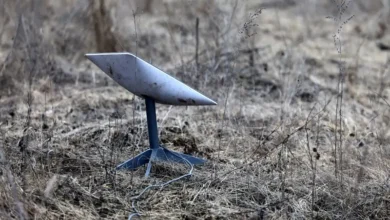
It may not sound like much, given the superiority of Western military satellites and Russia’s battlefield losses and communication problems after Elon Musk’s SpaceX company switched off smuggled Starlink satellite Internet terminals.
But data on US military assets Iran is receiving most likely comes from Liana, Moscow’s only fully functional system of spy satellites, according to an expert on Russia’s space programme and military.
Eyes in the sky
Russia also played a key role in the development of Iran’s space programme and its key satellite, the Khayyam.
Launched in 2022 from Russia’s Baikonur cosmodrome, the 650kg (1,430 pound) satellite orbits the Earth at 500 kilometres (310 miles) and has a resolution of one metre (3.3 feet).
Moscow “can, in theory, receive and process data from Iran’s optical imaging satellite and share data from its own several satellites”, Luzin said.
On Wednesday, Tehran claimed to have struck the Abraham Lincoln carrier with multiple cruise and ballistic missiles, but the Pentagon called the claim “pure fiction”.
On Sunday, Iranian media claimed that a “massive blaze” was caused by a strike on a US destroyer refuelling in the Indian Ocean.
Washington did not comment on that strike.
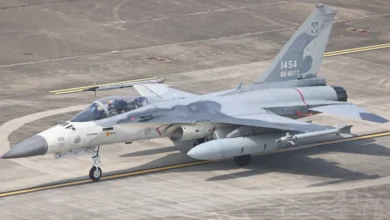
Russia has, for decades, supplied weaponry to Iran, including advanced air defence systems, trainer and fighter jets, helicopters, armoured vehicles and sniper rifles, worth billions of dollars.
Since Washington and Tel Aviv began their strikes on February 28, Russia has continued aiding Iran with “intelligence, data, experts and components” for weaponry, Lieutenant General Ihor Romanenko, former deputy chief of Ukraine’s general staff of armed forces, told Al Jazeera.
While Moscow and Tehran loudly proclaim their strategic partnership, they do not have a mutual defence clause, and Moscow has not intervened in the conflict directly.
But the arms supplies have been mutual. Since Russia’s 2022 invasion of Ukraine, Tehran has provided Moscow with ammunition and artillery shells, firearms and short-range ballistic missiles, helmets and flak jackets.
Drones with ‘comets’
And then there are the Shahed kamikaze drones – slow, noisy, yet cheap to manufacture – which have been launched on Ukrainian cities in swarms of dozens and then hundreds. Ukraine became so adept at bringing these down – now mass-producing cheap interceptor systems specifically to target Shaheds – that it is now providing its own know-how to Gulf states where US military assets have come under fire from Iran in recent weeks.
In the course of its war with Ukraine, Moscow has manufactured and modernised Shaheds, making them faster and deadlier, and equipping them with cameras, navigators and, occasionally, artificial intelligence modules.
And now, some of the upgrades have made their way back to Iran.
A Shahed drone with a pivotal Russian component launched by Iran-backed Hezbollah from southern Lebanon was able to hit a British airbase on Cyprus on March 1, the UK’s Times newspaper reported on March 7.
It reportedly contained Kometa-B (Comet B), a Russian-made satellite navigation module that also acts as an anti-jamming shield, making drones more resistant to interference.
Russia has also perfected the tactic of sending waves of real and decoy drones to exhaust and overwhelm Western-supplied air defence systems in Ukraine.
These days, the scheme helps Iran hit targets in the Gulf, Western officials say.
“I think no one will be surprised to believe that Putin’s hidden hand is behind some of the Iranian tactics and potentially some of their capabilities as well,” British Defence Secretary John Healey said on March 12 after Iranian drones struck a base used by Western forces in Erbil, northern Iraq.