Honduras votes for new president in poll overshadowed by Trump’s threats
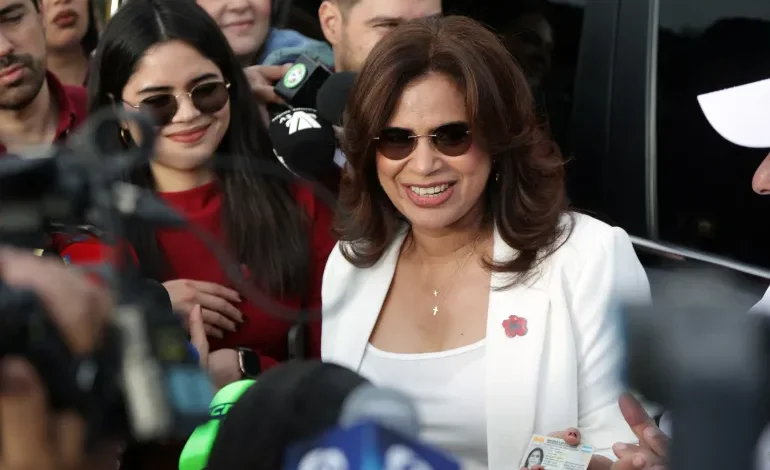
Hondurans have cast their ballots in an election to choose their next president, after a campaign dominated by allegations of fraud and threats from United States President Donald Trump.
Vote counting began on Sunday after polling was extended an hour beyond the original closing time in many locations to accommodate the remaining voters.
First results are expected late on Sunday night.
Most polls show a virtual tie between three of the five contenders: former Defence Minister Rixi Moncada of the governing leftist Liberty and Refoundation (LIBRE) party; former Tegucigalpa Mayor Nasry Asfura of the right-wing National Party; and television host Salvador Nasralla of the centrist Liberal Party.
Trump has backed Asfura, posting on social media that “if he doesn’t win, the United States will not be throwing good money after bad”.
Trump also said recently he would pardon the country’s former president, Juan Orlando Hernandez, a member of Asfura’s party, who is currently serving a 45-year US drug trafficking sentence.
It was unclear what impact Trump would have on the election, but it was the latest show of the US government’s willingness to directly involve itself in the region.
Trump’s warning also came at a time of already heightened tensions because of the US military buildup in the Caribbean and his threats against Venezuelan President Nicolas Maduro.
Accusations of fraud
The elections in Honduras, in which the 128 members of Congress, hundreds of mayors and thousands of other public officials will also be chosen, are taking place in a highly polarised climate, with the three top candidates accusing each other of plotting fraud.
Honduras’s Attorney General’s Office, aligned with the governing LIBRE party, has accused the opposition parties of planning to commit voter fraud, a claim they deny.
Prosecutors have opened an investigation into audio recordings that allegedly show a high-ranking National Party politician discussing plans with an unidentified military officer to influence the election.
The alleged recordings, which the National Party says were created using artificial intelligence, have become central to Moncada’s campaign.
The political tensions have contributed to a growing public distrust of the electoral authorities and the electoral process in general. There have also been delays in the provision of voting materials.
“We are hoping that there will be no fraud and that the elections will be peaceful,” said Jennifer Lopez, a 22-year-old law student in Tegucigalpa. “This would be a huge step forward for democracy in our country.”
Honduras, where six out of every 10 citizens live in poverty, experienced a coup in 2009, when an alliance of right-wing military figures, politicians and businessmen overthrew Manuel Zelaya, the husband of the current President Xiomara Castro.
In 2021, Honduran voters gave Castro a landslide victory, ending decades of governance by the National and Liberal parties.
The first woman to govern Honduras, Castro has increased public investment and social spending. The economy has grown moderately, while poverty and inequality have decreased, although both remain high. The International Monetary Fund (IMF) has praised her government’s prudent fiscal management.
Honduras’s security situation has also improved in recent years as homicides across the region continue to fall, but it still has Central America’s highest homicide rate.