BRICS wargames: Why they matter, why India opted out
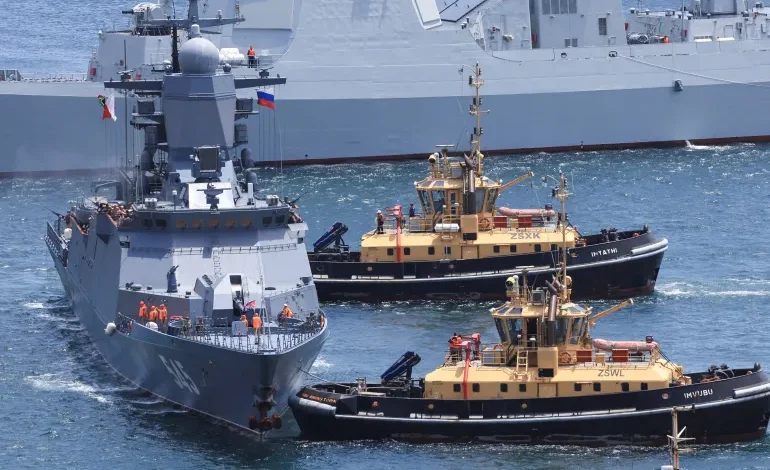
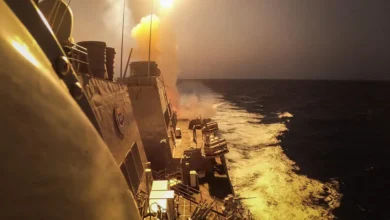
Joint naval drills involving several members of the BRICS bloc, including China, Russia and Iran, have kicked off near South Africa’s coast with South Africa describing the manoeuvres as a vital response to rising maritime tensions globally.
The weeklong Will for Peace 2026 exercises, which started on Saturday, are being led by China in Simon’s Town, where the Indian Ocean meets the Atlantic Ocean. They will include drills on rescue and maritime strike operations and technical exchanges, China’s Ministry of National Defence said.
Who is participating in the drills?
China and Iran sent destroyers, Russia and the United Arab Emirates sent corvettes and South Africa deployed a mid-sized frigate.
Chinese officials leading the opening ceremony on Saturday south of Cape Town said Brazil, Egypt, Indonesia and Ethiopia were joining the drills as observers.
Speaking at the ceremony, South Africa’s joint task force commander, Captain Nndwakhulu Thomas Thamaha, said the drills were more than a military exercise and a statement of intent among the BRICS group of nations.
The host country described this as a BRICS Plus operation aimed at ensuring “the safety of shipping and maritime economic activities”. BRICS Plus is an expansion that enables the geopolitical bloc to engage with and court additional countries beyond its core members.
South African officials said all members of the bloc were invited to the drills.
Iran joined the group in 2024. The bloc was simultaneously expanded to include Egypt, Ethiopia, Saudi Arabia and the UAE.
Why do the drills matter?
South Africa has previously carried out naval drills with China and Russia.
“It is a demonstration of our collective resolve to work together,” Thamaha said. “In an increasingly complex maritime environment, cooperation such as this is not an option. It is essential.”
The South African Department of Defence said in a statement that this year’s exercise “reflects the collective commitment of all participating navies to safeguard maritime trade routes, enhance shared operational procedures and deepen cooperation in support of peaceful maritime security initiatives”.
The ongoing exercises come amid heightened geopolitical tensions. They started just three days after the United States seized a Venezuela-linked Russian oil tanker in the North Atlantic, saying it had violated Western sanctions.
The seizure followed a US military operation that abducted President Nicolas Maduro from the capital, Caracas, with his wife, Cilia Flores and a pledge from US President Donald Trump to “run” Venezuela and exploit its vast oil reserves.
The Trump administration has also threatened military action against countries such as Cuba, Colombia and Iran and the semiautonomous Danish territory Greenland.