Blast kills seven people at hotel restaurant in Afghanistan’s capital Kabul

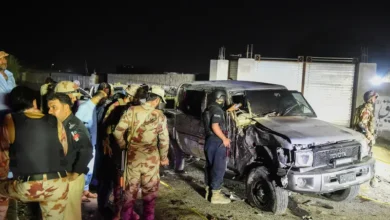
An explosion has torn through a Chinese-run restaurant in a hotel in a heavily guarded part of Afghanistan’s capital, killing a Chinese national and six Afghans and injuring several others including a child, officials said.
The restaurant hit by the blast on Monday is in the commercial Shahr-e-Naw neighbourhood of Kabul that includes office buildings, shopping complexes and embassies, police spokesperson Khalid Zadran said. The district is considered one of the safest in the city.
The Chinese noodle restaurant was jointly run by a Chinese Muslim, Abdul Majid, his wife, and an Afghan partner, Abdul Jabbar Mahmood, and served the Chinese Muslim community, Zadran said.
One Chinese national, identified as Ayub, and six Afghans were killed in the blast, which occurred near the kitchen, while several others were injured, Zadran added.
The Afghan branch of ISIL (ISIS) later claimed responsibility for Monday’s attack, saying in a statement that it was carried out by a suicide bomber.
ISIL’s Amaq news agency said the group had put Chinese citizens on its list of targets, citing “growing crimes by the Chinese government against Uighurs”.
Rights groups accuse Beijing of widespread abuses of Uighurs, a mainly Muslim ethnic minority group of about 10 million people who live in China’s far western Xinjiang region. Beijing denies any abuse and has accused Western countries of interference and peddling lies.
The Italian NGO Emergency said a medical facility it oversees in Kabul had received 20 people from the blast, seven of whom were dead when they arrived. The organisation said the casualty figures were “still provisional”.
“Twenty people have been received at EMERGENCY’s Surgical Centre in Kabul following an explosion this afternoon in the Shahr-e-Naw area, near the hospital. Among those received were seven people dead on arrival,” the NGO said in a statement.
It added that four women and a child were among the wounded.
Blasts in Kabul and across Afghanistan have been rarer since the Taliban returned to power after the United States withdrawal in 2021, but ISIL affiliates are still active in the country and carry out sporadic attacks.