Before You Ask Palestinians to Go to the Ballot Box… Expose the Occupation!
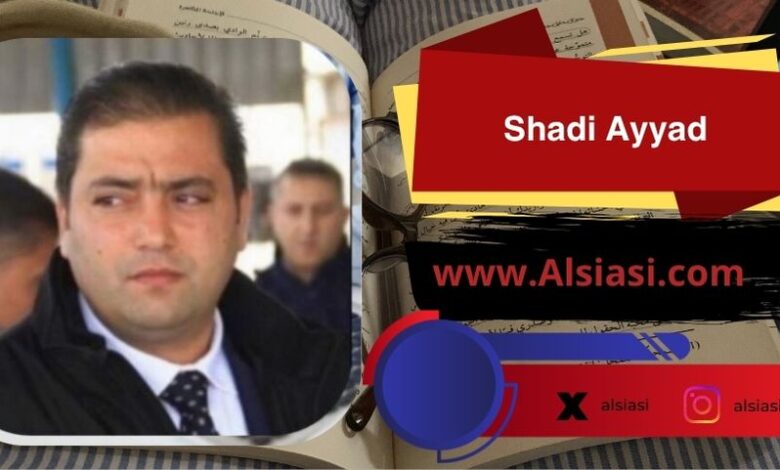
By Shadi Ayyad
By Shadi Ayyad
After reading the statement issued by the Foreign Ministers of Australia, Canada, France, and the United Kingdom concerning the postponement of the Palestinian elections, I felt compelled to clarify the reasons behind the Palestinian decision. Not to defend the postponement, nor to retreat from our people’s right to democracy, but to do justice to a truth that must not be obscured by diplomatic language.
We respect the positions of these friendly countries and appreciate their commitment to the Palestinian people’s right to choose their representatives. However, we disagree with their characterization of the decision as “regrettable” and with their call on President Mahmoud Abbas to reverse it, as though holding elections were simply a matter of political will, rather than a reality constrained by an occupation that tightens its grip on Palestinians, fragments their territory, and undermines the conditions necessary for exercising even their most basic political rights.
Yes, elections are a constitutional and national right, a long-overdue obligation, and a demand on which there is no disagreement. Nor do we deny the ministers’ observations regarding declining public confidence in institutions and the need for democratic renewal and accountability. On the contrary, we reaffirm that our commitment to democracy is neither a temporary political position nor a choice we abandon when circumstances become difficult.
But the question we must put to our friends is this: How can a people living under occupation be expected to exercise their democratic rights when the occupation itself places obstacles in the way of holding elections?
How can free and comprehensive elections be conducted in Jerusalem when the occupation refuses to allow the Central Elections Commission to carry out its work? How can Gaza’s participation be guaranteed amid the destruction, displacement, and fragmentation caused by the war? And how can we demand elections that meet international standards while limiting ourselves to merely calling upon the occupation not to obstruct them, without exerting genuine pressure to compel it to comply?
There is another equally important question that we must frankly put before our friends: Where does the international community’s commitment to democracy stand when the President of the Palestinian people is prevented from entering the United Nations headquarters to deliver his people’s address?
How can a president who is denied access to the international organization be expected to accomplish what would amount to a miracle: conducting free and comprehensive elections under the bayonets of occupation and the weight of restrictive decisions?
Are freedom of movement, respect for the political representation of peoples, and the protection of their right to make their voices heard in international forums not integral parts of the democratic system you defend?
The contradiction deserves serious reflection: Palestinians are asked to demonstrate their commitment to democracy, while their leadership is restricted even from accessing the international platform where the nations of the world gather. Meanwhile, the policies of the occupation and the decisions of the US administration that prevented the President’s entry are met with insufficient accountability and pressure.
Fairness demands that responsibility for obstructing Palestinian democratic life should not be placed solely on the Palestinians while the occupation remains beyond the reach of accountability.
Palestinians must not be placed in the position of the accused simply because they have been unable to exercise their rights, while those who prevent them from doing so remain outside the realm of political and moral accountability.
The postponement was a difficult decision, but it was taken under exceptionally complex circumstances, in which Palestinian land, institutions, and the very foundations of Palestinian political existence are subjected to immense pressure.
The decision did not represent an abandonment of democracy or a retreat from the people’s right to choose their leadership. Rather, it was taken in the absence of the conditions and guarantees necessary to hold genuine and comprehensive elections.
We are not pleased with the postponement. We do not celebrate it, nor do we regard it as a substitute for elections. However, we reject reducing the entire situation to a description of the decision as regrettable without questioning the circumstances that led to it.
There is a fundamental difference between a leadership that does not wish to hold elections and a leadership confronted with a reality that severely restricts the possibility of conducting them.
And if the international position maintains that Hamas can have no role in the future governance of Palestine, then what is required is a contribution to building a unified Palestinian political system that safeguards the national project and is governed by legitimacy, the rule of law, and the will of the people, rather than allowing such positions to remain merely conditions set out in diplomatic statements.
We value the four countries’ reaffirmation of their support for our people’s right to self-determination, and we thank them for their positions in support of democracy and reform.
But genuine friendship cannot be limited to expressions of regret. It must translate into an effective political stance that exposes the occupation, holds it responsible for obstructing Palestinian political life, and exerts pressure on it to halt the measures that undermine the prospects for establishing our independent state.
If you want free Palestinian elections, then make the freedom of Palestinians the focus of international pressure, rather than merely focusing on a date on the calendar.
And if you want a fair and transparent ballot, begin by confronting those who besiege the very land on which the ballot boxes are to be placed.
We remain firmly committed to democracy, to our people’s right to elect their leadership and hold it accountable, and to the necessity of political renewal that strengthens the legitimacy of our institutions.
Holding elections will remain a national obligation that we will continue working to fulfill once the genuine conditions and guarantees required for their conduct are in place.
What we ask of our friends is not to abandon their call for elections, but to complement it with a clear political position that does not equate the victim with the oppressor, does not demand of Palestinians what the occupation prevents them from achieving, and then simply expresses regret.
Palestine does not merely need those who lament the obstacles to its democracy. It needs those who confront the occupation that is suffocating it and defend its people’s right to vote, to govern themselves, and to live freely in their independent state.