Bangladeshi youth toppled Hasina. Now they could decide next prime minister
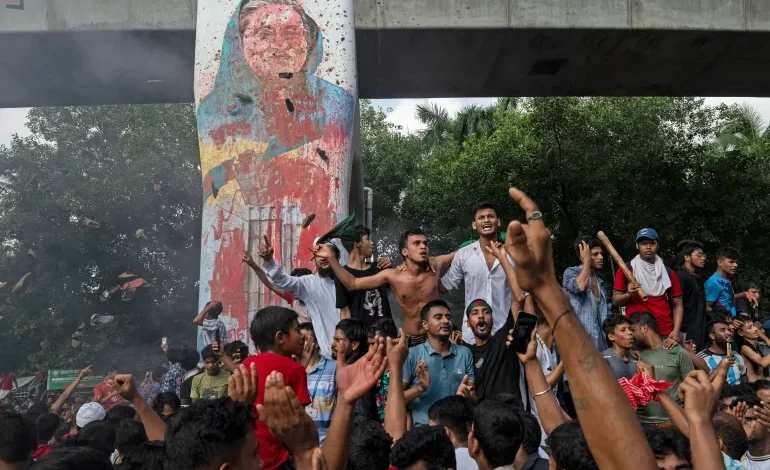
For most of his adult life, Rafiul Alam did not believe that voting was worth the walk to the polling station. He is 27, grew up in a middle-class neighbourhood of Dhaka, and became eligible to vote nearly a decade ago. He never did – not in Bangladesh’s national elections in 2018, nor in the 2024 vote.
“My vote had no real value,” he said.
Bangladesh is now heading for a national election on February 12, the first since the uprising. European Union observers have described the upcoming vote as the “biggest democratic process in 2026, anywhere”. And Alam plans to vote for the first time.
“I’m thrilled to exercise my lost right as a citizen,” he said.
He is not alone. Bangladesh has about 127 million registered voters, nearly 56 million of them between the ages of 18 and 37, according to the Election Commission. They constitute about 44 percent of the electorate, and are a demographic widely seen as the driving force behind Hasina’s downfall.
“Practically speaking, anyone who turned 18 after the 2008 parliamentary election has never had the chance to vote in a competitive poll,” said Humayun Kabir, director general of the Election Commission’s national identity registration wing.
“That means people who have been unable to vote for the last 17 years are now in their mid-30s… and especially eager to cast their ballots.”
This eagerness comes after three post-2008 elections that “were not considered credible”, Ivars Ijabs, the EU’s chief observer, said.
The 2014 polls saw a mass opposition boycott, and dozens of seats where Hasina’s Awami League party faced no contest. The 2018 vote, though contested, became widely known as the “night’s vote”, after allegations that ballot boxes had been filled before polling day.
The 2024 election, meanwhile, again went ahead amid a major boycott by opposition parties, with critics arguing that conditions for a “fair contest did not exist”.
A pivotal electorate
Fragmented by class, geography, religion and experience, Bangladesh’s young voters are united less by ideology than by a shared suspicion of institutions, which, for most of their adult lives, have failed to represent them, say analysts.
“There is a significant age gap between pre–Hasina regime voters and new voters,” said Fahmidul Haq, a writer and faculty member at Bard College in New York and a former professor at the University of Dhaka. “Because of the nature of elections under the Hasina administration, we do not know the actual level of public acceptance of the political parties.”
As a result, he said, the current cohort of first-time voters will play a decisive role in shaping the future direction of politics in Bangladesh. Haq described the upcoming election as a psychological release valve after years of repression, during which young people “could not hold their representatives accountable; rather, those representatives appeared to them as oppressors”.
A fraught alliance
With the Awami League barred from political activity by the interim Yunus government, the election has turned into a battle between two rival coalitions: one led by the Bangladesh Nationalist Party (BNP), and the other by Jamaat-e-Islami.
For many young protesters, this outcome cuts against the spirit of 2024.
Pantho Saha, a 22-year-old student from the Cumilla district in the country’s southeast, said many with whom he protested in 2024 had hoped the leaders who emerged from the uprising would break what he described as the “same old dynastic” patterns.
That expectation began to fracture, he said, when the National Citizen Party (NCP), a youth-led formation born out of the protest movement, moved towards an electoral alliance with Jamaat-e-Islami. A far-right Islamist party, the Jamaat’s opposition to Bangladesh’s independence during the 1971 war has long limited its mainstream appeal.
“Historically, those who rule us come to power with big promises,” Saha said. “But after a few years, power blinds them, and the same abuses repeat.”
The NCP, he said, initially felt different. “We thought of the NCP as a beacon of light. But seeing it align with a party that carries so much historical baggage made many of us lose hope.”
Fatema, who led the protests alongside several figures who later founded the NCP, said the party’s alignment with the Jamaat risks shrinking the significance of the July 2024 uprising. “Over time, it could seriously damage how this uprising is remembered in history,” he warned.
The NCP positioned itself at its launch as a generational alternative to Bangladesh’s traditional parties, promising what it called a “new political settlement” rooted in the 2024 July movement. But as talks advanced over the electoral alliance with Jamaat-e-Islami, the party saw a wave of resignations, including from several senior figures and women leaders who had been expected to contest parliamentary seats. Many of them have since announced independent bids, saying the party was “drifting from its founding commitments”.