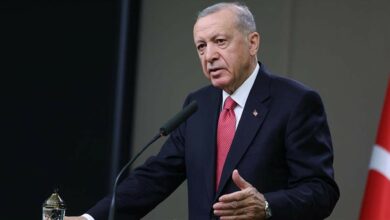
Ankara Exploits the Iranian Crisis to Restore Ottoman Glory
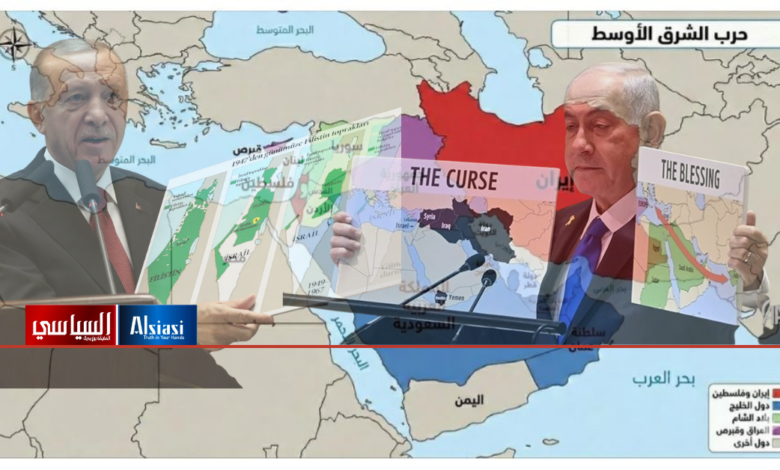
An old Arab proverb says: “Everyone sings for their own Layla,” referring to how each side exploits a crisis in pursuit of its own interests. This perfectly reflects what Turkey is doing amid the American-Israeli war against Iran and the attempts to drag Arab countries into the battlefield.
While Washington and Tel Aviv are working to pull the Gulf states to their side in the war — something that contradicts the interests of those countries and threatens the efforts they are making to stay away from the frontlines because of the security, political, and economic damage involved — Turkey is simultaneously operating on another front, though far from the noise of the Strait of Hormuz, explosions, and airstrikes.
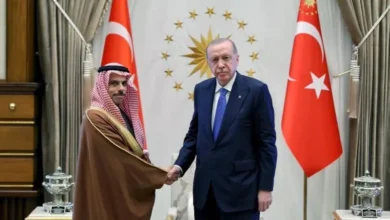
Turkey is playing on the card of Arab hostility toward both Iran and Israel, as well as the historical threat posed by both sides. Ankara is trying to exploit the situation of all parties and the atmosphere of caution among them by casting its fishing line into the turbulent lake of events in order to pull in all, or most, of the gains and emerge with the biggest prize.
The Turkish plan is based on establishing an Arab-Islamic alliance aimed at responding to attacks by Iranian proxy groups such as the Houthis, Iraqi militias, and Hezbollah, eliminating the threat posed by the ideology of the Iranian Revolution, confronting any Israeli aggression, and countering Israel’s expansionist ambitions based on the concept of “from the Euphrates to the Nile,” along with its economic expansion and technological, military, and security dominance.
However, the Turkish vision ultimately seeks to restore the glory and expansion of the Ottoman Empire, an ambition Ankara has long promoted. This time, however, it would not take the form of traditional colonialism, but rather economic and security dominance combined with political dependency, allowing Turkey to become the leader of the region after pushing Iran and Israel away from the top of the regional power structure.
The Turks insist that their objective is to deter Israel, stop its expansion and ambitions, and protect the region. It appears that the reckless course of American policy, along with President Donald Trump’s insistence on forcing regional countries to sign peace agreements with Israel without requiring Tel Aviv to make any concessions, is strengthening Ankara’s position. Turkey also needs Gulf financial support to rapidly build such an alliance.
Turkey’s goal in creating this alliance is to support its confrontation with Israel in Syria, where competition and conflict between Turkey and Israel have intensified following the fall of the Assad regime — an event backed by the West in which Turkey played a major role. Israel quickly moved to impose its influence over the new Syrian order by threatening Syrian security and attempting to divide the country, something that directly conflicts with Turkey’s own interests and vision.
Despite the growing Turkish-Israeli trade relations, and despite Ankara’s assistance in exporting Israeli oil and gas taken from Palestinian land through the Turkish port of Ceyhan, Turkey’s interests depend on maintaining tensions between the Arab states, Iran, and Israel. Ankara benefits from keeping these relations strained and from sustaining Arab fears regarding Israeli expansion in the West Bank and the Israeli threat to a future Palestinian state.
Arab countries do not need any outside power to lead an alliance in the region. With their financial and military capabilities and accumulated expertise, they are capable of establishing an independent alliance that would be far better than dependence on America, Israel, or Turkey. It is also important for these countries to build bridges with major world powers that respect their interests and independence, away from Ottoman ambitions, Israeli expansionism, and American pressure and blackmail. Those countries have already paid a heavy price after being classified alongside Israel and the United States in the recent war against Iran.