America deliberately harms the Bushehr reactor and risks plunging the region into a nuclear disaster
Reports and social media activists have spoken about warnings issued by Kuwaiti authorities to residents, announcing the presence of chemical leaks coming from Iran. They called on people to exercise caution and issued a set of preventive instructions.
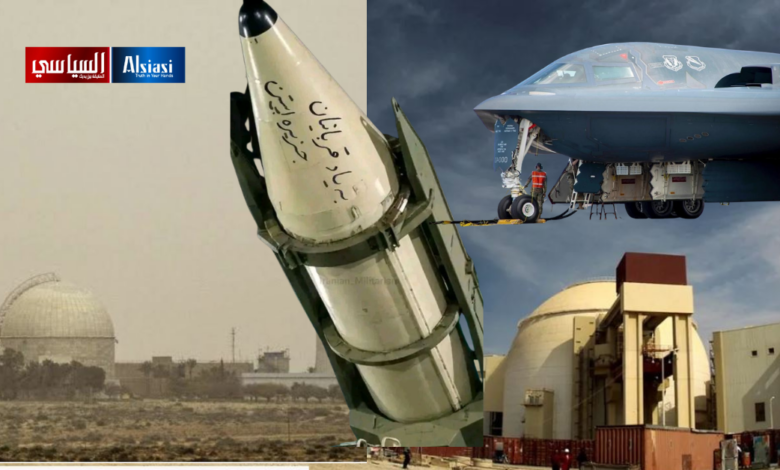
These warnings coincided with a statement issued by the International Atomic Energy Agency, which reported that “a projectile struck the vicinity of Iran’s Bushehr nuclear power plant at around 9 p.m. on Tuesday, March 24.”
In the current war, threats and targeting of the country’s nuclear facilities have resurfaced strongly, as any powerful strike on them could result in a serious radiological disaster in Iran and across the entire region.
Reports indicate a deterioration of the situation at Iran’s Bushehr nuclear plant after it was hit by a projectile on Tuesday. Although the “Atomic Agency” announced that no damage occurred to the plant, it confirmed that it is a civilian facility operating since 2011 under international supervision, with Russia supplying it with fuel in accordance with international agreements.
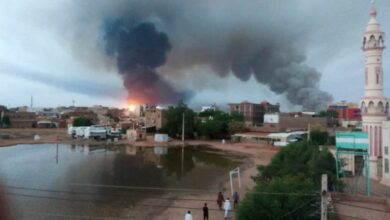
The American strike on Iran’s most well-known nuclear facility is not the first. On March 17 of this year, U.S. and Israeli airstrikes destroyed a supply and support station for the reactor located about 100 meters away, causing a massive fire. This suggests that the act is intentional and coordinated, aimed at intimidation and harming residents and surrounding areas. However, the damage would not remain limited—it could spread through the air over tens of thousands of kilometers, reaching Gulf countries.
On the other hand, if strikes and provocations against the reactor continue, Iran cannot stand idly by. It also appears capable of reaching Israel’s Dimona reactor, which it has approached several times. According to reports, this reactor is old and deteriorating and lacks safety systems. Any leakage from it would not only harm nearby residents but could trigger an unprecedented environmental and humanitarian catastrophe extending to neighboring countries, resulting in tens of civilian casualties—similar to what could occur in areas surrounding Iran’s Bushehr reactor.
“Bushehr” is considered a civilian reactor fully subject to oversight by the International Atomic Energy Agency. It does not conduct uranium enrichment operations; instead, Russia supplies it with low-enriched fuel not exceeding 3.67%, and retrieves the spent fuel after its cycle for reprocessing in Russia—an arrangement specifically designed to reduce nuclear proliferation risks.
If a nuclear fuel explosion were to occur due to bombs or missiles, or if the reactor core were to melt down due to lack of cooling from Gulf waters, materials such as cesium-137 and iodine-131 would leak directly into the Gulf waters, contaminating them. This would threaten desalination plants on which countries in the region fully depend, paralyze navigation through the Strait of Hormuz, and cause an environmental and economic disaster affecting Gulf waters, international shipping, and all neighboring countries.
The United States bears responsibility for any consequences resulting from this potential disaster, as it currently controls the region through its air dominance and can control any projectile reaching it. It is asserted that it is deliberately targeting the internationally monitored nuclear facility, where no prohibited materials can exist.