Doha Film Festival Announces Ajyal Film Competition Line Up, Honours the Power of Youth and Cinema
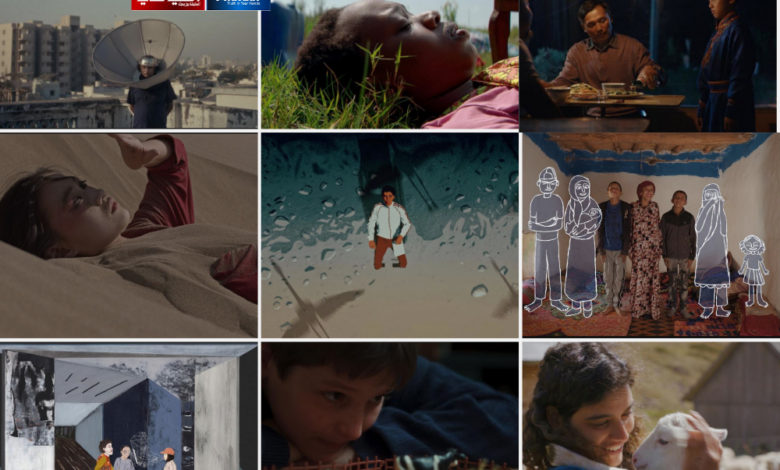
- Five feature films and 12 short films from around the world invite young audiences to explore new perspectives, challenge assumptions and discover the transformative power of storytelling
- Over 100 youth aged 16-25 will shape cultural conversations through distinct perspectives
Doha, Qatar; 8 November 2026: Doha Film Festival (DFF), presented by Doha Film Institute (DFI), today announced the selection for the 2026 Ajyal Film Competition, bringing together 17 films that celebrate the imagination, curiosity and creative spirit of young people.
Featuring five feature films and 12 short films from a diverse range of international filmmakers, the selection reflects Ajyal’s enduring commitment to empowering young minds through cinema, encouraging meaningful dialogue and fostering a deeper understanding of the world and one another.
At the heart of the competition is the Ajyal Jury of young people aged 16–25 who engage in conversations about the films and select the winners. Youthful perspectives, questions and interpretations are central to the Ajyal programme, affirming the important role that the new generation has in shaping the cultural conversations of today.
Fatma Hassan Alremaihi, CEO of Doha Film Institute and Festival Director of DFF, said: “Young people are not simply the audience of tomorrow; they are voices, visionaries and storytellers shaping our world today. This is evident in the growth of the Ajyal jurors who are now curators and moderators, sharing the power of cinema to create a space to celebrate their individuality and affirm that their voices matter. They show us that the invitation of Ajyal to build a more compassionate future can only be achieved when led by youthful energy.”
Ajyal Feature Film Competition
Feature Film Competition brings together five distinctive cinematic voices exploring the complexities of growing up, the search for belonging and the relationships that shape our lives.
Ben’Imana (Rwanda/Gabon/France/Norway/Qatar) by Marie-Clémentine Dusabejambo, winner of the Caméra d’Or at the Cannes Film Festival 2026, follows Vénéranda, a genocide survivor, who leads dialogue between victims and the families of perpetrators, helping others rebuild their lives and look towards the future.
Gabin (France/Germany/Switzerland) by Maxence Voiseux is about Gabin who seems destined to take over his father’s butcher shop, but his dreams lie elsewhere; training a contest cow, breeding dogs and saving his mother’s struggling farm.
Out of School (Morocco/Denmark) by Hind Bensari, set in a remote village in Morocco’s Atlas Mountains with no secondary school, 12-year-old Mohamed had to leave his education behind and dreams of finding work in the city to lift his family out of poverty.
Summer Meadow (Belgium/France) by Naël Khleifi and Lisa Debauche is about Hana, a young Lebanese woman training as a shepherdess, leads a solitary life with her flock, far from the noise of the world and the war in her native country.
We Are Aliens (Japan/France) by Kohei Kadowaki follows third-grader Tsubasa who befriends Gyotaro, an odd, funny boy who keeps a piece of meteorite and might just be an alien. They become inseparable, until Tsubasa quietly lets his friend go.
Ajyal Short Film Competition
The short film selection brings together 12 standout works that reflect the diversity of young people’s experiences and the many ways cinema can illuminate the world around us.
As a Cure (China/UK) by Dorothea Sing Zhang: a girl searches the dunes for the identity card she needs to enrol at the Beijing Opera Academy. It has been hidden from her.
Boomerang Atomic (Algeria/France/Japan/USA) by Rachid Bouchareb: On 13 February 1960, as the countdown ended in the Algerian desert, France became a nuclear power. Rachid Bouchareb’s documentary traces a fallout that has never ended.
Boundaries (South Korea) by Seun Yee: a passenger on a bus reclines their seat too far. This small action shifts the balance of the shared space, sending everyone on board in an unexpected direction.
Intersecting Memory (France/Palestine) by Shayma’ Awawdeh: Hebron during the Second Intifada, where fear, siege and death are ordinary. Childhood reminiscence surfaces and meets the memory of a city, asking what is kept and what is lost.
Nobody Said Anything (Serbia/France/Slovenia/Croatia) by Tamara Todorović: As dinner waits, Katarina is summoned to collect her daughter Mina from a friend’s house, where the girls must account for what happened to a kitten.
Prisoner of Love (Lebanon/USA) by Yumna Marwan: In a Beirut refugee camp after the Israeli bombardment, a young first responder passes the night with cards and friends, while the memory of the dead stays with him.
The Bird’s Placebo (Tunisia) by Rami Jarboui: In a marginalised neighbourhood of Tunis, Yahya, a young man in a wheelchair, dreams of crossing the Mediterranean, until a rare bird sets him on a new path.
The Kalgan Horse (China/USA) by Zichen Zhao: In Kalgan, where farmland meets the Mongolian steppe, ten-year-old Amu sets out to save his beloved horse, Aban, from the gelding his father insists must be done.
Threads of Support (Uzbekistan/Qatar) by Olya Korsun: In Uzbekistan’s Fergana Valley, families who kept hand-woven silk alive through decades of Soviet bans now face a flood of cheap printed copies.
Typhoon Mambo (Switzerland/France/Thailand) by Domenico Singha Pedroli: Rusmee keeps talking to her dead husband, who now exists as an AI chatbot. Then Fa arrives, the woman who cared for him, carrying memories the house has not released.
Vegetare (Spain) by Adrià Expòsit-Goy: As climate collapse unsettles the forest, a beech tree suffering from a strange form of anorexia carves a diary into its own bark, searching for a way to let go.
We Were Here (India) by Pranav Bhasin: In a sleepy old Indian town, convinced that machines are replacing them, three retired men threaten to take over the jobs of household appliances.
Through the Ajyal Film Competition, DFF continues to champion cinema as a powerful platform for young people to engage in cultural exchange, critical thinking and creative discovery.
Key Partners of Doha Film Festival include Katara, Media City Qatar I Film Committee and Visit Qatar. Taking place from 19–27 November 2026, Doha Film Festival brings together filmmakers, audiences and industry voices from the region and beyond to honour original storytelling and important voices in film. For more information, visit www.dohafilm.com.