As aid situation worsens, displaced Sudanese worry about warnings of famine
The sound of gunfire forced 50-year-old Aisha Adam to flee her home in the al-Kalakla neighbourhood of Khartoum days after war erupted in Sudan between the Sudanese Armed Forces (SAF) and the paramilitary Rapid Support Forces (RSF) on April 15, 2023.
She went to the neighbouring city of Omdurman, but fighting followed her and in May 2023, Adam had to find a new refuge. It brought her to a camp for internally displaced people (IDPs) in Port Sudan, on the country’s Red Sea coast, where she lives with her orphaned grandson and nephew.
“Amid the clashes, I left with my grandson for the bus station, intending to travel to Wad Madani in Gezira state, south of Khartoum. But I found a bus heading to Port Sudan and boarded it, even though all I knew about the city was that it was safe,” she told Al Jazeera.
The fighting between the SAF and the RSF has killed as many as 200,000 people, according to aid workers. The war has also displaced 13 million people and led to famine in parts of the country.
After Adam was forced to move to Port Sudan, she initially stayed at a shelter for IDPs in the centre of the city. In June, she and others were relocated to a displacement centre on the outskirts of the city.
Accommodation was allocated according to household size. Adam was given a tent to share with the two children under her care, and shared a boundary with two other families.
“At the first shelter, I received some assistance from organisations, other agencies and even ordinary people. But things are different here. The aid we receive has decreased significantly, so I had to try to find work to avoid starving to death,” she said.
Adam’s struggle to feed the two children comes as Sudan faces deepening food shortages. In a joint statement released on October 27, the United States Department of State warned of the deterioration in food availability and the risk of famine in the coming months.
“Sudan is experiencing an alarming deterioration in its food security. The risk of famine in the coming months, as warned by the Integrated Food Security Phase Classification, needs urgent action,” the statement said.
Fatima is experiencing the real-life consequences highlighted in the report, as finding food becomes a daily struggle. Humanitarian assistance over the past six months has been limited, and she recalls receiving aid on only three occasions. Once, she received 550,000 Sudanese pounds ($59.13) in cash. Another time, she was given 12kg of flour. At the last distribution, she received personal hygiene supplies for women.
“I have no choice but to work. There is no one I can rely on. My two sons are missing, and I do not know where they are, while my other son died before the war began,” she said.
Adam leaves her accommodation early in the morning and heads to a nearby market, where she makes and sells zalabia, a traditional Sudanese fried pastry, alongside tea and coffee. Some days she makes a profit; on others, she loses money.
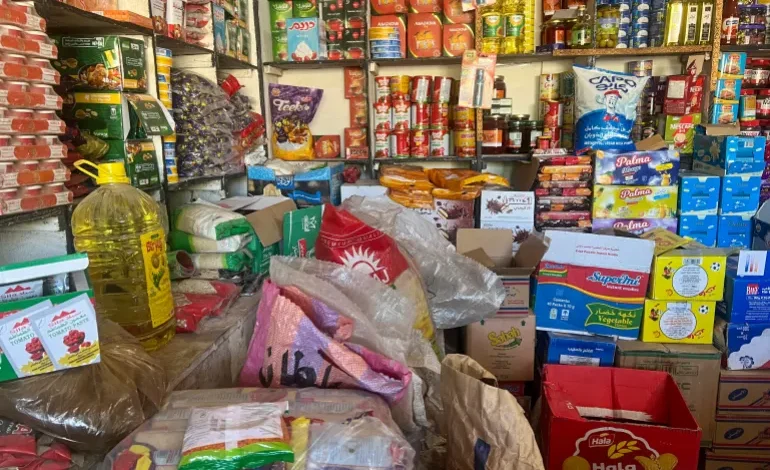
“I do not know how to calculate my profit. But as soon as I finish selling the zalabia, I go to buy the ingredients … for the next day: 3kg of flour for 21,000 pounds ($2.25), 2 litres of oil for 22,000 pounds ($2.36) and three bags of charcoal for 9,000 pounds ($0.97),” she told Al Jazeera.
Adam says the money left after buying these supplies is often insufficient to provide a meal for herself and the two children in her care. A kilogramme of lentils, one of the cheapest food items available to her, costs 16,000 pounds ($1.72). Meat is no longer on her shopping list, and her diet now consists mainly of lentils and rice.
“Fortunately, aid organisations have been providing water for the past five days. Before that, I used to buy 18 litres for 1,500 pounds ($0.16). Sometimes I did not have the money and had to borrow it,” she said.