CENTCOM chief visits Hormuz Strait, says US helped export 1.5 billion barrels of oil
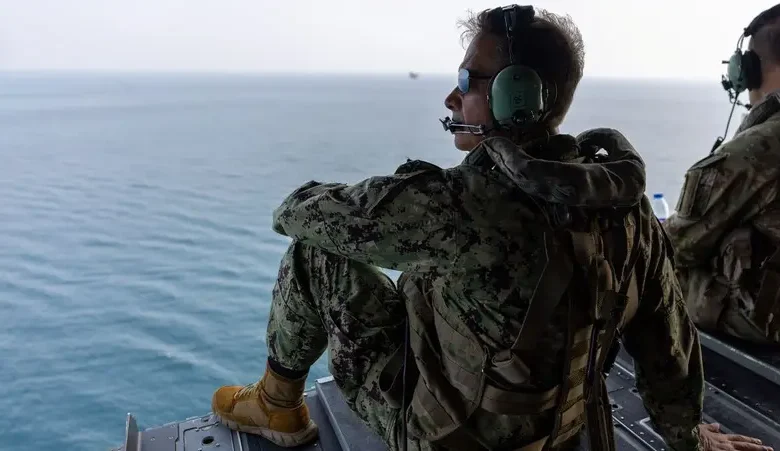
The commander of US Central Command (CENTCOM), Admiral Brad Cooper, visited the Strait of Hormuz on Sunday as the US military announced it had helped regional partners export more than 1.5 billion barrels of crude oil since the summer, despite continued tensions with Iran.
In a statement posted on X, CENTCOM said Cooper flew over the strategic waterway aboard a US Army CH-47 Chinook helicopter to assess the operational environment.
More than 3,000 commercial vessels have successfully transited the Strait of Hormuz with support from US forces over the past six months, according to CENTCOM.
“We continue to stand shoulder to shoulder with our Gulf partners and the shipping industry,” Cooper said. “This visit underscores our strong commitment to continued freedom of navigation through the Strait of Hormuz.”
CENTCOM said the visit followed a US military operation to clear international shipping lanes in the strait of sea mines it said had been laid by Iran’s Revolutionary Guard Corps (IRGC).
During the visit, Cooper met US service members involved in the mine clearance operation and thanked them for their efforts.
“Today, primary transit routes in the Strait of Hormuz remain free and clear of Iranian sea mines thanks to incredible efforts by our people,” Cooper said.
“We remain intensely focused on keeping commercial traffic flowing as we work with our teammates in the US interagency, Gulf Cooperation Council, and shipping industry.”
CENTCOM said more than 95 percent of vessels navigating the Strait of Hormuz had passed through safely in recent months, despite what it described as continued IRGC aggression.
The command also asserted that the United States and its regional partners maintained control of the international waterway.
The Strait of Hormuz, which connects the Gulf to the Gulf of Oman and the Arabian Sea, is one of the world’s most important maritime chokepoints for oil shipments.
Iran has claimed control over the strait since the outbreak of its conflict with the United States and Israel earlier this year and has repeatedly targeted vessels attempting to transit without its authorization.
Washington has opposed Tehran’s restrictions on maritime traffic and maintained a naval counter-blockade on Iranian ports.
The latest CENTCOM announcement comes amid renewed concerns over a potential escalation between Washington and Tehran, despite an April 8 ceasefire that brought an end to the most intense fighting.
US President Donald Trump said Friday that Washington could launch another military operation against Iran, while Iranian Foreign Minister Abbas Araghchi warned Sunday that renewed fighting would not alter Tehran’s positions.