15 Films from Four Continents Set for Doha Film Festival’s 2026 International Feature Competition
- Line-up includes 11 films supported by Doha Film Institute, with seven directed by women
- 13 Middle East and North Africa Premieres and 1 World Premiere included in the selection of internationally acclaimed titles competing for US$185,000 in Awards
Doha, Qatar; 08 October 2026: Doha Film Festival (DFF) today announced the 15 film line-up of world cinema titles for its 2026 International Feature Film Competition, featuring bold and distinctive voices from across the Arab world, Asia, Africa, Europe and the Americas.
Eleven films in the competition were supported through Doha Film Institute’s Grants programme, while seven are directed by women. The selection reflects the festival’s commitment to supporting important voices in independent cinema, with particular emphasis on stories from underrepresented regions, and includes films recognised at some of the world’s leading festivals.
Fatma Hassan Alremaihi, CEO of Doha Film Institute and Director of DFF, said: “Cinema has the power to carry voices across borders and create connections where distance and difference might otherwise divide us. Doha Film Festival was created to give those voices a home, particularly filmmakers who challenge conventions to bring unheard stories to the screen and demonstrate the possibilities of independent cinema.
“This year’s features competition reflects great ambition. The 15 films from across the world are united by the courage, imagination and urgency of their filmmakers. Each has travelled a remarkable journey, and it is deeply meaningful that Doha is a part of that journey, ensuring that these powerful works are seen, shared and remembered.”
Four Palestinian films in the competition, reflect the strength and range of contemporary Palestinian filmmaking. Thirteen in Gaza (Palestine/Qatar), by Hosam Abu Dan, follows a motherless thirteen-year-old coming of age in a Gaza displacement camp without privacy or protection. Shot entirely in Gaza, the film won the NETPAC Award at the Toronto International Film Festival in September.
Sama (Palestine/France/Qatar), by Rabab Khamis, will have its world premiere at the festival. The documentary follows ten-year-old Sama, who collects plastic and cardboard in Deir al-Balah to sell as fuel and help sustain her family.
In Conversation with the Sea (Palestine/Netherlands/KSA/Qatar), by Muayad Alayan, a Palestinian man in Jerusalem is ordered by an Israeli court to pay a large social security debt on behalf of his son, who drowned in the Red Sea more than 20 years ago — or so he was told.
Revolutionaries Never Die (Palestine/Belgium/Qatar), by Mohanad Yaqubi, is a response to the final email of Lebanese filmmaker Jocelyne Saab, who invited Yaqubi to collaborate in October 2018 and died three months later. Built from 113 reels of film Saab preserved throughout her life, the film won the Special Jury Prize in the Filmmakers of the Present competition at Locarno.
Other titles from the Arab world include Concrete Land (Jordan/Palestine) by Asmahan Bkerat follows an Afro-Palestinian Bedouin family on the outskirts of Amman as luxury villas close in around them. Filmed over eight years, the filmmaker’s debut feature premiered in the Semaine de la Critique at Locarno.
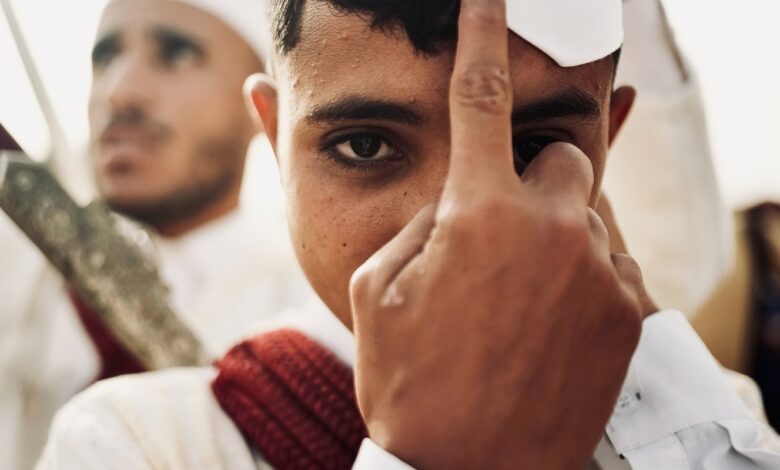
In Bardi (Morocco/France/USA/Qatar), by Tala Hadid, farmers and workers in central Morocco become warriors and princes through Tbourida, a centuries-old equestrian tradition. The film had its world premiere as the centrepiece of the Currents section at the New York Film Festival.
The Station (Yemen/Jordan/France/Germany/Netherlands/Norway/Qatar), the debut feature by Yemeni-Scottish filmmaker Sara Ishaq unfolds inside a women-only petrol station in war-torn Yemen — a rare sanctuary where women gather for fuel, conversation and moments of respite from the realities surrounding them. When Layal’s younger brother faces enlistment, she is forced to reconnect with her estranged sister to save him.
Two films in the competition represent sub-Saharan Africa. In House of the Wind (Cameroon/France/Belgium/Benin/KSA/Qatar), director Auguste Bernard Kouemo Yanghu follows an 80-year-old woman in Yaoundé who builds a house in the hope of bringing her children home from the West. The film won the Lion of the Future for a Debut Film and the Special Orizzonti Jury Prize at Venice in September.
My Semba (Angola/Qatar), by Hugo Salvaterra, follows three orphaned siblings in Luanda who fight for dignity through faith, fury and verse. The film won the Feature Film Competition Award at the International Film Festival Innsbruck.
Three films from Asia include: 9 Temples to Heaven (Thailand/Singapore/France/Norway/China/HonkKong/Indonesia/Qatar), by Sompot Chidgasornpongse, which follows a family visiting nine temples in a single day in the hope of keeping their grandmother alive. The film won Best Director and Best Actor in the Asian New Talent Award at the Shanghai International Film Festival and is Thailand’s submission for the 99th Academy Awards.
In A Girl Unknown (China/France), Zou Jing follows a girl abandoned at birth who passes between three families — and three names — in 1990s China. The debut feature won the FIPRESCI Prize in Critics’ Week at Cannes.
Filipiñana (Singapore/UK/Philippines/France/Netherlands/Qatar), by Rafael Manuel, follows a teenage tee-girl at a Manila country club who begins to uncover the violence beneath its manicured lawns. The film won the World Cinema Dramatic Special Jury Award for Creative Vision at Sundance and is Philippines submission for the 99th Academy Awards.
Films from the Americas and Europe include: The Meltdown (Chile/USA/Spain/Mexico), by director Manuela Martelli, who returns to post-dictatorship Chile in 1992, where a nine-year-old girl’s friend disappears near her grandparents’ ski hotel. The film is Chile’s submission for the 99th Academy Awards.
The Illusion of an Everlasting Summer (USA/Argentina), by Alessandra Sanguinetti, follows two cousins on the Argentine Pampas through the photographer’s lens over 25 years. The film won the Golden Leopard in the Filmmakers of the Present competition at Locarno.
Tin Castle (Ireland/France), by Alexander Murphy follows an Irish traveller family, two parents and ten children, threatened with eviction as they fight to preserve their way of life in an old caravan.
The International Feature Film Competition invites narrative and documentary features, for their Middle East and North Africa premieres. A jury of five international film professionals will recognise the Best Narrative Award (US$75,000); Best Documentary Award (US$50,000); Best Artistic Achievement Award: (US$45,000) and Best Performance Award (US$15,000). International Federation of Film Critics (FIPRESCI) joins DFF 2026 with a three-member jury to award its prize to a film considered to make the most significant achievement in the competition.
Key Partners of Doha Film Festival include Katara, Media City Qatar I Film Committee and Visit Qatar. Taking place from 19–27 November 2026, Doha Film Festival brings together filmmakers, audiences and industry voices from the region and beyond to honour original storytelling and important voices in film. For more information, visit www.dohafilm.com.