US military withdrawal from Iraq closes one chapter, opens questions over what comes next
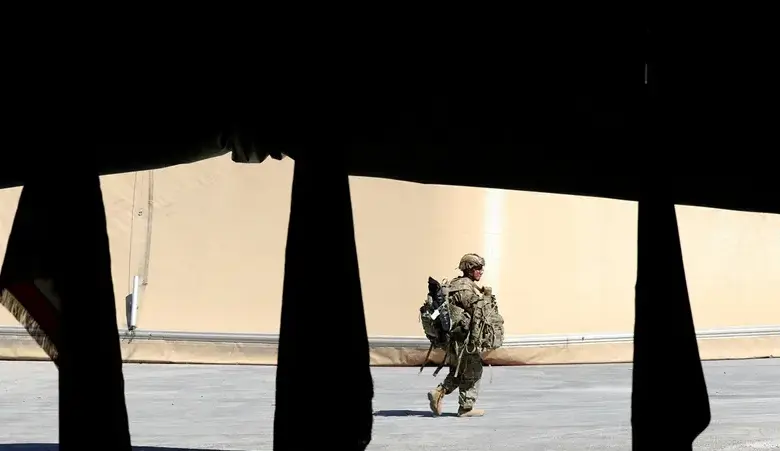
More than 20 years after the US invaded Iraq and a decade after American forces returned to fight ISIS, Washington is ending its latest military mission there, closing one chapter of a long and unsettled US presence while leaving the future of the relationship with Baghdad less certain.
US Central Command said American forces and equipment departed Erbil Air Base on Sept. 30, marking the end of the Operation Inherent Resolve mission in Iraq. The US-led task force is now headquartered in Jordan, while American forces continue counter-ISIS operations in Syria.
Erbil had served as the coalition’s main operational hub in Iraq and hosted most of the roughly 1,500 American and Coalition troops supporting counter-ISIS operations.
US President Donald Trump said Wednesday that he was pleased to announce that “the last American Forces are leaving Iraq!”
Trump called it a “Great Day for America,” while heaping praise on Iraq’s prime minister, Ali al-Zaidi.
“We came to fight a caliphate. There is no longer a caliphate. We are going home!” he said.
CENTCOM says Iraqi forces are now capable of handling the threat without the coalition presence that has operated in the country since 2014.
“Because of your grit, sacrifice and professionalism, ISIS no longer poses a systemic threat to Iraq’s national security and Iraqi security forces, including the Peshmerga and other Iraqi Kurdistan Region security forces, now possess the capacity, leadership, and operational independence to unilaterally manage threats to their homeland,” CENTCOM commander Adm. Brad Cooper said.
Why the timing matters
The departure comes amid a broader regional conflict involving Iran, yet Washington and Baghdad proceeded with a withdrawal that had been negotiated well before the current crisis.
“That the departure proceeded along the original timeline amidst the current conflict demonstrates the extent to which the withdrawal is disconnected from broader regional dynamics and is more driven by a desire to reduce US military engagement in the Middle East,” Victoria Taylor, a former US deputy assistant secretary of state for Iraq and Iran, told Al Arabiya English.
Dana Stroul, a former deputy assistant secretary of defense for the Middle East, points to a different significance of Washington adhering to the timeline.
“The US is fulfilling a commitment it made two years ago to withdraw the forces it sent to Iraq at the request of Baghdad when ISIS seized vast swathes of Iraqi territory more than a decade ago. This signals that the US keeps its commitments to its partners,” Stroul told Al Arabiya English.
Stroul, now at The Washington Institute for Near East Policy, also contrasted the US withdrawal with Iran’s continued support for armed groups across the region, despite calls from Iraq, Lebanon and Syria for Tehran to respect their sovereignty.
What comes next?
The end of Operation Inherent Resolve does not formally end US security cooperation with Baghdad. The agreement envisioned a possible transition from the coalition mission to a bilateral defense relationship, but what that partnership will entail remains undefined.
Taylor, now director of the Iraq Initiative at the Atlantic Council, said the Trump administration has considerable flexibility to determine the scope of future cooperation. She pointed to the administration’s decision this spring to briefly pause security cooperation as an indication that Washington could reconsider those ties if dissatisfied with progress on priorities such as militia disarmament.
Stroul said the door also remains open to renewed American military assistance if circumstances change. If the Iraqi government requests US military support in the future, she said, Washington could provide it under a new agreement and appropriate conditions.
The relationship also extends beyond defense, with diplomatic, economic and private-sector ties remaining between the two countries.
But whether Washington sustains those relationships as its military footprint disappears may become the larger test of the post-withdrawal era.
“What remains to be seen is whether the Trump administration and future administrations will remain actively engaged in Iraq and whether the withdrawal of US troops will herald an era of not only a diminished US security presence, but diminished US engagement across the board,” Taylor said.