As major powers act unilaterally, experts say UN faces crisis in New York
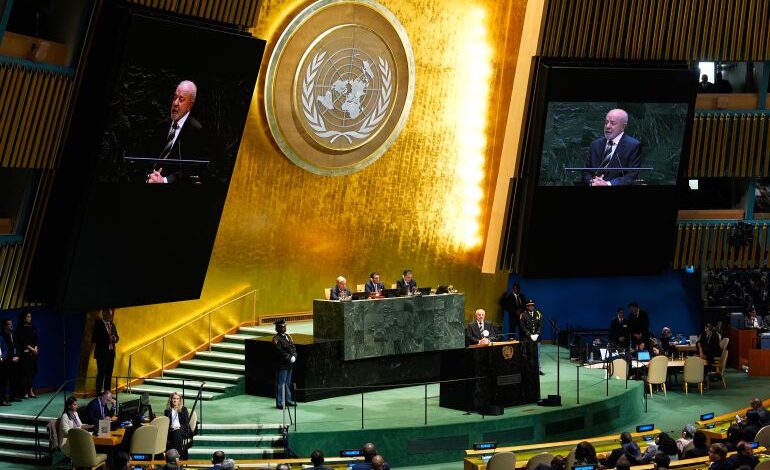
As world leaders gather in New York for the 81st United Nations General Assembly (UNGA), experts say the institution is battling an existential crisis of funding, relevance and Security Council gridlock.
Major conflicts appear intractable, and powers like the United States and Russia can bend the UN’s Security Council to their will; member states are looking for new mechanisms to bring accountability to the venue and for a new secretary-general to voice their concerns. The body has been accused of failing to stop what its own experts have said is a genocide in Gaza.
World leaders are not under any illusion that the UNGA is in good health, said Daniel Forti, head of UN Affairs at the International Crisis Group. Yet many still understand the venue’s power.
“The vast majority of leaders, from small states, from middle powers, and even a few from major powers, recognise the importance of a UN that is a global conversation platform,” Forti said.
Trying to weigh in where the Security Council fails
The UN is juggling multiple conflicts – from high-profile wars involving Iran to the often overlooked catastrophes in Sudan and Myanmar.
In the Ukraine war, the UN says more civilians were killed in the first eight months of 2026 than in the whole of 2025, and even NATO powers now say they worry about spillover into their countries.
Russia has repeatedly vetoed Security Council resolutions, but Ukraine’s President Volodymyr Zelenskyy has continued to appear before the UNGA to urge member states to help stop Moscow.
On Wednesday, Zelenskyy spoke for the fifth time before the assembly since Russia’s full-scale invasion of Ukraine, urging leaders to further tighten economic measures meant to punish Moscow despite its vetoes of Security Council resolutions.
“Many of you here have seen more than once how the abuse of the veto at the UN weakens the world and pushes peace further away,” Zelenskyy said.
In the Israeli war on Gaza, the UN has labelled Israel’s conduct there a genocide, but it has struggled to exercise real agency. Security Council resolutions have been repeatedly vetoed, and UN relief agencies have been targeted by Israel without any accountability.
The ongoing war between the US, Israel and Iran is having economic impacts across the globe and threatens to plunge Yemen back into a civil war.
“From Ukraine, to Gaza, and Sudan, and also with what’s happening now in Iran, the veto problem leaves the UN hamstrung,” said Alanna O’Malley, professor and chair of Global Governance and Wealth and head of the Department of History at Erasmus University.
UN Secretary-General Antonio Guterres told Al Jazeera’s James Bays this week that these conflicts were having real humanitarian impacts worldwide, including reduced food access, rising fuel prices, and global inflation.
The UNGA will allow the opportunity for some discussions for parties involved in these kinds of conflicts, but it is unlikely they can reach major agreements, said Forti.
But the assembly is still the only forum where all 193 member states are equal, and nations have tried to invoke new procedures and reach back into historical mechanisms to try and mitigate the veto deadlocks, O’Malley said.