Iran says Hormuz to stay closed unless US meets Tehran’s conditions
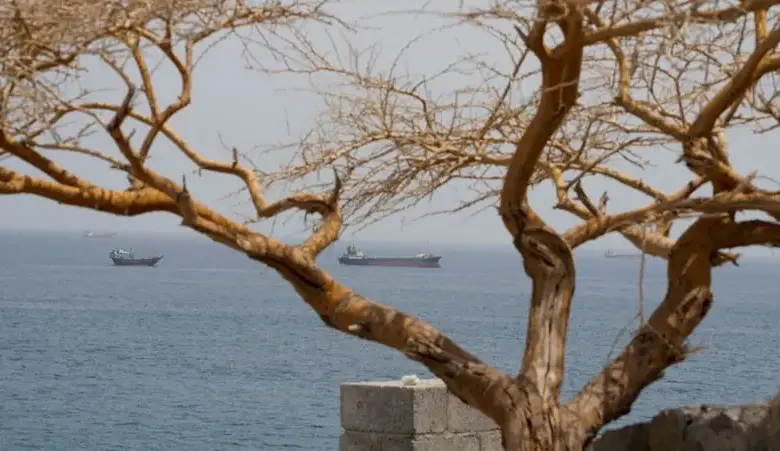
The Strait of Hormuz will remain closed as long as the US does not change its behavior and accept Iran’s conditions to end the war, the newly appointed secretary of Iran’s Supreme National Security Council said on Tuesday.
His comments are the strongest indication so far that any deal in talks with Oman over the waterway would not immediately reopen it to shipping if the US does not also abide by its commitments in a memorandum of understanding toward ending the conflict reached between Washington and Tehran in June.
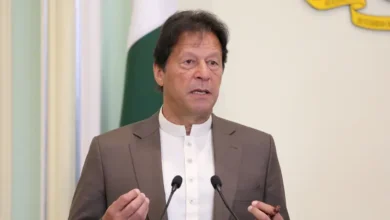
“As long as America does not change its behavior and does not accept Iran’s conditions, the Strait of Hormuz will not be opened,” Mohsen Rezaei, a close ally of Supreme Leader Mojtaba Khamenei, was quoted by semi-official Tasnim news agency as saying.
“America must end the war, pay Iran’s frozen assets, the war must end throughout the region, including in Lebanon and Gaza,” he said.
“If an agreement is reached between Iran and Oman regarding the transit route through the Strait of Hormuz, this agreement will be a matter separate from the closure of the Strait of Hormuz.”
Trump calls for compensation
Rezaei, appointed on Sunday as second-in-command of the body that coordinates Iran’s security and foreign policy, said the conditions had been transmitted to the US through mediators.
Mohammad Mokhber, an adviser to Khamenei, also said on X on Tuesday that “the punishment of the aggressor continues, and the Strait of Hormuz will not be opened until Iran’s conditions are met.”
Oil futures extended their gains due to concerns over the fate of the strait.
There was no immediate comment from Washington on Iran’s latest comments, but President Donald Trump had already raised a new US demand himself – that Iran pay compensation for people killed in wars, attacks and protests – and also accused Tehran of being “devious negotiators.”
“We’re going to ask for money for the damage they’ve done over a 50-year period,” Trump said at the White House on Monday.
In an interview released late on Monday, he described some of his current options in the war – “just bop along” and let Tehran fail economically or hit them “really, really hard.”
“I’m sort of negotiating,” Trump told Real America’s Voice in the phone interview. “They’re very devious negotiators.”
Trump has alternated between threats of escalation and claims that a peace deal is imminent.
Pakistan had raised hopes of progress
Before the rhetoric escalated again, Pakistan, one of the main mediators in the conflict, along with Qatar, had raised hopes that the two sides might be closing in on a deal that would in effect reopen the vital waterway, through which a fifth of global oil and liquefied natural gas flowed before the war.
“The signals in the last two, three days are that we are close to some sort of an arrangement,” Pakistani Defense Minister Khawaja Asif said in an interview with Bloomberg News.
Thousands of people have been killed in the conflict – mainly in Iran and Lebanon – since the US and Israel launched attacks on Iran on February 28.
Iran has retaliated by striking US assets and infrastructure in the region, as well as civilian sites across several regional countries.
Attacks on shipping
Adding to the rhetoric from both sides, there were reports of new attacks on shipping in the Gulf of Oman and the Red Sea, highlighting the threat to maritime trade.
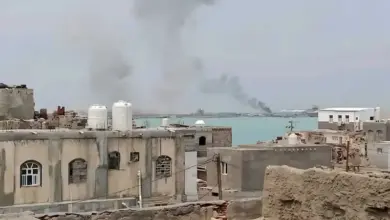
Four crew members were killed in a suspected attack by Yemen’s Iran-backed Houthis on a small cargo vessel in the Bab al-Mandeb Strait on Tuesday, Yemen’s transport ministry said.
The fatalities aboard the Egyptian-owned Tihamah, if confirmed, would be the first deaths in a Houthi strike on shipping since the Iran war began. The Houthis have not claimed the attack.
A US helicopter on Tuesday fired missiles into the engine room of a Panama-flagged cargo ship that attempted to break the American blockade of Iran’s ports, the US military said.
The US Navy MH-60 helicopter fired on and disabled the M/V Vela Nova “after the ship’s civilian crew ignored repeated warnings from American forces,” US Central Command said on X, adding that the vessel “is no longer transiting to Iran in violation of the US blockade.”
The US first announced a blockade of shipping trying to reach Iran’s ports in April and reimposed it in July after the June peace accord crumbled.