Houthi attacks on gov’t forces hint that a major battle in Yemen is brewing
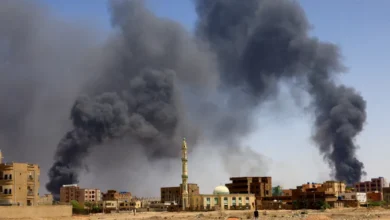
Houthi missiles and drones struck military locations inside Yemen on Thursday, leaving at least 30 government soldiers dead and 15 others injured in the first such attack in years.
Targeting government military camps and gatherings in Hadramout and Marib, the attacks marked a major escalation in the war between the Houthis and the government.
Yaya Saree, the Houthi military spokesperson, claimed in a broadcast statement that the attacks killed “hundreds” and “destroyed a large number of camps and depots”.
He alleged that the strikes were launched after Houthi forces “detected a massive Saudi military mobilisation” with the aim of an escalation.
The two sides have been at war since the Houthis and their allies captured the capital, Sanaa, in September 2014, with a Saudi-led coalition intervening in March 2015 on the side of the government.
Fierce fighting has subsided in recent years, but there has been a consolidation of government and some southern forces since the United Arab Emirates left Yemen in 2025. The Houthis’ gradual engagement in the regional war between the US and Israel against Iran, the group’s key ally, included an announcement of a naval blockade on Saudi ports and attacks in the Bab al-Mandeb Strait last month.
The Houthis are now on high alert for any military developments, Saree said, as pro-government forces appear to be preparing to retaliate for Thursday’s attacks and the renewal of Yemen’s largely dormant war.
Neither peace nor war
The strikes on government forces in Marib and Hadramout mark a turning point in Yemen’s conflict, with analysts telling Al Jazeera that Yemen appears to be edging closer to a wider conflict.
Abdul Rahman Saleh, 34, who lives in Sanaa, said the war has now become tangible to the people living in Yemen. “It is no longer a potential threat. It has become a reality. We have repeatedly heard explosions over the past days in Sanaa. We watch the figures of deaths and injuries on the news. Parties boast of their deadly attacks on their media outlets,” he told Al Jazeera.
“It reminds us of the pre-2022 truce. Each party is hungry for revenge. As a civilian, I feel it would take a miracle to stop this war now.”
Fuad Mussed, a Yemeni researcher focusing on political and military affairs, believes the recent Houthi attacks on government military camps are proof that the Houthi group has taken a final decision on entering an open confrontation with its opponents.
“The Houthis’ message is clear: opting for escalation both inside Yemen and beyond,” Mussed told Al Jazeera. “As they expand their attacks internally, they continue targeting ships in the Red Sea and sites in Saudi Arabia. So, it can be said that the state of neither peace nor war has ended.”
Although the war in Yemen has largely halted since April 2022, when the rival sides reached a United Nations-sponsored truce, both sides have expressed a desire for a decisive military battle in recent months.
Ahmed Nagi, a senior analyst at the International Crisis Group, said that the Houthis’ expansion of cross-border attacks on government forces means the threat of all-out war between the two sides is no longer far-fetched.
“Although there is still a chance for both sides to return to a policy of containment, the problem is that each new escalatory move makes that much more difficult. If this pattern continues and the Houthis increase their attacks, then the risk of a new round of war increases significantly,” Nagi told Al Jazeera.
“Based on what we are seeing today, the indicators pointing toward renewed conflict are stronger than those pointing toward de-escalation.”
‘War is a priority’
Sheikh Othman Majali, a member of the Saudi-backed Presidential Leadership Council, said there can be no prospect of peace, security, stability, development, coexistence or national partnership as long as the project of “the terrorist Houthi militia” continues to threaten Yemen and the region.
“This can only be achieved by confronting and toppling the militia, and by halting the harm and evil it inflicts upon our people and our region,” Majali told the government-run Yemen TV channel.