US launches second night of strikes on Iran after ship hit by drone
For a second day in a row, the United States has launched strikes on Iran, once again citing an attack against a commercial vessel as a motivation.
Saturday’s renewed attacks are the latest indication that a Middle East ceasefire, established as part of a June 17 memorandum of understanding between the US and Iran, might be at breaking point.
In a statement, US Central Command (CENTCOM), which directs military action in the Middle East, explained that the latest attacks came “at the Commander in Chief’s direction”.
“CENTCOM forces launched strikes today in direct response to continued Iranian aggression against commercial shipping,” the command centre wrote.
“U.S. military aircraft targeted Iranian military surveillance infrastructure, communication systems, air defense sites, drone storage facilities, and minelayer capabilities.”
Explosions were reported in southern Iran, around the village of Tahrui, near the port of Sirik, which was also the focal point of Friday’s US attacks. State media also indicated that Qeshm Island had been hit.
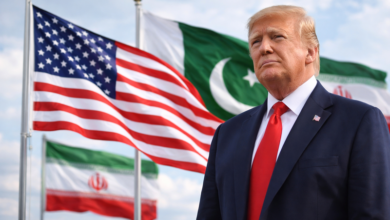
In a social media post less than two hours after the strikes began, US President Donald Trump warned that Saturday’s attacks could be a precursor to more intense fighting, should Iran fail to comply with Washington’s expectations.
He criticised Iran for repeatedly violating the ceasefire memorandum, an accusation both sides have traded.
“It is very possible that they will never learn,” Trump wrote.
“There may come a point when we are no longer able to be reasonable, and will be forced to militarily complete the job that we very successfully started. If that happens, the Islamic Republic of Iran will no longer exist!”
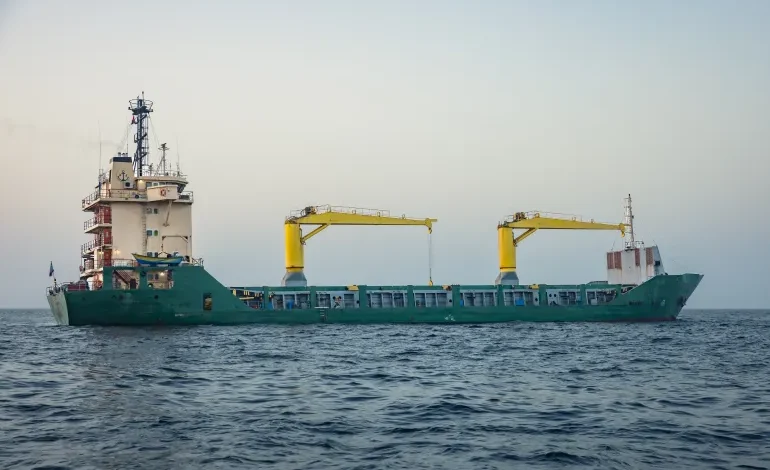
Early on Saturday morning, at about 4:30am Eastern US time (08:00 GMT), the Panama-flagged tanker Kiku was travelling through the Strait of Hormuz when it was reportedly hit by an unidentified projectile.
No crew members were injured, and no leakage was reported from its cargo.
CENTCOM said the ship had been carrying more than 2 million barrels of crude oil when it was hit by a “one-way attack drone”.
The website MarineTraffic.com indicates that the tanker left the Al Shaheen oilfield on Thursday and is due to dock in Fujairah, in the United Arab Emirates, on Sunday.
A similar sequence of events prompted Friday’s volley of US attacks.
In that case, a Singapore-registered container ship, the Ever Lovely, was struck by a drone as it sailed through the Strait of Hormuz on Thursday. No one on board was injured, and the boat continued on its travels.
But Trump denounced the drone strike on Friday as a “foolish violation” of the June 17 memorandum.
By that evening, the US and Iran had exchanged fire, with the US targeting the area around Sirik, and Iran hitting US military installations in the Middle East.
CENTCOM referenced Friday’s actions in announcing the latest round of strikes.
“After yesterday’s U.S. strikes in response to the Iranian attack on M/V Ever Lovely, Iran was given a chance to honor the ceasefire agreement,” CENTCOM wrote.
Iran “elected not to”, it added, citing the Kiku drone strike. CENTCOM also maintained that commercial traffic through the Strait of Hormuz, a sticking point in ceasefire negotiations, would continue, with US military backing.
“U.S. forces remain vigilant, lethal, and ready,” CENTCOM said in its statement.
Controlling the strait
Central to the latest round of fighting is control over the Strait of Hormuz, a key artery for maritime traffic. Nearly 20 percent of the world’s oil supply passed through the narrow waterway in peacetime, as well as significant quantities of fertiliser and natural gas.
But after the US and Israel launched attacks on Iran on February 28, starting the present-day war, Tehran moved to shut down traffic through the strait, which sits between its shores and Oman’s.
Iran’s decision sent global fuel prices skyrocketing, generating domestic and international pressure for the Trump administration.
The June 17 memorandum was designed to provide relief. Though it was a prelude to further negotiations, the deal called for the US, Iran, and their allies to “declare the immediate and permanent termination of military operations on all fronts, including in Lebanon”.