No fuel for sale as Ukraine’s blockade of Russian-occupied Crimea takes effect
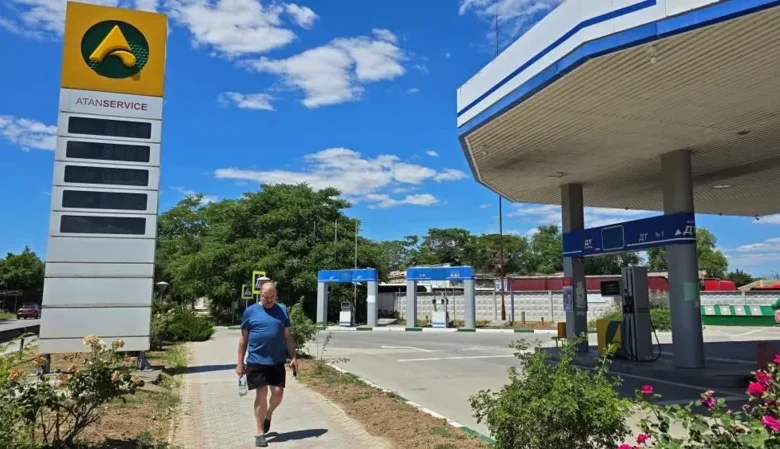
Power blackouts are now being reported in Russian-occupied Crimea in addition to fuel shortages, as Ukraine intensifies efforts to isolate the region annexed by Moscow in 2014.
“There’s petrol at the filling station, but they’re not selling it,” complained one local resident who has started using his bicycle to avoid going by car unless absolutely necessary. “Apparently, it was delivered during the night, and during the day they were supposed to start selling it as usual, but after Aksyonov’s decree they shut everything down.”
Fuel in Crimea is now reserved mostly for government services, after Russian-installed leader Sergei Aksyonov announced on Sunday that all sales at petrol stations were suspended.
In Sevastopol, Crimea’s biggest city and a major port on the region’s south-west coast, one resident said that he had bought a back-up generator, but now had nothing to power it with as petrol was no longer available.
Authorities in the port city have now gone beyond fuel restrictions with public transport, shops, and cafes operating only by day and street lights being kept off at night.
Even before fuel sales were halted, the resident in Sevastopol said there had been a big price rise, and he had spent 50% more to fill his car than the average petrol price in Russia.
“It’s unclear how long this will last, and as for getting to work, I honestly have no idea what I’m going to do,” he said.
The worsening situation in Crimea has led to some panic-buying in shops, he said. His assessment was confirmed by a woman in Sevastopol who said there was no sugar in the stores she visited.
Ukrainian attacks on oil refineries in many areas of Russia, including Moscow, have led to widespread restrictions on fuel sales, and Vladimir Putin acknowledged the difficulties on Tuesday.
In Crimea, acute shortages have been exacerbated by Kyiv stepping up a campaign targeting key bridges connecting the peninsula with other areas of occupied Ukraine.
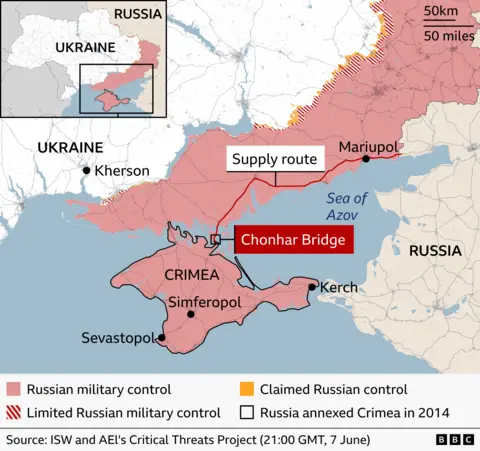
Crimea is internationally recognised as Ukrainian territory, but since the full-scale invasion it has been linked to Russia by road and rail links along a land corridor through occupied areas of southern Ukraine, and since 2018 by a road and rail bridge across the Kerch Strait.
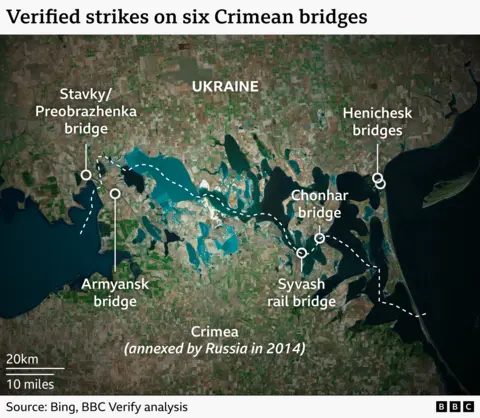
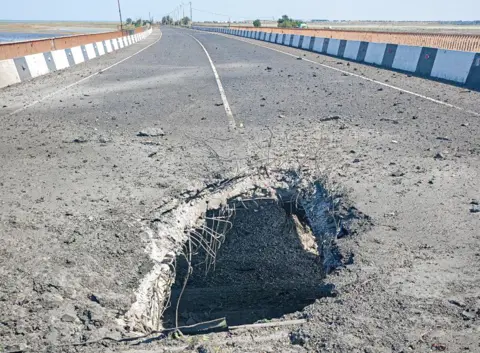
At least six bridges targeted by Ukraine in June have been identified by satellite imagery and in drone video shared by Ukrainian forces.
These include several attacks on the Chonhar road and rail bridges in north-eastern Crimea.
Satellite images show Russia installed temporary, replacement pontoon bridges, which led to bottlenecks in lorries getting over. These backlogs of vehicles have in turn been targeted by Ukrainian strikes, verified drone footage shows.
Before Russian-installed authorities shut down Crimea’s petrol sales, videos shared on social media showed queues stretching for kilometres at petrol stations.
In several clips, residents complained of regularly being unable to fill their cars, while some acknowledged the shortages by declaring they could endure the hardship.
Other videos shared by Russian tourists highlighted a complete lack of petrol, including one woman who had travelled from Russia with her own fuel and recommended others did the same.
Russia’s appointee in Crimea, Sergei Aksyonov, has also ordered the closure of children’s summer camps, which are widely popular among Russians. Some trains taking the children to a camp called Artek on the southern coast were stopped mid-way.
“I saw the “Artek” kids getting off the train, there were maybe 10 people left in our carriage. I thought it was rather strange, since they left all their food and snacks behind”, one passenger on the train said on social media.
Ukraine’s campaign to isolate Crimea appears to be part of what its defence minister Mykhailo Fedorov has called a “logistics lockdown” to disrupt Russian military supplies using AI-enabled drones, which has seen key motorways along the land corridor in occupied Ukraine targeted for several months.
After Ukraine struck the Crimean bridge in 2022, the М14 highway in occupied southern Ukraine became the main route for fuel deliveries to the peninsula.