The founding king’s advice to the Tunisian leader
Mohamed Hadi Hannachi
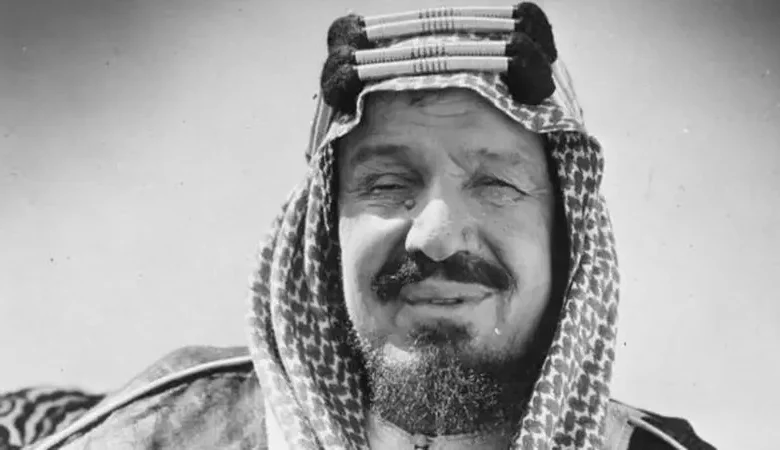
Around this time in June 1951, a Dakota aircraft arriving from Cairo landed in Riyadh. Among its passengers was Habib Bourguiba, leader of Tunisia’s national movement, accompanied by fellow party officials Mohamed Masmoudi and Ali Zlitni.
The delegation spent several days of Ramadan in a government guesthouse in Riyadh, enduring the city’s intense summer heat in a building that had never known air conditioning. They were waiting for an audience with King Abdulaziz.
The meeting would prove pivotal in the context of Tunisia’s struggle against French colonial rule. At the time, Bourguiba had found little support from the Arab League. Its secretary-general, Abdul Rahman Azzam Pasha, had effectively sidelined Tunisia’s cause, arguing that the organization was preoccupied with Palestine. Ahmad al-Shuqairi, then the League’s assistant secretary-general, responded to Bourguiba’s request for support by saying: “A person who is occupied cannot be occupied with something else. Once we resolve the Palestinian issue, we will resolve the Tunisian issue.”
Bourguiba and his colleagues found themselves with few options. France, emboldened by its victory in World War II, had become increasingly harsh toward its colonies, carrying out brutal repression and committing massacres in places such as Algeria and Madagascar.
The Tunisian leader and his companions were surprised by King Abdulaziz’s extensive knowledge of colonial methods, his deep understanding of the region’s political landscape, and his vision for confronting colonial rule. The king advocated a strategy of gradual stages combined with targeted operations designed to wear down the occupying power over time.
The Riyadh meeting marked a decisive turning point in the political career of Bourguiba, a lawyer educated at the University of Paris and the Paris Institute of Political Studies (Sciences Po), from which he graduated in 1927.
Bourguiba was deeply impressed by King Abdulaziz. Turning to Masmoudi, he said in French: “C’est formidable, ce monsieur-là” – “This man is remarkable, extraordinary. He never attended the Sorbonne or Harvard, yet he taught me something I did not know.”
King Abdulaziz believed strongly in the justice of Tunisia’s cause and its people’s right to freedom. He instructed Saudi diplomats to support Tunisia internationally. More than that, when the delegation returned to its residence, they found gifts waiting for them: complete Saudi traditional outfits and three small bags filled with gold sovereigns. The money was intended to help arm the resistance and support Bourguiba’s international campaign to raise awareness of Tunisia’s struggle.
This royal contribution became the starting point for arming Tunisian resistance fighters.
The gold was exchanged through Egypt’s foreign minister at the time, Mohamed Salah al-Din Pasha.
Ali Zlitni then purchased a plot of land in Tripoli, Libya, where a training camp was established to arm and prepare revolutionaries. From that base, the Tunisian uprising was launched on January 12, 1952.
The fallaqa – Tunisian resistance fighters – subsequently exhausted French colonial authorities, following King Abdulaziz’s strategy of gradual pressure and attrition.
Bourguiba retained his affection and gratitude toward King Abdulaziz and his sons for the rest of his life.
Yet, this story has largely disappeared from history books and attracted little scholarly attention. French historians and Francophone intellectuals worked to obscure such episodes in order to weaken the connection between North Africa and the Arabian Peninsula.
They promoted narratives portraying North Africa as fundamentally Berber, with Arabs cast as later arrivals and France presented as culturally and geographically closer to the region. Although the Maghreb’s diverse identity survived many ideological currents from the Middle East, it proved more vulnerable to a sustained cultural campaign.
It was a long campaign waged by colonial France against Arab tribes descended from migrants originating in Najd, the Hejaz, Banu Hilal, Banu Sulaym, and other Arabian tribes whose descendants today number in the millions across North Africa.
Colonial authorities in Algeria and Tunisia confiscated tribal lands, burned tents, seized livestock, deported tribal leaders and scholars to distant colonies, altered family names, and recorded them under different identities in official registers. These policies were designed to sever links between North African Arabs and their ancestral roots in the Arabian Peninsula.
French Orientalist scholars depicted their customs and culture negatively despite their similarities to traditions still practiced in Arabia.
Italy pursued a similar policy in Libya, attempting through settler colonialism to erase the country’s Arab identity and revive an idealized Roman past by portraying Libya as a “Fourth Shore” of Rome.
Colonial powers were not alone in creating barriers between North Africa and Arabia.
During the 1960s and 1970s, the media apparatuses associated with Nasserism and Baathism divided the Arab world into two camps: a supposedly progressive camp championing Arab nationalism and revolutionary ideals, and a traditional camp portrayed as disconnected from modernity and liberation.
This political division deepened psychological and cultural barriers between Arab peoples. Transnational ideologies overshadowed a more nuanced understanding of regional realities.
The divide was further reinforced by populist discourse, much of it influenced by leftist and nationalist movements. Some emphasized economic disparities with the Gulf, while others treated Gulf wealth as a collective Arab entitlement without recognizing the efforts that had contributed to that prosperity.
As a result, a widespread perception emerged depicting the Gulf primarily through stereotypes: camels, tents, oil wealth, and dependence on Western – especially American – support.
Educational curricula across the region presented an oversimplified image of the Gulf.
Gulf history was often reduced to its religious significance, represented mainly by Mecca and Medina. Generations of students were taught to imagine empty deserts populated by camel-riding tribes reciting poetry, little different from pre-Islamic times.
Modern Gulf states were frequently portrayed as passive entities lacking agency, moved and directed by great powers according to external interests.
Geography lessons focused heavily on oil while largely ignoring Gulf social history before the discovery of petroleum.
Despite strong political ties between Arab states, there are virtually no research centers in North Africa dedicated specifically to Gulf affairs.
This is despite the existence of numerous academic studies dealing with historical migrations from Najd and the Hejaz to North Africa and the wider Maghreb region.
These barriers have gradually begun to erode in recent years.
As they weaken, forgotten chapters of history have resurfaced, highlighting Gulf societies’ struggles, achievements, and resilience. Gulf states were not passive observers of Arab affairs but managed complex political challenges with wisdom, patience, and strategic foresight.
At the same time, they focused on developing their societies by investing in education, healthcare, transportation, and living standards.
The Gulf governments pursued long-term development strategies and built significant soft power in global economic and political affairs.
By contrast, ideological slogans and political rhetoric transformed other countries in the region into societies that drove their citizens abroad – whether through dangerous migration routes to Europe or migration to Gulf states themselves.
As a result, younger generations, freed from colonial-era narratives and ideological influences, encountered a reality that differed from what they had previously been taught.
A new generation has emerged in North Africa amid the decline of French cultural influence – a trend acknowledged even by French President Emmanuel Macron.
French-language publishing and writing have diminished significantly, replaced by Arabization policies in Tunisia, Algeria, and Morocco, alongside a growing desire to engage with an increasingly English-speaking global economy.
This generation has become more open to the Gulf states, which have offered opportunities to tens of thousands of North African professionals.
This is undeniably a fortunate generation because it views the Gulf without the “dark glasses” and “thick curtains” that once obscured reality and shaped public perceptions.
This generation has moved beyond artificial barriers.
Alongside a new cohort of intellectuals, writers, and historians, it is reassessing historical narratives and correcting what they see as distortions of history.
Millions increasingly recognize that North Africa’s relationship with the Arabian Peninsula is not simply a matter of shared membership in the Arab League but also one of genuine historical and familial ties.
It is hoped that this generation will rethink politics through the lesson that so impressed Bourguiba during his meeting with King Abdulaziz seventy-five years ago. The king conveyed that confronting great powers is a long battle requiring patience, wisdom, and progress made one step at a time. Bourguiba, the founder of independent Tunisia, later embraced this approach and described it in his speeches as the “policy of stages.”