Ronaldo, other ageing stars push limits to make history at World Cup 2026
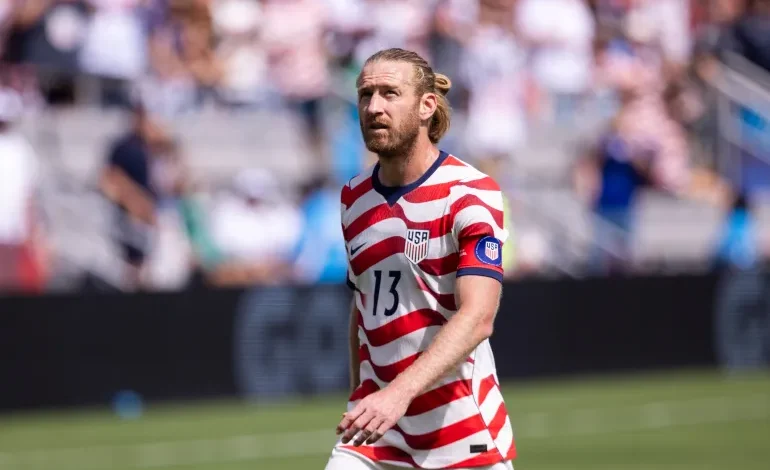
After playing at Qatar 2022 at age 35, US national team defender Tim Ream thought it was “pretty unlikely” he could play in another World Cup. But he decided he would at least try to stay in the game as long as possible.
“Because for me, it’s about pushing boundaries, pushing myself, pushing the limits of what I can physically and emotionally handle,” he told Al Jazeera.
Last week, Ream was named as the US’s captain for the upcoming football tournament in North America and, at 38, is the oldest ever outfield player in a US World Cup squad.
“To be given the honour and the opportunity to wear the captain’s armband in a home World Cup is incredible,” he said.
Ream, who played for Bolton Wanderers and Fulham in the Premier League and is now at Major League Soccer (MLS) side Charlotte FC, is one of several outfield players in their late 30s and beyond at the 2026 World Cup; including Portugal superstar Cristiano Ronaldo, 41, the 40-year-olds Luka Modric and Edin Dzeko, Yuto Nagatomo, 39, and Argentina legend Lionel Messi, who turns 39 later this month.
Evolving sport science plays a significant role in extending career longevity – the days when “recovery” meant having a few beers after the game are long gone, and many players now extoll all kinds of developments from lymphatic draining to cryotherapy.
Huge amounts of data measuring biomarkers from heart rate variability and muscle oxygenation to hormonal fluctuations and inflammation are also now available, including from wearable technology.
But experts argue that sport science is just part of a complex system of interlocking factors needed to extend longevity in football, including culture, relationships, a learning mindset, luck, resources, and the motivation to keep going into a fifth decade.
“It’s not just about the science, or machines, or AI,” Vlatko Vucetic, a professor of kinesiology at the University of Zagreb who has worked as a personal trainer with Croatian and Real Madrid star midfielder Modric for more than 10 years, told Al Jazeera.
“This question is always about people.”‘I’m setting an example’
Footballers tend to peak before the age of 30, with research suggesting a general decline in the early 30s in terms of speed, power and explosiveness, although endurance fades more slowly.
As players age, recovery takes longer, and they also become more susceptible to injuries. Football has also gotten much faster and more physical over the last few decades, and the number of matches at the elite level has increased dramatically.
Goalkeepers have tended to play on the longest; the oldest World Cup player ever was Egyptian keeper Essam El Hadary, who played at Russia 2018 at the age of 45.
According to Transfermarkt.com, only 15 players aged 35 or above appeared in the Premier League this season out of more than 500 players.
However, there is evidence that the median age of footballers may be increasing, while the number of outfield players playing into their late 30s and early 40s at the upcoming World Cup is striking. Before this tournament, Cameroon’s Roger Milla – who scored at USA 1994 aged 42 – was the only outfield player in their 40s to play at a World Cup.
Ben Rosenblatt was the lead performance coach for the England men’s team for seven years and is the founder and director of 292 Performance, a sport consultancy firm that trains and advises elite individuals and organisations.
He told Al Jazeera that advances in sport science and data collection – and an increased focus on health and wellness culture inside and outside the game – have helped extend careers in football.
“Within the game, there is more attention to detail over the last two decades being placed on an understanding and knowledge around training science and in particular, how to schedule organised training sessions to optimise athletes’ performance and reduce injury risk – which is obviously going to be a big survival factor for players,” he said.