Analysis: Turkey targets more defense sales as West rearms, alliances shift
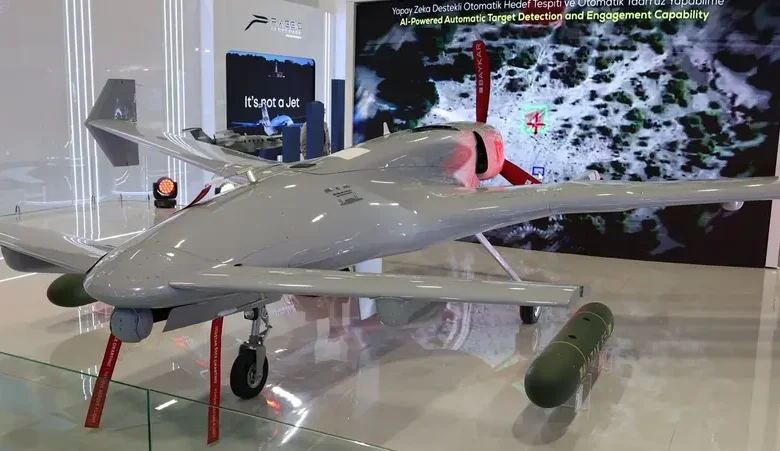
Two decades of state investment have transformed Turkey into a major exporter of drones and other military equipment, and the NATO member is now looking to build on that momentum as the West rearms and security alliances are reshaped.
Turkey, once heavily reliant on foreign arms makers, now supplies nearly 40 countries mainly in the Gulf, Africa, Asia and parts of Europe with weapons that many buyers see as cheaper, faster to deliver and more adaptable than alternatives.
As European governments reassess security dependencies following Russia’s invasion of Ukraine and question the durability of US guarantees, many NATO allies increasingly see Turkey not only as a military bulwark on the alliance’s southeastern flank but also as a potential industrial partner.
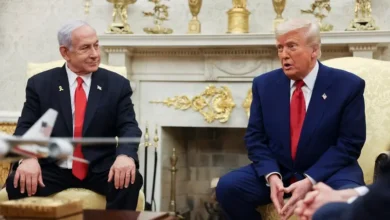
Ankara hopes hosting US President Donald Trump and other NATO leaders at a summit next month will help expand arms sales and joint production in Western markets, particularly the European Union. There, Turkish firms face structural barriers including members-only defense initiatives and political resistance tied to broader diplomatic disputes.
A Reuters review of trade figures shows Turkish defense exports – including the high-profile armed drones used by Ukrainian forces – have more than tripled since 2021 to $10 billion last year, accounting for about 3.7 percent of total exports from the major emerging market economy.
Exports to Europe and the US almost quadrupled over the same period to $5.6 billion.
That growth reflects a maturing domestic defense industry that includes drone-maker Baykar, Turkish Aerospace Industries, and smaller firms such as Arca Defense and Kale.
Analysts say sustained state backing, flexible supply chains and a willingness to customize systems for buyers have allowed such firms to move quickly into markets where Western suppliers face capacity constraints or lengthy procurement cycles.
War threats and opportunities
Turkey aims to double defense exports in two years, its defense agency says, potentially generating vital revenues as it looks to pay down debt and fund further development.
Sitting between two major conflicts – Ukraine to the north and Iran to the southeast – Turkey’s own security is also at stake, given its gaps in air defenses and jet and tank engines that could be addressed through trade and technology deals.
Can Kasapoglu, senior fellow at the Hudson Institute, said Turkey’s defense industry had made a “major leap” by exporting advanced systems, especially aerial drones.
The war in Ukraine, he said, underscored that modern warfare depended not only on cutting-edge platforms but also on industrial depth and sustainability – areas where Turkey has gained credibility.
NATO summit showcase
Turkey supplies about 65 percent of armed drones used worldwide and is a major exporter of ammunition. It also produces, or plans to produce, frigates, an aircraft carrier, air defense systems and armored vehicles. Indonesia said last year it would buy 48 Turkish fighter jets currently under development.
Turkey’s ambitions also carry political and reputational risks. Last month, it unveiled a prototype domestic intercontinental ballistic missile at a defense show in Istanbul, prompting criticism from some experts over feasibility and messaging after a promotional video depicted a hypothetical launch that appeared to target North America.
Turkish officials say the defense sector will be a focal point at the NATO meeting in Ankara on July 7–8. Alliance chief Mark Rutte has said a planned defense industry forum there would be NATO’s most comprehensive yet.
European hurdles
US pressure on NATO allies to shoulder more of their own defense burden, including plans to withdraw thousands of troops from Germany, creates both opportunities and uncertainty for Turkey, which has the alliance’s second-largest military.
Defense Minister Yasar Guler in April urged European allies to abandon security arrangements that exclude non-EU NATO members such as Turkey, arguing such policies could “harm Europe’s security and resilience more than the US reduction of forces in Europe.”
Turkey is largely excluded from the EU’s Security Action for Europe (SAFE) program, while some governments have kept Ankara at arm’s length over regional policy disputes and concerns about democratic backsliding, including a sweeping legal crackdown on the main opposition party.
Even so, Turkish firms have secured defense supply deals with Poland, Spain, Portugal and Romania, while Baykar has acquired Italy’s Piaggio Aerospace and partnered with Leonardo on production.
Global spending spree
Global military spending rose 24 percent to nearly $2.9 trillion in the five years to 2025, including a 75 percent jump in Europe, according to the Stockholm International Peace Research Institute.
Over the same period, Turkey’s defense agency doubled the number of funded R&D projects to more than 1,400.
Arda Mevlutoglu, a defense analyst, said the conditions were in place for deeper cooperation with Europe if political obstacles could be managed.
“Europe needs solutions that can be implemented rapidly … but high-level political will is needed for this cooperation to move healthily,” he said. “Turkey is in a process of realignment and recalibration toward both Europe and … NATO.”