US extends sanctions waiver on Russian oil: Why it matters
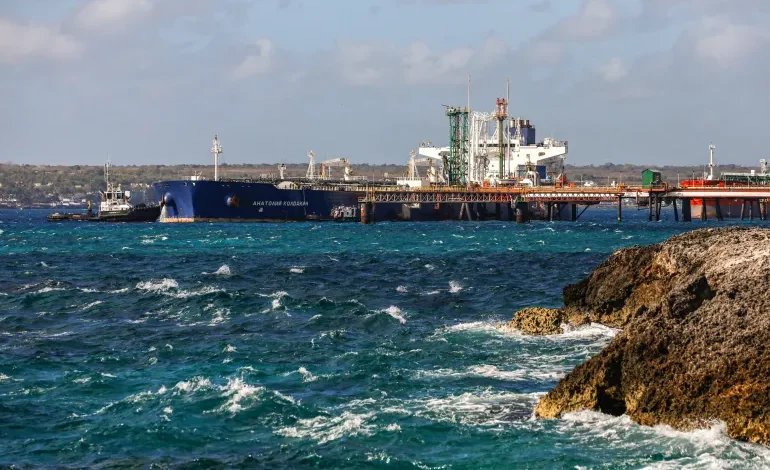
The United States has announced another 30-day extension of a sanctions waiver for countries buying Russian oil and petroleum products currently already loaded on tankers at sea, as global energy markets have been roiled by the US-Israel war on Iran.
In a post on X on Monday, Treasury Secretary Scott Bessent announced that the US would issue the extension “to provide the most vulnerable nations with the ability to temporarily access Russian oil currently stranded at sea”. It will last until June 17.
“This extension will provide additional flexibility, and we will work with these nations to provide specific licenses as needed. This general license will help stabilize the physical crude market and ensure oil reaches the most energy-vulnerable countries,” he wrote.
“It will also help reroute existing supply to countries most in need by reducing China’s ability to stockpile discounted oil,” he added.
The US issued its first 30-day sanctions waiver for Russian oil and petroleum products in March in a bid to stabilise global energy markets after crude oil prices surged above $100 per barrel in the wake of US-Israeli strikes on Iran. In April, Bessent told The Associated Press news agency that Washington had no plans to renew the waiver.
But energy markets have failed to stabilise amid ongoing negotiations for a peace proposal between the US and Iran, as well as the closure of the Strait of Hormuz, a vital waterway through which about 20 percent of global oil and gas is shipped during peacetime, and the US naval blockade of Iranian ports. The closure of the strait, which is the only sea route from the Gulf to the open ocean, has “walled in” 20 million barrels of Gulf oil per day, George Voloshin, an independent energy analyst based in Paris, told Al Jazeera in March.Furthermore, European sanctions on Russian oil – imposed since the start of the 2022 invasion of Ukraine – remain in place.
Will the US waiver extension help stabilise the energy market? What does this mean for Russia? Here’s what we know:
How much Russian oil is at sea?
According to analytics firm Kpler, there is currently about 113 million barrels of oil or liquid volume (Mbbl) of Russian crude and condensate loaded on ships and at sea. Russian crude oil in transit is approximately 106Mbbls.
Johannes Rauball, a senior crude analyst at Kpler, told Al Jazeera that floating storage of Russian crude – oil held on stationary tankers awaiting buyers or further shipping instructions – has declined significantly since the start of the year from a high of about 19Mbbls in late January to 7Mbbls now.
“In recent months, Russian crude exports have been pressured by ongoing Ukrainian drone strikes, which have disrupted export infrastructure and reduced shipping capacity,” he said. As a result, Russian crude production has averaged roughly 9.1 million barrels per day (bpd), below its OPEC+ quota of approximately 9.5 million bpd, he added.