Is Iran’s oil storage nearly full – and will it have to cut production?
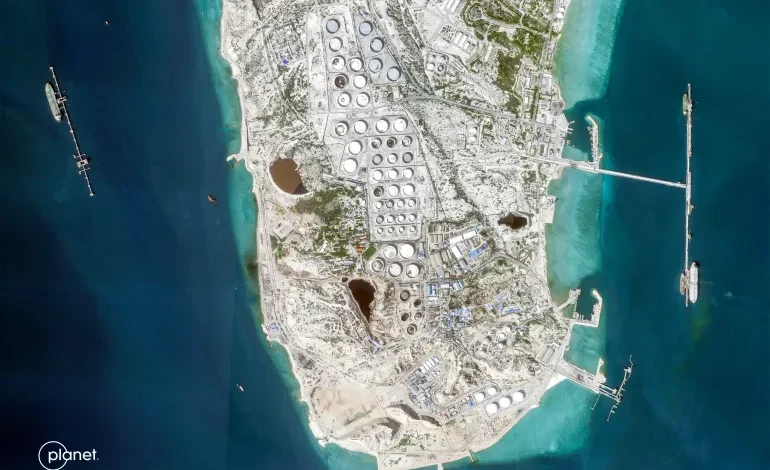
The US naval blockade of Iranian ports and the Strait of Hormuz, in place since April 13, has raised concerns that Iran could run out of crude oil storage capacity and be forced to curb production.
Bloomberg reported analysis on Tuesday from the data and analytics company Kpler suggesting Iran could run out of crude storage in 12 to 22 days if the blockade persists.
Last week, United States Treasury Secretary Scott Bessent claimed that storage capacity at Kharg Island, where most of Iran’s oil is exported, would be full “in a matter of days”.
So how quickly could Iran run out of oil storage, and why does it matter?
What is happening in the Strait of Hormuz?
The Strait of Hormuz is a narrow channel that connects the Gulf to the open ocean. It spans the territorial waters of Iran on its northern side and Oman on its southern side. It is not in international waters.
During peacetime, 20 percent of the world’s oil and liquefied natural gas (LNG) supplies are shipped through the corridor.
Two days after the US and Israel launched their first air strikes in their war on Iran on February 28, Ebrahim Jabari, a senior adviser to the commander in chief of Iran’s Islamic Revolutionary Guard Corps (IRGC), announced that the strait was “closed”. If any vessels tried to pass through, he said, the IRGC and the navy would “set those ships ablaze”.
Iranian First Vice President Mohammad Reza Aref said on April 19 that the “security of the Strait of Hormuz is not free”.
“One cannot restrict Iran’s oil exports while expecting free security for others,” he wrote in a post on X.
“The choice is clear: either a free oil market for all, or the risk of significant costs for everyone,” he added. “Stability in global fuel prices depends on a guaranteed and lasting end to the economic and military pressure against Iran and its allies.”
Since the US naval blockade on the strait began, the US has opened fire on and taken control of an Iranian-flagged tanker near the Strait of Hormuz while also redirecting vessels on the high seas transporting cargo to or from Iran. Iran’s armed forces have denounced these actions as “an illegal act” that “amounts to piracy”.
The US naval blockade of the strait means that Iran might have to store the oil it produces.
Iran is the third largest oil producer in the Organization of the Petroleum Exporting Countries (OPEC) after Saudi Arabia and Iraq and exports 90 percent of its crude oil via Kharg Island in the Gulf for shipping through the Strait of Hormuz.
What has the US claimed?
The US is eager to curb Iran’s oil revenues, which have risen since Tehran closed the Strait of Hormuz to other shipping. This is the primary motive behind Washington’s naval blockade of Iranian ports.
Iran exported 1.84 million barrels per day (bpd) of crude oil in March and shipped 1.71 million bpd in April, compared with an average of 1.68 million bpd in 2025, according to Kpler.
However, the US naval blockade since mid-April now means that most of its exports are having to be stored instead.
Bessent wrote in an X post on April 22: “In a matter of days, Kharg Island storage will be full and the fragile Iranian oil wells will be shut in.”
“Constraining Iran’s maritime trade directly targets the regime’s primary revenue lifelines.”