U.S. Strategy 2026: Israel First, and Allies Must Rely on Themselves
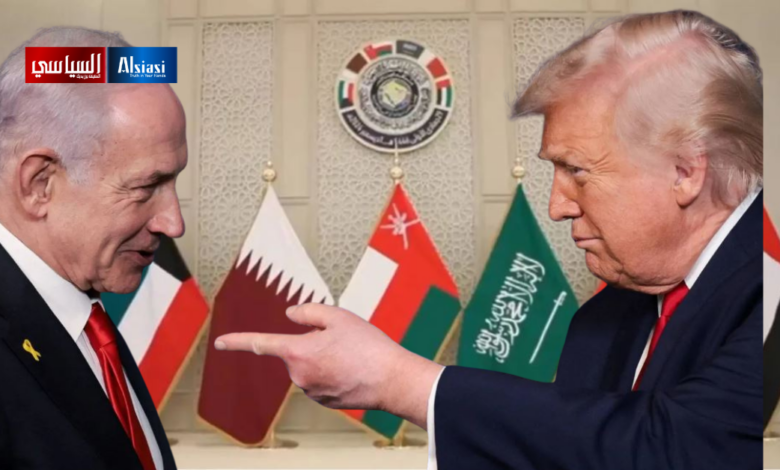
The U.S. strategy for 2026, announced by the administration of President Donald Trump at the beginning of this year, may be the clearest indication yet of what is described as America’s aggressive intentions toward other countries, as well as its willingness to abandon allies and partners and shift burdens onto them—burdens that Washington has long assumed.
The new U.S. strategy indicates that plans based on “soft containment” are now outdated, and that new forms of control over resources, strategic passages, and oil sources will rely on military force to dominate and control the world.
According to the plan, the United States will place greater focus on itself, while allies will bear more responsibility for their own defense.
The Trump administration is prepared to use force—or the threat of it—in multiple regions simultaneously. This sends a clear message to both adversaries and allies: the United States can easily be drawn into unnecessary conflicts. For example, the decision to strike Iranian nuclear facilities was not inevitable, but was undoubtedly encouraged by Israel’s partial and incomplete attack on Iran.
The Trump administration operates on the assumption that strength and decisiveness are the cornerstones of successful foreign policy.
The National Defense Strategy outlines four main issues that the Department of War—under its new designation—must address:
Defending U.S. territory
Deterring China
Increasing burden-sharing with allies and partners
Accelerating and strengthening the U.S. defense industrial base
The U.S. strategy is portrayed as relying on aggression, force, and the overthrow of opposing regimes, as seen in Venezuela, attempts in Iran, and threats toward Cuba and Greenland. This policy is described as one of destruction and destabilization, similar to what occurred in Iraq and later in Libya.
Arab countries, especially those in the Gulf, are also not immune to marginalization under this strategy. They are now expected to rely on themselves, as the United States is increasingly avoiding firm security commitments to any country and prioritizing the protection of Israel above all else. This was evident, according to the text, in the U.S.-Israeli war against Iran, where Washington supplied Israel with missile defense systems while leaving Gulf states exposed to attacks threatening their energy and water infrastructure.
The United States has demonstrated that Israel is its primary partner. According to this perspective, American policy seeks to ensure that Israel remains the dominant regional power, capable of supporting U.S. interests in wars and keeping regional countries preoccupied with countering Israeli actions rather than focusing on development and progress.
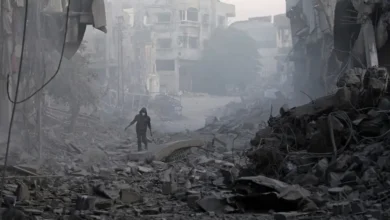
Within this strategic framework, the Gaza agreement stands out. It followed what is described as systematic and devastating Israeli destruction of the Gaza Strip, resulting in hundreds of deaths, injuries, and widespread displacement. Through Israeli actions, Washington is portrayed as having pushed Palestinians and Arabs into accepting what is primarily an economic agreement aimed at salvaging what remains of the territory.
The agreement is said to undermine the establishment of a Palestinian state and suppress protests demanding Palestinian rights or rejecting the imposed reality. The U.S.-Israeli plan, centered around building a “Riviera”-style development, is described as enabling Israel to maintain control over Gaza after its withdrawal, while launching economic projects funded by Gulf capital—benefiting American companies facing financial strain following the COVID-19 pandemic.
In essence, the agreement is described as illusory. Peace and an end to Israeli military actions remain out of reach due to the intransigence of Israeli Prime Minister Benjamin Netanyahu, who is portrayed as seeking escape from political scandals. The text cites figures including the killing of 500 Palestinians (including 100 children), the destruction of 250 homes, the arrest of 80 doctors, and hundreds of ceasefire violations targeting civilian areas, alongside the displacement of 1.6 million people and the occupation of over half of Gaza’s territory.
Israel reportedly approved the composition of the governing council for Gaza on the condition that it serves Israeli interests and operates under its authority. As a result, this council is described as neither focused on monitoring peace efforts nor contributing to de-escalation, and as being far from supporting Palestinian self-determination or complying with international laws supporting Palestinian and Arab rights.