Why is the EU under pressure to suspend its trade agreement with Israel?
Germany and Italy blocked a bid to suspend a key European Union trade pact with Israel on Tuesday, as European Union foreign ministers met to discuss the bloc’s relationship with Israel.
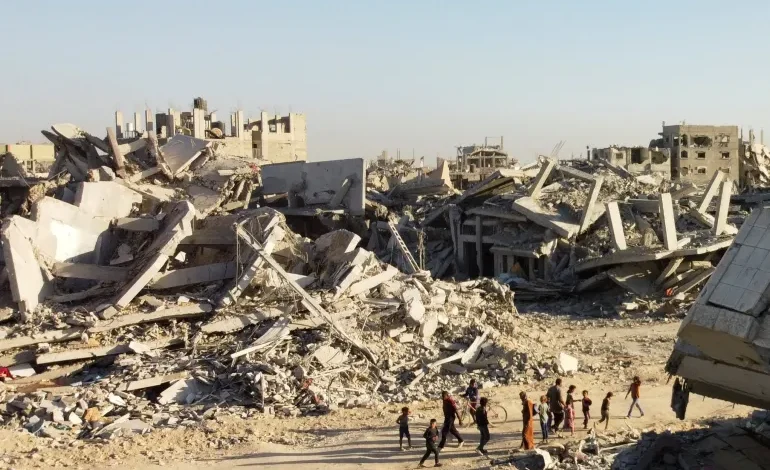
Three member nations – Spain, Slovenia and Ireland – had requested that the Association Agreement between the European Union and Israel be reconsidered because of Israel’s actions in Gaza and the occupied West Bank.
While it has been blocked this week, the move is a reflection of growing unease across the continent over Israel’s conduct in the occupied Palestinian territories in recent years, as well as mounting calls for action from rights groups over Israel’s growing list of human rights abuses.
In Luxembourg on Tuesday, Spain’s Foreign Minister Jose Manuel Albares told reporters. “I expect every European country to uphold what the International Court of Justice and the UN say on human rights and the defence of international law,” he said. “Anything different would be a defeat for the European Union.”
The bloc remains divided on its ties to Israel, however. Countries such as Germany, Hungary and the Czech Republic, in particular, are reluctant to take any drastic steps, meaning any move towards full suspension of the agreement is unlikely in the near future.
German Foreign Minister Johann Wadephul called Spain’s request “inappropriate”, saying any issues had to be discussed in a “critical, constructive dialogue with Israel”.
So, what is the EU-Israel agreement, and why is it so controversial?
What is the EU-Israel Association agreement?
The agreement, which came into effect in 2000, grants Israel preferential access to EU markets and supports cooperation within key areas such as trade, research and diplomacy.
The European Union is Israel’s largest trading partner, making the agreement a major part of their relationship.
A central feature of the deal is its human rights clause, known as Article 2, which states that cooperation is “based on respect for human rights and democratic principles”.
This clause is at the heart of the current debate, as critics argue that violations by Israel could justify suspending the agreement, either fully or in part.