US moves to sideline Iran in Lebanon, but the conflicts remain intertwined
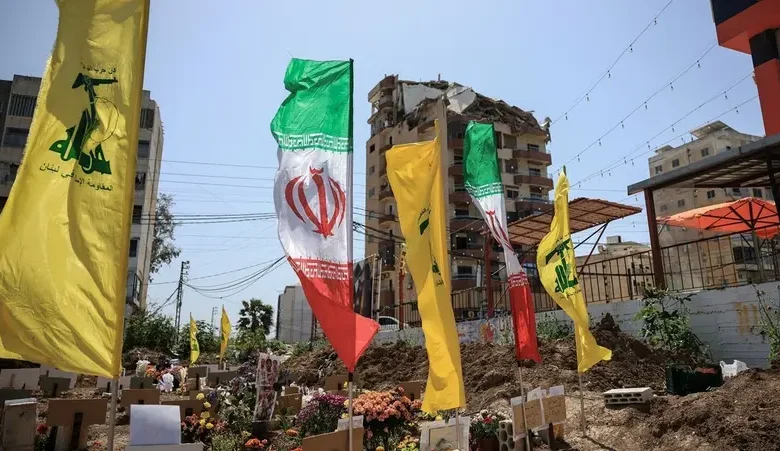
Before last week’s talks with the US in Islamabad, Iran’s two lead negotiators threatened to scrap negotiations unless a Lebanon ceasefire was secured in advance. No ceasefire materialized, yet the talks went ahead at the highest level in decades.
In parallel, a coordinated media campaign appeared to take shape among the Iranian regime’s allies, both domestically and across the region, shifting focus squarely onto Lebanon.
Mohammad Bagher Ghalibaf, Iran’s parliament speaker and their lead negotiator, repeatedly framed a Lebanon ceasefire as a precondition for engaging with Washington. As recently as Wednesday, he wrote on X that any ceasefire would come as a result of “the great Hezbollah and the unity of the Axis of Resistance.”
The messaging extended beyond Tehran. Ahead of the Pakistan talks, the editor-in-chief of Hezbollah-linked Al-Akhbar in Beirut called for the overthrow of the Lebanese government, which has banned Hezbollah’s military wing and declared the Iranian ambassador persona non grata. The ambassador has refused to comply and remains in the country.
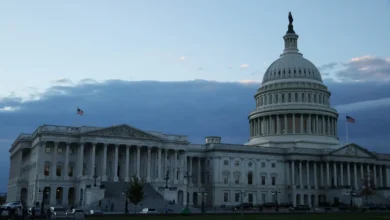
This intensified as reports surfaced that the State Department would host the Lebanese and Israeli ambassadors to Washington for the first direct talks in decades.
Iran will no longer dictate Lebanon’s future, official says
The Trump administration pushed ahead with mediating direct talks between Lebanon and Israel while insisting that a ceasefire between those two countries is not linked to the ongoing negotiations between Washington and Tehran.
Although no joint statement followed the first round of Lebanon-Israel talks, which were held on Tuesday, the US issued a pointed message: any agreement to halt hostilities “must be reached between the two governments, brokered by the US, and not through any separate track.”
A White House official said that Lebanon had acknowledged that Hezbollah was a mutual problem for both Israel and Lebanon during the talks on Tuesday.
For Trump administration officials, this marked a turning point.
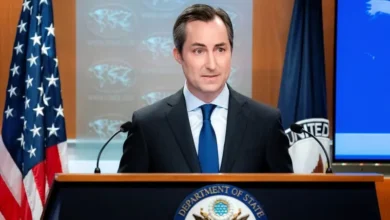
“Iran will not be allowed to dictate the future of Lebanon anymore,” a State Department official said, describing the direct talks in Washington as central to that effort.
Officials told Al Arabiya English that preparations for these talks had been underway for months, with US Ambassador to Lebanon Michel Issa working behind the scenes to bring both sides together.
The State Department official also said that the Lebanon track was conceived well before any discussions about US-Iran negotiations in Pakistan.
“As the President has made clear, there is no link between the negotiations between the United States and Iran in Islamabad and the Israel-Lebanon talks,” the official insisted.
Iran’s threats
Still, the overlap in timing has fueled tensions.
Lebanon’s prime minister postponed a scheduled visit to Washington this week, citing “internal circumstances,” as pressure mounted from Tehran and its allies while also threatening the fate of his government.
Iranian officials and advisers accused Beirut of “obstructing” US-Iran ceasefire talks by attempting to pursue a separate track with Israel, one that excludes Iran.
Ali Akbar Velayati, a senior adviser to Iran’s leadership and former foreign minister, went further, warning the Lebanese premier of “irreparable security risks” for “ignoring the role of the resistance.”
In a post on X, Velayati added that Lebanon’s stability “lies solely in the synergy between the government and the resistance,” a reference to Hezbollah.
Hezbollah itself has signaled resistance to the process. Ahead of the Washington talks, senior official Wafik Safa said the group would not abide by any agreement emerging from the negotiations.
US officials, however, have drawn a firm line.
“Iran dragged the Lebanese people into a war, so it cannot pretend to be Lebanon’s protector,” a second State Department official said.
“Hezbollah is a terrorist organization that does not deserve a place. It must be fully disarmed, and the United States supports that goal,” the official added.
Behind the scenes, sources say Iran has continued to test Washington’s approach, pressing for a Lebanon ceasefire in order to gauge whether the US can restrain Israeli military action. The effort is seen as a potential model for how a broader arrangement might function in the context of a deal to end the US-Israeli war with Iran, according to the sources familiar with the talks.
For Washington, the priority remains narrower.
A senior Trump administration official said the focus is on building trust between Lebanon and Israel to create space for a durable agreement, “so that any future understandings can be durable. Both sides need to build political momentum.”
That momentum appeared to accelerate on Thursday, when Trump announced that a ceasefire in Lebanon would take effect at 5 p.m. EST.
Following the constructive tone of Tuesday’s meeting, Trump spoke with Israeli Prime Minister Benjamin Netanyahu. “The Prime Minister agreed to a ceasefire with certain terms,” a White House official said.
That was followed by a call on Wednesday night between the top US diplomat and the Lebanese president, Joseph Aoun, during which the later agreed to the ceasefire.
On Thursday morning, Trump spoke separately with the Lebanese president and Netanyahu ahead of his public announcement of the ceasefire.
Trump then said that he would invite the Lebanese president and the Israeli prime minister to the White House for talks. “Both sides want to see PEACE, and I believe that will happen, quickly!” he said on Truth Social.
Such a meeting would put a dent in the Iranian narrative that Lebanon, which has hosted Tehran’s number one proxy for the last four decades, is a bastion of the so-called axis of resistance.
Lebanese-Israeli peace deal
For some observers, the shift is strategic.
“In doing this, Trump is effectively pulling Lebanon out from under the Iranians and making it exclusively the prerogative of the United States to mediate peace and a better future for the Lebanese than the Iranians have done over the last 40 years,” a source close to the talks said.
Firas Maksad, Eurasia Group’s managing director for the Middle East and North Africa, told the New York Times that the US was “signaling its refusal of continued Iranian influence over Lebanon.”
Even so, US officials acknowledge the broader stakes.
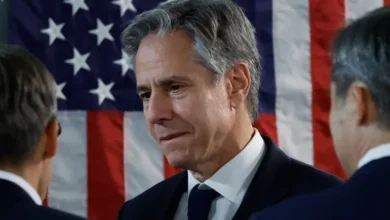
Ahead of Tuesday’s State Department talks, Secretary of State Marco Rubio framed the effort as part of a longer-term objective. “This is about bringing a permanent end to 20 or 30 years of Hezbollah’s influence in this part of the world… This will take time, but we believe it is worth this endeavor.”