Iran says it will view military vessels approaching Hormuz Strait as ceasefire breach
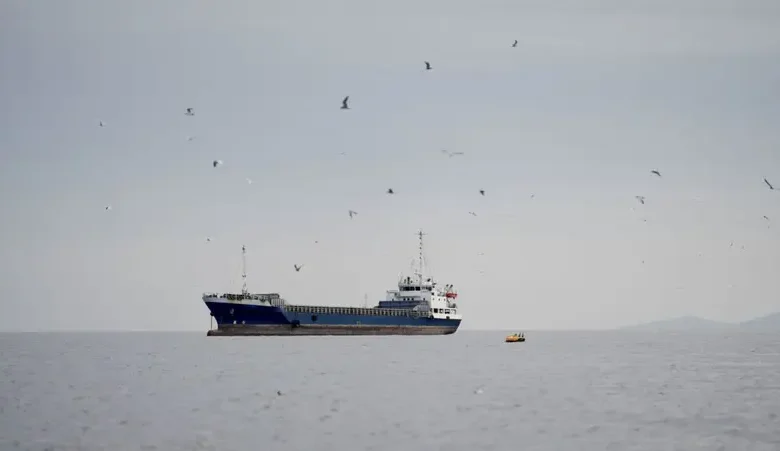
Iran’s Islamic Revolutionary Guard Corps (IRGC) said on Sunday that any military vessels attempting to approach the Strait of Hormuz will be considered a violation of the two-week ceasefire with the US and will be dealt with “harshly and decisively.”
The strait is under the control and “smart management” of Iran’s navy, the IRGC said in a statement reported by Iranian state media, adding it is “open for the safe passage of non-military vessels in accordance with specific regulations.”
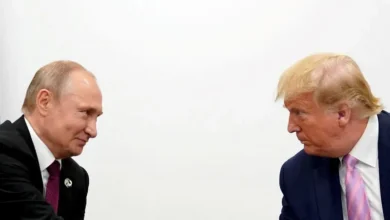
US President Donald Trump ordered the US Navy on Sunday to block the Strait of Hormuz, furious with Iran’s refusal to surrender its nuclear ambitions after peace talks broke down without agreement.
In a lengthy declaration on his social media platform, Trump said that his eventual goal was to clear the strait of mines and reopen it to all shipping, but that in the meantime Iran must not be allowed to profit from its control of the waterway.
“Effective immediately, the United States Navy, the Finest in the World, will begin the process of BLOCKADING any and all Ships trying to enter, or leave, the Strait of Hormuz,” Trump said. “Any Iranian who fires at us, or at peaceful vessels, will be BLOWN TO HELL!”
Iran has itself been restricting traffic through the strait – a key route for shipments of oil, gas and fertilizer from the Gulf to the world market – while allowing vessels deemed to be working for friendly countries, such as China, to pass. There have been unconfirmed reports that Tehran plans to charge tolls.
“THIS IS WORLD EXTORTION,” Trump said. “I have also instructed our Navy to seek and interdict every vessel in International Waters that has paid a toll to Iran. No one who pays an illegal toll will have safe passage on the high seas. We will also begin destroying the mines the Iranians laid in the Straits.”
The president’s latest ultimatum appeared to have been triggered by the failure of talks in Islamabad between high-level American and Iranian delegations to secure a deal to end the six-week-old war, that began when the US and Israel launched strikes on Tehran and killed Iran’s Supreme Leader Ali Khamenei.
Iran’s refusal to give up its right to a nuclear program – which Tehran insists is for peaceful civilian purposes but Western capitals believe conceals a quest for a bomb – frustrated the US delegation, led by Vice President JD Vance, White House envoy Steve Witkoff and Trump’s son-in-law Jared Kuchner.
“I have always said, right from the beginning, and many years ago, IRAN WILL NEVER HAVE A NUCLEAR WEAPON!” Trump said.
“The Blockade will begin shortly. Other Countries will be involved with this Blockade. Iran will not be allowed to profit off this Illegal Act of EXTORTION.”
Vance left Pakistan after the talks – the highest-level meeting between the two sides since the 1979 Islamic Revolution – and warned that Washington had made Tehran its “final and best offer” for a deal, adding: “We’ll see if the Iranians accept it.”
Iran’s Parliamentary Speaker Mohammad Bagher Ghalibaf, the head of his country’s negotiating team, said Tehran “put forward constructive initiatives but ultimately the other side was unable to gain the trust of the Iranian delegation in this round of negotiations.”
The failure of the talks will raise concerns that a return to fighting could drive world energy prices higher and further damage shipping and oil and gas facilities in the region.
Pakistan, which hosted the talks and whose leadership had ushered the rival sides to the table, said it would keep facilitating dialogue and urged both countries to continue respecting the temporary truce.