Americans Open the Way to Iran for ISIS
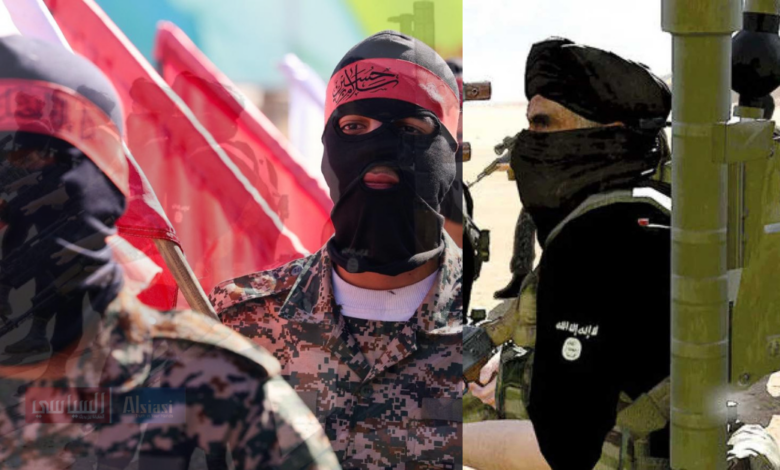
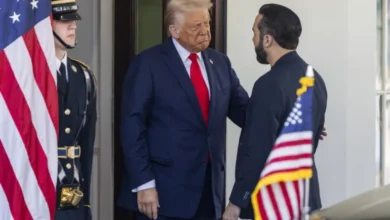
Shortly before U.S. President Donald Trump announced a ceasefire and a two-week truce with Iran, he appeared stunned, confused, and in a state of crisis after the Kurdish faction refused to deal with him or cooperate with U.S. forces to serve as a supporting force in the war against the Iranian regime.
The U.S. president acknowledged sending shipments of weapons to Iranian Kurds so they could form a pressure ground force, effectively sacrificing them in confrontation with Iranian ground troops after realizing his inability to deploy U.S. Marines due to fears for their safety from ambushes by the Revolutionary Guard. However, the Kurds demanded guarantees for his promises, stating that they would not be an easy target or a tool to be used and discarded by the Americans, as happened with the Kurds in Syria, who had been promised for years the establishment of a sovereign entity, only to face the usual American abandonment.
Thus, U.S. calculations failed dramatically, and the card that seemed almost guaranteed before consultation returned a negative response that was not anticipated—contrary to the American-Western vision and their historical perception. Washington and the circle surrounding the U.S. president then turned to other options to implement the ground plan.
The Americans directly turned to ISIS, the terrorist organization they had long claimed to fight in the region, and whose presence in Syria and Iraq they had justified as necessary to confront such violent groups.
After the fall of Bashar al-Assad’s regime, the Kurds in Syria waited for Washington to fulfill its promises to them. However, U.S. envoy Thomas Barrack informed them that those promises were a thing of the past and that the Kurds must integrate into a unified Syria, with no independent entity—neither autonomy nor self-administration. He added that U.S. interests now lie with the new government led by President Ahmed al-Sharaa. Control over ISIS detainee prisons was taken from them and transferred to Iraq.
The spokesperson for the Iraqi Ministry of Justice, Mohammed Al-Laibi, confirmed that the total number of transferred prisoners reached 5,703, belonging to 61 nationalities. Among them were 4,253 Arabs and 983 foreigners. Iraqis numbered 467, while Syrians accounted for 3,543, with the rest distributed among other nationalities.
He added that Baghdad’s Karkh Central Prison had been prepared to receive them, and that the prisoners were classified using a database provided to Iraq by the international coalition.
Accordingly, the dreams of the Syrian Kurds have effectively come to an end.
With Iranian Kurds (at least five million people) refusing to cooperate with the Americans—based on the belief that one should not be stung twice from the same hole—U.S. decision-making centers reopened the file of ISIS members transferred from Syria to Iraq.
These individuals allegedly had close ties to the CIA and possess deep ideological, religious, and political hostility toward Iranians. There is doctrinal divergence and a fierce conflict history between them, especially in the Syrian arena. They are expected to move into Iran to spread chaos and carry out bombings, using experience accumulated over at least 14 years in combat operations and in operating as sleeper and active cells.
The alleged U.S. plan is to move them into areas inhabited by minorities such as Azerbaijanis (the largest minority), Kurds, Lurs, Arabs (especially in Khuzestan), Baloch, and Turkmen, in addition to religious minorities including Sunnis, Christians, Jews, Zoroastrians, and Baha’is, to form a launch base into the Iranian interior.
There are precedents cited for U.S. dealings and cooperation with ISIS. Coordination, it is claimed, reached high levels in Syria, where they were used for security and political purposes, targeting forces of the Assad regime, Iran, and Russia to destabilize certain areas, particularly in Palmyra, Homs, and the Syrian desert in general.
It is also claimed that the United States used ISIS elements in Afghanistan, supplying them with weapons, funding, and intelligence to wage battles against the Taliban, including attacks on mosques, Hussainiyas, Shiite centers, and facilities linked to the Taliban government. Additionally, it is alleged that, in cooperation with Ukrainian intelligence, hundreds were brought to fight on fronts against Russia.
Israel, in turn, is said to support U.S.-ISIS cooperation, as their strikes would be more painful to the Iranian state than those of the Kurds, potentially spreading chaos driven by ideological motives that could mobilize Sunni Muslims—considered a stronger driver than the sectarian dynamic that might be limited between the Kurds and the Iranian regime.