Slovenia’s liberals and conservatives neck and neck in parliamentary vote
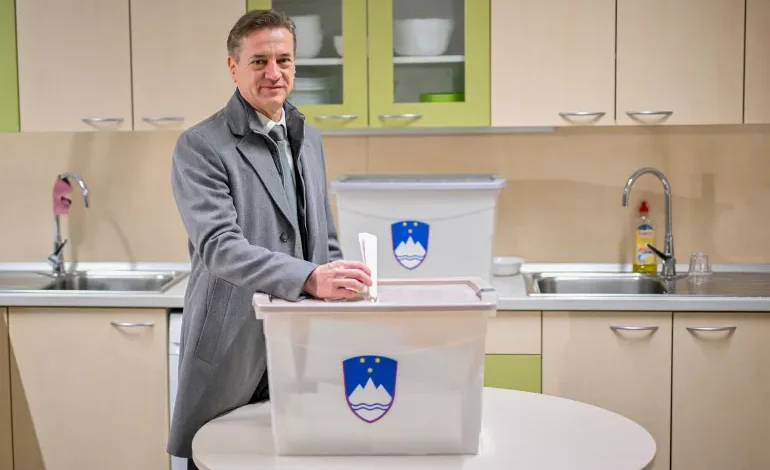
Slovenia’s governing liberals and opposition conservatives were neck and neck after a parliamentary election, near-complete preliminary results showed, heralding a period of political uncertainty in the small European Union country.
Prime Minister Robert Golob’s centre-left Freedom Movement won 28.5 percent of the vote, while the right-wing Slovenian Democratic Party, or SDS, led by ex-Prime Minister Janez Jansa, had 28.1 percent, the State Election Commission said after counting some 99 percent of the ballots on Sunday.
The nearly equal result means that none of the main parties will have a majority in the 90-member parliament and that whoever will form a future government will depend on smaller parties that will act as kingmakers. It was not immediately clear what shape possible future alliances might take.
Golob expressed confidence that his party will form the next government, though he acknowledged that “tough negotiations lie ahead”.
“Since we have received the [people’s] confidence, now we can think about going forward under a free sun,” Golob said at his party’s headquarters.
Earlier, as he voted, Golob, 59, called on citizens to cast their ballots.
“Democracy and Slovenia’s sovereignty cannot be taken for granted any more,” he told reporters.
Jansa predicted that “there will not be much [political] stability” after the ballot.
The opposition party leader has served as prime minister three times, most recently from 2020 to 2022.
Upon voting on Sunday, Golob warned that the “democracy and sovereignty” of Slovenia can no longer be taken for granted. He urged voters to “not let others decide instead of you. Go out and vote.”
Jansa said the election amounted to a “referendum on whether the people can take back the state.”
Ahead of the vote, the election had been marred by controversy after a report last week alleged that Jansa met with officials from the Israeli spy firm Black Cube in December.
Golob told journalists after the report: “The fact that … foreign services are interfering in the elections of a democratic member state of the European Union is something unheard of.”