What US-Israeli targets reveal about Iran war goals three weeks in
The administration of US President Donald Trump has offered a carousel of contradicting final objectives for the US-Israeli war with Iran: destroying its regional military might; decapitating its leadership; fomenting dissent; eliminating its nuclear programme.
But beyond the rhetoric, military targets over three weeks of fighting have painted a picture of how the US and Israel are prioritising those goals, while raising further questions about Washington’s final endgame in the conflict and its potentially diverging ambitions from Israel.
In some ways, the targets have reflected the Trump administration’s stated multipronged war aims, offering several avenues for Trump to claim some level of success and attempt to disengage.
But how the US and Israel have so far prosecuted the war has also removed many off-ramps in the grinding conflict, opening the door to prolonged escalation, analysts told Al Jazeera.
“President Trump has outlined a wide array of goals,” Jon Alterman, a global security and geostrategy analyst at the Center for Strategic and International Studies (CSIS), told Al Jazeera.
“This will give him the option of stopping the assault whenever he wants,” he said, “but what he won’t be able to do is control what the Iranians do in response.”
“A halt in American bombing alone will neither stop the war nor necessarily open the Strait [of Hormuz], let alone lead to security in the Gulf.”
From ‘shock and awe’ to gasfield strikes
Three weeks in, the fighting has broadly fallen into three phases, according to Hamidreza Azizi, a visiting fellow at the German Institute for International and Security Affairs.
“So the aim is clear, to erode the capacity of the Islamic Republic to preserve internal security, in order to pave the way for some sort of unrest, either in terms of mass protests again, or the activation of some armed cells from within the country,” Azizi said.
The second phase has also been coupled with heavy bombing in Iran’s western border with Iraq, which has been “interpreted as trying to facilitate the entry of Kurdish insurgent groups, armed groups” that the US Central Intelligence Agency (CIA) has reportedly been supporting, he said.
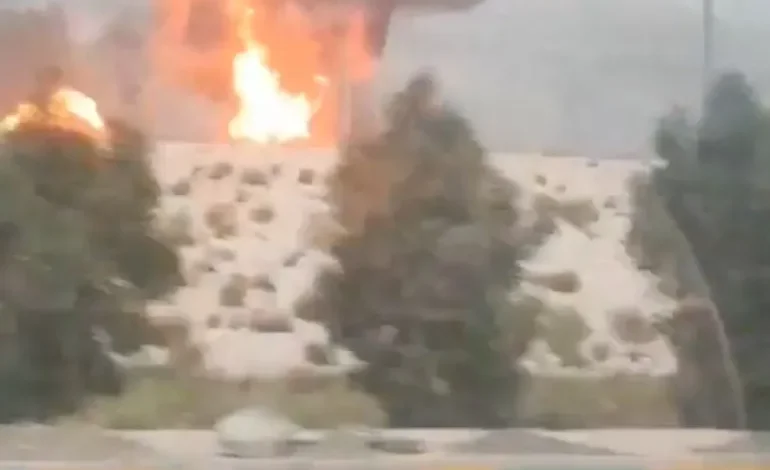
Azizi said Israeli strikes on the South Pars gasfield on Wednesday appeared to signify a new phase in the war had begun, in which the “aim seems to be to also disrupt the government’s ability to provide basic services, especially electricity and gas” to make the situation further untenable for residents of Iran.
The attack sparked immediate retaliation from Iran, including strikes on Qatar’s Ras Laffan gas facility and Saudi Arabia’s Samref oil refinery.
On Wednesday, in his clearest rebuke of the close ally, Trump said Israel had “lashed out” without US approval in launching the attack.
He added that the US “knew nothing about this particular attack”, while condemning Iran for “unjustifiably and unfairly” retaliating against Qatar.
Attacks on missile, drone and naval capacities
To be sure, the US and Israeli campaign has shown a quantifiable emphasis on attacks on Iran’s ballistic missile, naval and drone capacity; its related mobile and communications systems; as well as attacks on IRGC installations, according to Clionadh Raleigh, the founder of the he Armed Conflict Location & Event Data Project (ACLED), which has been tracking the war.
But about 30 percent of attacks focused on what she described as “hyperlocal military and security infrastructure” traditionally used to assert control over the population, Raleigh explained. Iran’s nuclear facilities, meanwhile, have been some of the “least hit” targets.
All told, the US and Israel have conducted 1,434 total “strike events” on Iran, compared with 835 retaliatory “strike events” launched by Iran, according to ACLED data. So-called “strike events” represent a time and location of an attack, but do not count the number of individual weapons used or the number of targets hit in each event.
The Trump administration has said it has hit more than 7,800 targets since February 28, flying more than 8,000 combat missions. It has been said that US forces have damaged or destroyed 120 of Iran’s naval vessels.
On that front, the White House has hailed “massive results” from the war.
“Iran’s ballistic missile capacity is functionally destroyed. Their navy assessed the combat as ineffective. Complete and total aerial dominance over Iran,” it said in a statement this week.