Has Trump misunderstood Iran’s IRGC and the Basij forces?
On Saturday, as the United States and Israel attacked Iran, US President Donald Trump sent a message to the Islamic Revolutionary Guard Corps (IRGC) conscripts, demanding they surrender or die.
“To the members of the Islamic Revolutionary Guard, the armed forces and all of the police, I say tonight that you must lay down your weapons and have complete immunity,” Trump said. “Or in the alternative, face certain death. So, lay down your arms. You will be treated fairly with total immunity, or you will face certain death.”
Instead, they retaliated with drone and missile attacks on Israel and multiple Arab states that host US assets in the region. Early on Sunday morning, Iranian state television announced that one of the strikes on Tehran killed its longtime supreme leader, Ayatollah Ali Khamenei.
If Trump’s appeal to the IRGC was aimed at inspiring defections or abdications, it does not seem to have had the intended effect. So why did Trump’s call for the IRGC to lay down their arms fall on deaf ears?
What is the IRGC
It is an elite armed force and a constitutionally recognised component of the Iranian military, established in 1979 after the Islamic revolution. It operates alongside the country’s regular army but answers directly to the supreme leader.
In fact, its doctrine is built on velayat-e faqih, or guardianship of the Islamic jurist, essentially the protection of the Islamic revolution and its fealty to the supreme religious leader, initially Ayatollah Ruhollah Khomeini, who died in 1989 and was succeeded by Khamenei.
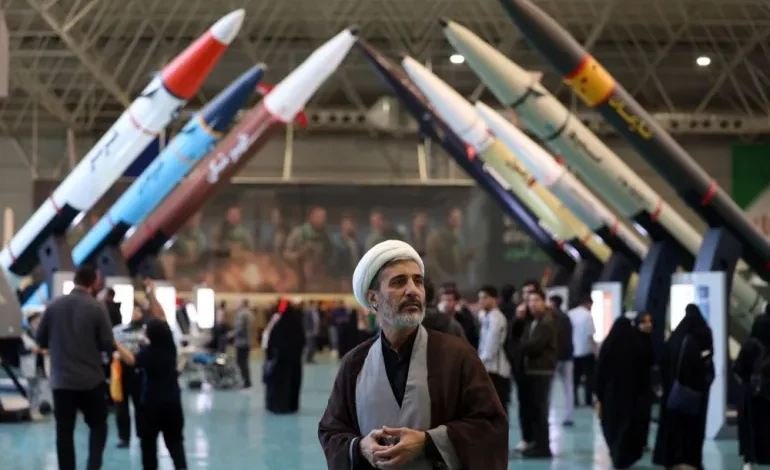
It is composed of ground, naval and air forces troops and includes an internal security paramilitary militia known as Basij. It also has an external operations force called the Quds Force, which is focused on special operations outside Iranian territory.
What does the IRGC do?
It plays a key role in Iran’s defence, foreign operations and regional influence with its 190,000 or so active personnel and a total of 600,000 if reserves are included. The IRGC manages Iran’s ballistic missile programme, is responsible for security for the country’s nuclear programme and coordinates with its regional allies in what is described as the “axis of resistance”.
The IRGC has been heavily sanctioned by various states. The US designated it an FTO (foreign terrorist organisation) in 2019. The European Union did the same in February 2026, prompting Tehran to respond by naming all EU member states, naval and air forces, as terrorist organisations the same month.
The IRGC, however, is also deeply entrenched in Iran’s political and economic structures. Its economic role expanded during the 1980-88 Iran-Iraq war, as it handled engineering and logistics to sustain Iran’s war effort. Firms affiliated with the IRGC reportedly have contracts in key sectors such as Iran’s natural resources, transport, infrastructure, telecommunications, and mining. Iranian officials call this the “resistance economy” and say this is part of how the country has circumvented sanctions.