Trump says Khamenei is dead – what happens next?
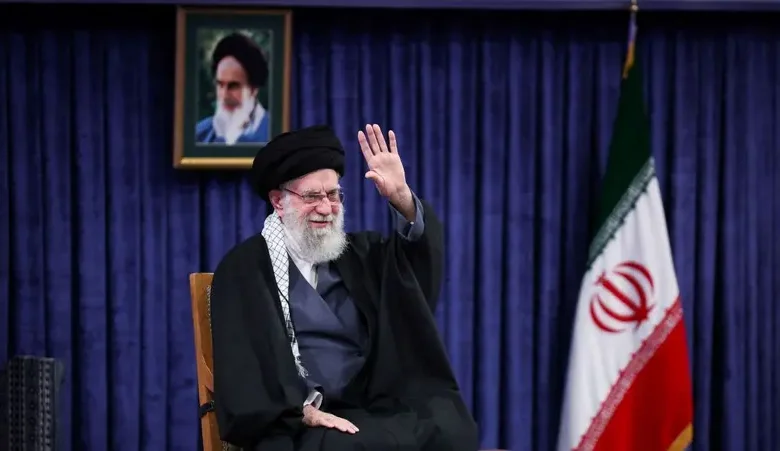
US President Donald Trump on Saturday declared that Iran’s Supreme Leader Ali Khamenei is dead in a post on Truth Social, though there has been no confirmation from Iranian authorities.
“Khamenei, one of the most evil people in History, is dead,” Trump wrote, calling it “the single greatest chance for the Iranian people to take back their Country,” and adding that US military operations would continue.
As of publication, Tehran has not confirmed Khamenei’s death, and Iranian state media has denied Trump’s claim.
If confirmed, the death of Iran’s supreme leader would mark the most consequential political shift in the country since 1989.
The most powerful office in Iran
The supreme leader is the highest authority in Iran’s political system, above the president. The office controls the armed forces, appoints the heads of the judiciary, state media and key security bodies, and holds final authority over foreign policy, including the nuclear program.
Khamenei has held the post since 1989, succeeding fellow Shia cleric Ruhollah Khomeini, the founder of the Islamic Republic, which was established following the 1979 revolution that ousted Shah Mohammad Reza Pahlavi.
His death would trigger a constitutional succession process, though the political reality could prove more complex.
What does Iran’s constitution say?
Under Article 107 of Iran’s constitution, the supreme leader is chosen by the Assembly of Experts – an 88-member clerical body elected by the public but vetted by the Guardian Council. Members of the Guardian Council are either directly or indirectly appointed by the supreme leader.
If the supreme leader dies or becomes incapacitated, a temporary leadership council assumes authority until a successor is formally appointed.
The Assembly of Experts is responsible for selecting the next leader. The constitution allows for either a single supreme leader or a leadership council. Analysts say, however, that the process would likely be shaped heavily by elite political and security institutions, particularly the Islamic Revolutionary Guard Corps (IRGC).
The IRGC factor
Trump claimed in his post that some members of Iran’s IRGC and security forces were seeking “immunity,” though there has been no independent confirmation of that assertion.
The IRGC is one of the most powerful institutions in Iran, with influence across military, intelligence and economic sectors. In any transition scenario, its primary priority would likely be preserving regime stability.
Whether it backs a senior cleric, a compromise figure, or a transitional leadership council could significantly influence the country’s direction.
Succession in Iran has long been the subject of speculation, though the process remains opaque.
Names previously discussed in political circles have included Mojtaba Khamenei, the supreme leader’s son; senior clerics aligned with hardline factions; or a consensus figure acceptable to both religious authorities and security elites. No official succession plan has been made public.
If confirmed, Khamenei’s death could produce several possible scenarios. There could be a tightly managed transition aimed at preserving continuity, internal elite power struggles, public unrest amid economic hardship and political repression, or a period of heightened military confrontation.
Iran has experienced repeated waves of domestic protest in recent years. A leadership vacuum could test the cohesion of the Islamic Republic’s institutions.
Iran’s supreme leader sets the country’s strategic direction, including policy toward Israel, the United States, Gulf states and allied armed groups across the region.
Instability in Tehran could have immediate regional consequences, particularly given tensions around the Strait of Hormuz, a critical global oil transit route.
Energy markets would likely respond sharply to confirmed leadership change or signs of prolonged unrest.
Despite Trump’s declaration, Iranian officials have not confirmed Khamenei’s death. Fars, a news agency close to the IRGC, dismissed the claim, saying Trump “has a long history of spreading false and fake news.”
Until official confirmation emerges, the implications for Iran and the wider Middle East remain uncertain.