In Gaza, when money is scarce, every choice counts: Bank, cash, or credit?
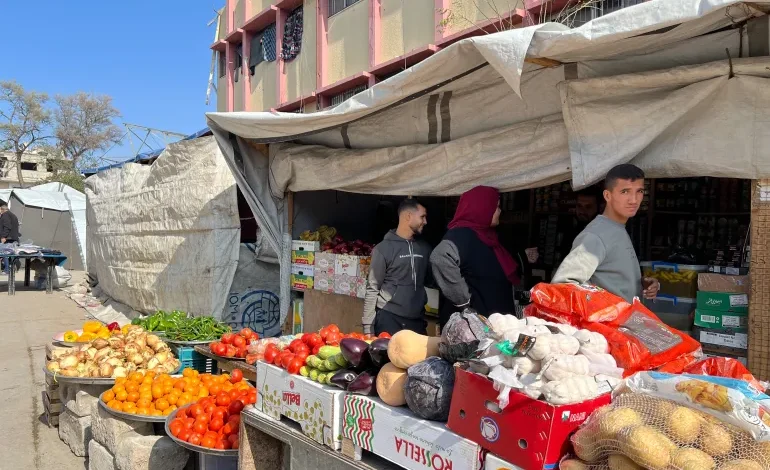
Amid the buzz of customers in the Remal neighbourhood in Gaza City, Samar Abu Harbied stops at a small, makeshift roadside stall to buy groceries to prepare an Iftar meal for her family, to break their fast during the Muslim holy month of Ramadan.
With no cash in her purse, the 45-year-old housewife asks the grocer if she could put the bill on credit, until her husband or son could wire the money to him.
“I have not touched a paper note for months. I don’t even have money to pay for a taxi. Now we walk a lot, for long distances,” Abu Harbied said.
Najlaa Sukkar, 48, was trying to catch her breath at the same stall, which is run by her son Abdallah, after a failed journey on foot to see a doctor for a post-surgery check-up and to buy medication.
Najlaa said she did not have enough money to pay the 30 shekel (US$9.5) check-up fees, and the only banknote she had, a 20-shekel bill, was so worn out that the pharmacist turned it down.
“I returned without receiving medical care,” she told Al Jazeera.
“At the pharmacy, they didn’t accept the banknotes as they were frayed. The taxi driver didn’t accept a banknote, only small change, which I don’t have. It is very difficult to get by. What a mess, we don’t know what to do!”
Palestinians in the Gaza Strip are struggling to conduct their daily lives amid a severe cash flow problem imposed by Israel immediately after it embarked on its genocidal war on Gaza in October 2023.
A US-brokered ceasefire that went into effect in October has brought little reprieve to Palestinians, who are still using worn-out currency they had from before the war, or must rely on a new system of electronic payments conducted through smart telephones amid limited internet coverage.
Electronic payments
Palestinians were forced to turn to a digital payment system as a way to get around a severe shortage of Israeli shekel banknotes, a problem that has been exacerbated by the destruction of an estimated 90 percent of bank branches and cash machines.
The Palestinian Monetary Authority, working with internet service providers, has pushed for mobile-based electronic payments, including PalPay and Jawwal Pay, to help Palestinians overcome the liquidity problem.
Abu Harbeid said her son switched to electronic payments after he faced many problems using the 50 shekels per shift he was receiving while working as a night guard.
“My son, Shady, was receiving his daily wage in cash, which was worn and torn. We could hardly break it into smaller change or buy anything, as sellers don’t accept overused paper bills,” she told Al Jazeera.
“Moreover, the seller doesn’t accept it unless I spend it all, as they don’t have change. Now, as he is paid into his bank account, we buy everything through bank apps,” she added.
But digital payments have added another layer of hardship to a large segment of the population.
Most Palestinians still do not receive bank-transferred salaries, many lack access to smartphones, and those who have phones struggle to keep them charged in an area where electricity services are in severe crisis.
To add to that, there is still the problem of finding a good internet connection for the transfer process.
Abu Harbeid said a proper trip to the market requires her to have her husband or son with her to pay for goods. But neither can leave work to join her.
“I prefer cash in my hand; I could buy anything on the go,” Abu Harbied said.