‘A dangerous thing’: S Africa’s gang-ridden townships fear army deployment
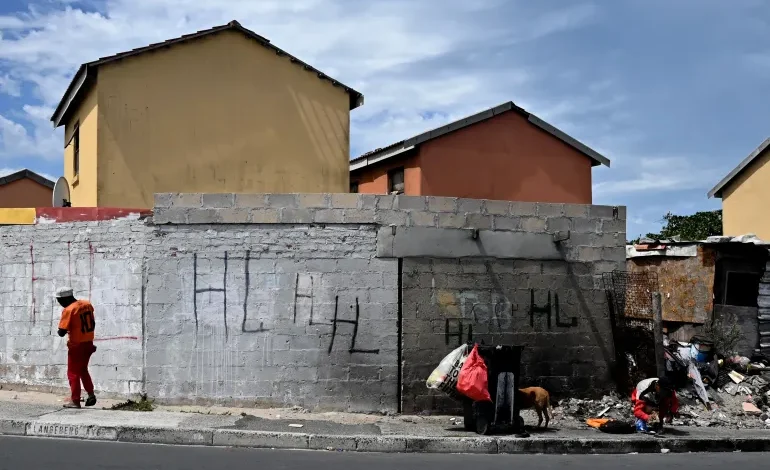
Two ominous letters are spray-painted on a wall at the entrance to Tafelsig, a township in Mitchells Plain on the outskirts of Cape Town: HL – the insignia of the Hard Livings gang, which has threatened communities there for five decades.
It’s a February day soon after the president’s state of the nation address, in which Cyril Ramaphosa boldly announced he’d be deploying the army to communities across South Africa to tackle the growing crisis of crime, drugs and gangs. But in Tafelsig, which will likely be part of the new military operation, most people seem unbothered by the news.
Mitchells Plain is on the Cape Flats – a series of densely populated, impoverished townships about 30km (19 miles) southeast of the wealthy city centre where the president made his speech. While the city boasts hordes of tourists and some of the most expensive real estate on the continent, the Cape Flats accounts for the highest rate of gang-related killings in the country.
“When it was at its worst, [there was a shooting] almost every day,” said Michael Jacobs, the chairperson of a local community police forum.
“Whether it’s day or whether it’s night, they’re shooting somewhere on the Cape Flats,” he added on a drive through the settlement of run-down houses and corrugated iron shacks.
Around him, residents made their way to a home-grown tuck shop, known as a spaza, or sat on street corners while toddlers ran about.
“How is this conducive to raising children?” he asked, recounting the horrors of life in Mitchells Plain.
Tafelsig residents now await the probable arrival of uniformed soldiers and armed vehicles in their neighbourhood, but have little hope that it will make a difference.
Despite his weariness with the violence, Jacobs is far from enthusiastic about a decision to deploy the army.
Other critics of the government’s decision said it is window dressing more than a real solution while some question the wisdom of such a drastic step in a country where the military has a history of brutality and where recent explosive allegations about police corruption at the highest levels have surfaced.
‘Do our lives not matter?’
In his speech on February 12, Ramaphosa said he would deploy the army to the Western Cape, the province that includes the Cape Flats, and Gauteng, home to the country’s largest city, Johannesburg, to tackle gang violence and illegal mining. On February 17, Acting Police Minister Firoz Cachalia announced that the Eastern Cape would be added to the list and a deployment would take place in 10 days – although no soldiers have so far been deployed.
The president’s decision followed pressure from civil society groups and the Democratic Alliance (DA) party, which runs the Western Cape, to take drastic action to curb widespread gang-related violence in the three provinces.
A day before its province was added to the deployment schedule, the DA joined residents in Gqeberha, the largest city in the Eastern Cape, for a “Do Our Lives Not Matter?” protest to demand that Ramaphosa take urgent action.
In Gauteng, neighbourhoods surrounding the province’s once-lucrative abandoned mines have often been turned into battlegrounds, resulting in shootouts between police and illegal artisanal miners, known as zama zamas.
Gauteng and the Western Cape frequently appear at the top of the country’s organised crime lists while the Eastern Cape made headlines last year for a series of killings linked to extortion syndicates.