In Zimbabwe, millions choose funeral insurance over pricey medical cover
Ngoni Mutambararo’s uncle, Steward Ganda, 60, spent the last months of his life at home, trying to recover from a severe ailment on his own.
Ganda suffered from severe pain in his legs that left him confined to bed and unable to tend the small tuck shop he ran in Kambuzuma, a low-income suburb in Harare.
Like millions of Zimbabweans without health insurance and unable to cover hospital expenses, he had hoped to soldier through and get well without medical attention. But as the weeks and months passed, his condition deteriorated.
Eventually, family members convinced him to consult a physician, and he was first admitted to Sally Mugabe Central Hospital. Doctors initially suspected he’d suffered a stroke. But on further inspection, they told the family he may have a kidney-related issue and needed to see a specialist, a nephrologist whose consultation fee was $600.
With no savings, Ganda’s family spent a month late last year trying to gather the money, hoping it would save his life. But it was too late.
“We couldn’t raise that amount,” Mutambararo, 39, told Al Jazeera. “He died barely a month after the admission.”
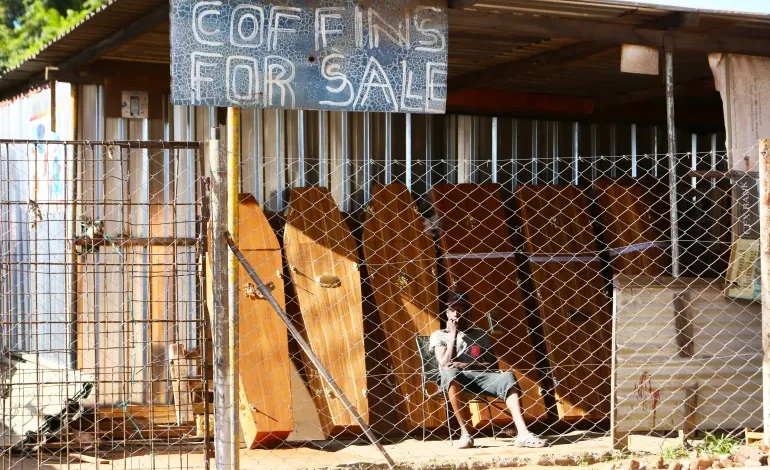
Soon after, the funeral was held. And while Ganda had spent his last months in pain and relative poverty, the service that bid him farewell was enviable: a casket, a hearse, burial equipment and a 65-seat bus to carry mourners on the 135km (85-mile) journey from Harare to his hometown of Wedza.
While Ganda could not afford health insurance, which averages about $200 per month and would have covered his diagnosis and treatment, he never missed his $11 monthly payment to a funeral services company, Nyaradzo Group, which paid his post-death costs.
Although health insurance is accessible through employers and monthly premiums are deducted automatically from salaries, fewer than 900,000 Zimbabweans are formally employed.
About 16 million people, or roughly 90 percent of the population, have no health insurance and must fund medical care out of their own pockets, according to 2023-2024 data from Zimbabwe’s National Statistics Agency.
At the same time, experts said funeral policies offer a cheaper, culturally resonant form of support, especially in a society in which dignity in death often takes precedence over safeguarding life itself.
Of all insured Zimbabweans, 72 percent hold funeral insurance policies while 30 percent have health insurance, according to a 2022 report from the financial inclusion nonprofit FinMark Trust.
‘Life after death is important’
For most Zimbabweans, medical cover is a luxury they cannot afford, so they forgo private healthcare for government services. Public health fees can start at about $5 per month, but government-run facilities suffer from poor infrastructure, limited drug supplies and staff shortages caused by the migration of healthcare professionals, which many said lead to low-quality care.
Although some private insurance premiums start at about $10 per month, others run into tens and even a few hundred dollars, putting plans beyond the reach of many households in a country where 60 percent of the population lives on less than $3.65 a day.
In comparison, funeral insurance plans are widely accessible and relatively low cost. The funeral cover provider Ecosure, for instance, offers plans starting at $0.75 while Zimnat’s policies begin at $1.
“Funerals are immediate, unavoidable events that come with significant financial and communal expectations,” said Innocent Tshuma, the public relations manager at Doves Holdings Group, a funeral services provider.
“In contrast, access to comprehensive medical aid remains limited due to affordability challenges, exclusions and unpredictable out-of-pocket costs.”
He argued that Zimbabweans place deep importance on dignity, respect and collective responsibility at times of death and funeral insurance offers certainty in cost and service delivery, “which explains its strong appeal in an environment of constrained household incomes”.