Trump warns US won’t help Iraq if it picks pro-Iran Nouri al-Maliki as prime minister
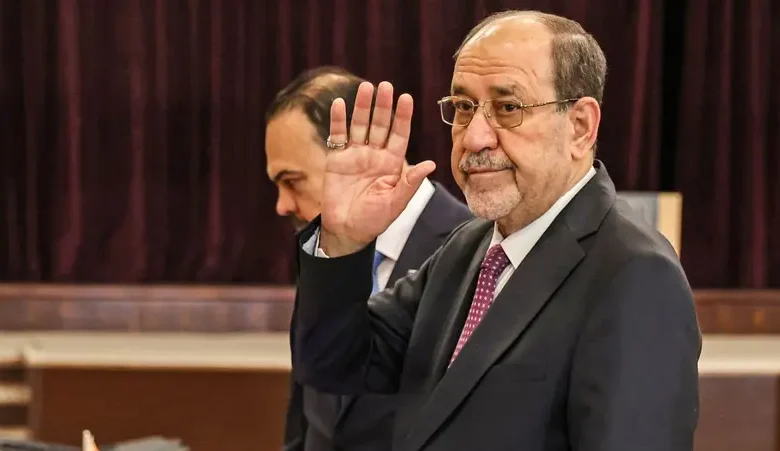
President Donald Trump warned on Tuesday that the United States would no longer help Iraq if the country picks pro-Iran Nouri al-Maliki as its prime minister.
“I’m hearing that the Great Country of Iraq might make a very bad choice by reinstalling Nouri al-Maliki as Prime Minister,” Trump wrote on Truth Social.
“Last time Maliki was in power, the Country descended into poverty and total chaos. That should not be allowed to happen again,” he said.
“Because of his insane policies and ideologies, if elected, the United States of America will no longer help Iraq and, if we are not there to help, Iraq has ZERO chance of Success, Prosperity, or Freedom. MAKE IRAQ GREAT AGAIN!” the US president added.
The alliance of Shia political blocs that holds a majority in Iraq’s parliament picked former prime minister al-Maliki as its nominee for the post, it announced last week.
On Sunday, US Secretary of State Marco Rubio warned Iraq against a pro-Iranian government.
Al-Maliki, who left power in 2014 following heated pressure from the United States, has been chosen by Iraq’s largest Shia bloc, which would put him in line to be nominated prime minister.
A pro-Iranian government in Iraq would be a rare boon for Tehran’s clerical state after it suffered major setbacks at home and in the region.
In a letter, US representatives said that while the selection of the prime minister is an Iraqi decision, “the United States will make its own sovereign decisions regarding the next government in line with American interests.”
The United States wields key leverage over Iraq as the country’s oil export revenue is largely held at the Federal Reserve Bank in New York, in an arrangement reached after the 2003 US invasion that toppled former president Saddam Hussein.
Chief among US demands is that Iraq prevent a resurgence of Shia armed groups backed by Iran.
Al-Maliki initially took office in 2006 with support of the United States as he strongly backed US military efforts against al-Qaeda in Iraq and other Sunni militants.
But the United States eventually soured on al-Maliki, believing he pushed an excessively sectarian agenda that helped give rise to ISIS.